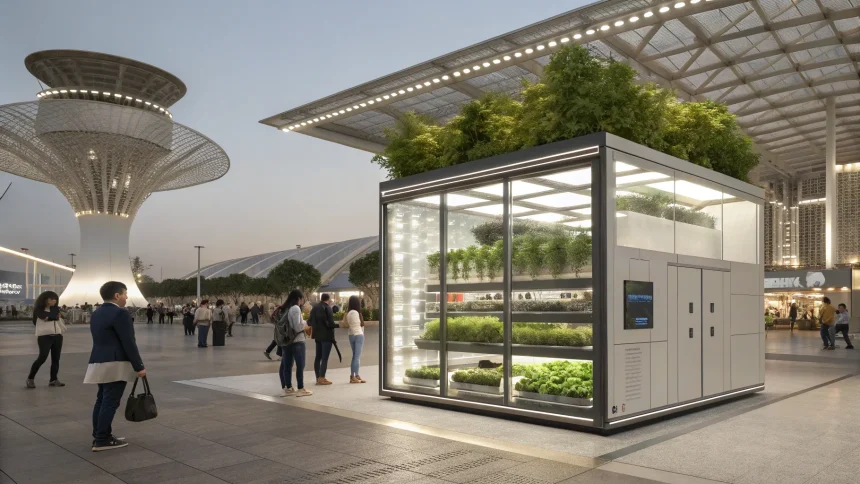
A compact, self-contained food ecosystem drew crowds at Expo 2025 Osaka-Kansai in Japan, offering a fresh look at city growing. The display showed how residents could one day harvest greens on apartment rooftops or in tight urban corners. The concept, inspired by the classic greenhouse, points to a new phase for local food and small-space farming.
The exhibit arrives as cities search for reliable food options and climate-friendly production. It proposes a modular “grow unit” that could sit on a roof, balcony, or shared courtyard. The goal is simple: produce and eat local, with low waste and low transport costs.
From Greenhouse Roots to High-Density Growing
The design builds on the greenhouse idea but adds modern controls. It uses a closed setup to manage light, water, and nutrients. The pitch is familiar yet timely: bring steady harvests closer to where people live.
Inspired by the humble old greenhouse, a futuristic self-contained food ecosystem was recently on display at Expo 2025 Osaka-Kansai in Japan.
Urban agriculture has gained momentum as city populations rise. Public agencies and planners see rooftop and vertical systems as tools for resilience. They can shorten supply chains, reduce spoilage, and ease pressure during disruptions. Researchers have tracked steady growth in rooftop farms and indoor gardens in major cities over the past decade, with pilots tied to schools, hospitals, and public housing.
How the Compact Ecosystem Could Work
While full specifications were not released, the exhibit suggested a small “plug-and-grow” unit. It likely relies on hydroponics or similar low-soil methods. A closed-loop approach would capture and reuse water. Automated sensors could adjust moisture and airflow to maintain crops through the seasons.
Think of it as a tiny house of produce.
The concept targets leafy greens, herbs, and strawberries—crops known to thrive in controlled environments. These foods have short grow cycles and high freshness value. A rooftop cluster could supply a building or a block with weekly harvests.
Why Cities Are Paying Attention
For many urban leaders, the draw is resilience and health. Shorter supply lines can cut spoilage and fuel use. Fresh greens can support nutrition goals in neighborhoods with limited access to produce. During shocks such as extreme weather, on-site growing can help steady supply.
Backers also point to community value. Shared rooftop farms can bring neighbors together and teach food skills. Schools and nonprofits often use small controlled systems for science lessons and workforce training.
- Lower transport and packaging waste
- Fresher produce with steady availability
- Education and community programs
- Potential energy savings with efficient lighting and water reuse
Costs, Limits, and Open Questions
The promise comes with trade-offs. Upfront costs for climate controls and lighting can be high. Roof load limits, permits, and insurance rules can slow adoption. Operators need training to manage pests, nutrients, and safety. Food safety plans, water testing, and clear oversight remain essential.
Energy use is another hurdle. Efficient LEDs and heat recovery can help, but power needs must be measured against expected yields. Experts advise matching crops to the season and local rates to keep units viable.
What the Exhibit Signals for the Market
The Expo display illustrates growing demand for small, modular systems. Local governments are piloting rooftop greenhouses on public buildings. Housing managers are testing shared grow rooms. Restaurants are adding micro-farms to secure steady herbs and salad greens.
The display offered a glimpse at how we might one day have “farm to table” on our apartment block rooftops or in small urban spaces.
Analysts expect continued trials through 2025 as builders and co-ops test costs and yields. Success will depend on simple maintenance, low energy use, and clear benefits for residents.
The Osaka showcase compressed a big idea into a small footprint: fresh food grown where people live. It offers a practical path for rooftops and courtyards to play a role in daily meals. The next steps will focus on costs, policy, and training. Watch for pilot programs in dense neighborhoods, partnerships with schools, and new rules that make safe rooftop growing easier to manage.