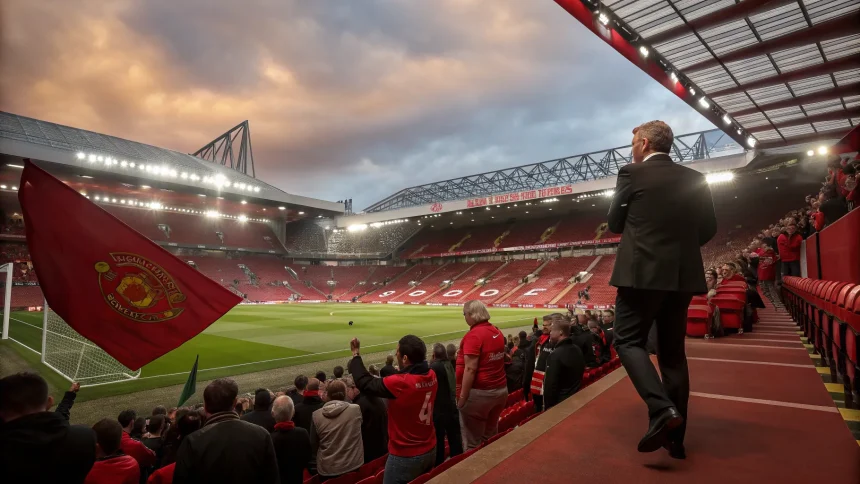
Old Trafford readies for a charged reunion as David Moyes returns while Everton face Manchester United in a high-stakes Premier League meeting. The matchup brings a familiar figure back to a stadium where expectations, history, and recent form often collide. The game, covered live by reporter Michael Butler, draws attention not only for the points on offer, but for what it reveals about two clubs with intersecting pasts and uncertain futures.
Why This Meeting Matters Now
Moyes’ presence adds weight to a fixture already rich in history. He spent more than a decade at Everton, shaping the club’s identity and stabilizing its place in the top flight. He later stepped into the Manchester United job, succeeding Sir Alex Ferguson in 2013 under intense scrutiny and pressure.
His time at Old Trafford was brief, but it remains a key chapter in both his career and United’s post-Ferguson transition. A return to the stadium, even from the opposite dugout, is more than a sideline note. It is a reminder of leadership choices, the strain of expectation, and the fine margins that define elite football.
“David Moyes returns to Old Trafford as Everton tackle Manchester United.” — Match coverage led by Michael Butler
How We Got Here
Everton entered the modern era under Moyes with a focus on structure, team cohesion, and disciplined recruitment. That approach delivered consistent top-half finishes and European qualification. It also raised the manager’s profile, setting the path to his move to Manchester United.
United’s transition after Ferguson brought managerial shifts, squad rebuilds, and changing tactical identities. Every meeting with Everton since has carried threads from that handover: uncertainty at Old Trafford, resilience on Merseyside, and the evolving standards of both clubs.
Tactics, Selection, and Pressure Points
On the pitch, the dynamics are straightforward: United seek control and incision at home; Everton look to compress space, win aerial duels, and strike on transitions. Set pieces could be decisive. United’s wide play and early crosses often test opponents, while Everton’s compact shape and direct counters challenge back lines that overcommit.
- United’s wide delivery versus Everton’s aerial strength
- Midfield second balls and defensive cover in transitions
- Set-piece marking assignments on both ends
In this kind of game, full-back positioning matters. If United’s full-backs push high, Everton’s wide forwards will look for space behind. Conversely, if Everton sit deep for long stretches, United’s patience and shot selection will be critical.
What Stakeholders Are Watching
For United, home form is a barometer of progress. The crowd expects assertive starts and sustained pressure. For Everton, every point on the road strengthens a campaign built on organization and resilience.
Analysts point to Moyes’ emphasis on structure and work rate. Those values could tilt the contest in tight moments. Meanwhile, United’s supporters recall the turbulence of that managerial handover, adding an emotional layer to the fixture.
Past Lessons, Present Risks
Historical meetings between these clubs tend to be tight, with momentum swings and late chances. While form and injuries shape the day, the meeting often hinges on who wins the midfield duels and which side defends the back post better on crosses.
Discipline is another thread. Early bookings for midfield anchors or full-backs can distort plans and open channels for the opponent. The first goal typically tilts control in matches like this, forcing one side to chase and the other to compress the game.
What Comes Next
The outcome will ripple through both camps. A United win steadies home expectations and reinforces confidence. An Everton result at Old Trafford could validate a disciplined approach and fuel belief for the winter schedule.
Beyond the points, the evening underscores an ongoing story: how institutions adapt after iconic eras, and how managers navigate legacies while building something new. That is why Moyes’ return resonates. It ties past to present, and it makes a standard league fixture feel like a measure of direction for both sides.
As the whistle nears, attention turns to the touchlines and the details: first-contact duels, set-piece routines, and nerve in the final third. The bigger picture will emerge in the result—and in what it says about where these clubs are heading.