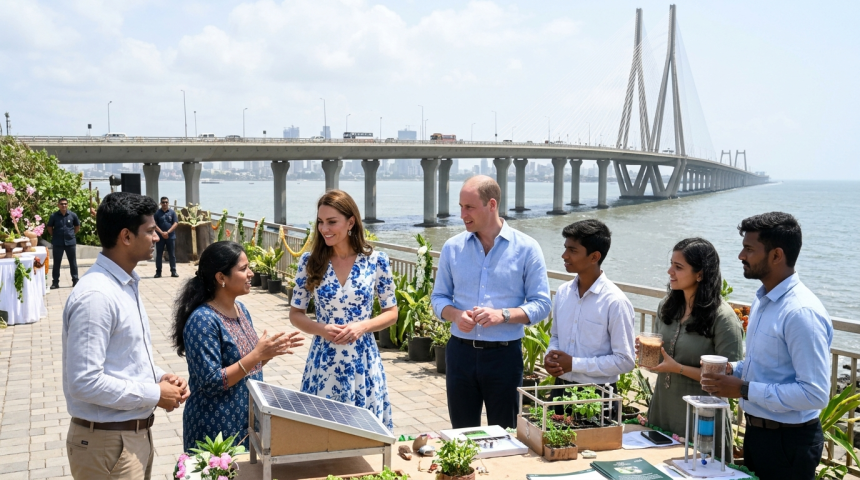
Royal visitors opened their day at Mumbai’s Worli Sea Link by meeting finalists for this year’s Earthshot Prize Awards Night.
The gathering took place at the Skyline Viewpoint, a waterfront location overlooking one of the city’s best-known bridges. It gave the finalists an early chance to discuss their environmental work before the awards ceremony.
Details about the visiting royals, finalists and their projects were not immediately provided. Still, the choice of venue placed climate action against the backdrop of a coastal city facing serious environmental pressures.
A High-Profile Start to Awards Day
The meeting served as a public opening to the day’s Earthshot events. Such appearances can give environmental teams valuable attention before the prizes are announced.
The Earthshot Prize supports responses to major environmental problems. Its awards program brings together project leaders, investors, campaigners and public figures. Finalists often use the event to seek wider support for ideas that can grow in other communities.
For the royal visitors, the Mumbai stop also put environmental work at the center of the schedule. The finalists, rather than the ceremony itself, received the first spotlight.
“The royals started their day at the Skyline Viewpoint at Worli Sea Link in Mumbai to meet the finalists ahead of this year’s Earthshot Prize Awards Night.”
The brief announcement did not disclose what was discussed during the meeting. It also did not identify which projects were represented.
Mumbai Offers a Striking Setting
Mumbai’s location makes it a fitting host for a conversation about climate solutions. The crowded coastal metropolis regularly deals with flooding, heavy monsoon rain, intense heat, air pollution and waste.
The Worli Sea Link is also a symbol of modern urban growth. Yet the surrounding shoreline shows why city planning and environmental protection must work together. Rising seas and stronger weather risks can affect transport, homes and public services.
Holding the meeting at a viewpoint added visual drama, but the setting carried a serious message. Climate programs must work in places where millions of people live, travel and earn a living each day.
Attention Now Turns to the Finalists
The awards night will determine which environmental teams receive the program’s highest recognition. Before then, several questions remain unanswered:
- Which finalists met the royal visitors in Mumbai?
- What environmental problems do their projects address?
- Which entries will receive awards and financial support?
Recognition can bring more than a trophy. It may help a project attract funding, partnerships and public trust. However, awards are only one step. The harder test is whether a winning idea can deliver measurable results at a larger scale.
The Mumbai meeting placed the finalists at the heart of the occasion and gave the awards day an accessible opening. Next, attention will shift from waterfront photographs to evidence, funding and execution.
For cities facing climate threats, that shift matters. A polished ceremony may win headlines, but lasting progress depends on whether the featured solutions work after the applause ends.