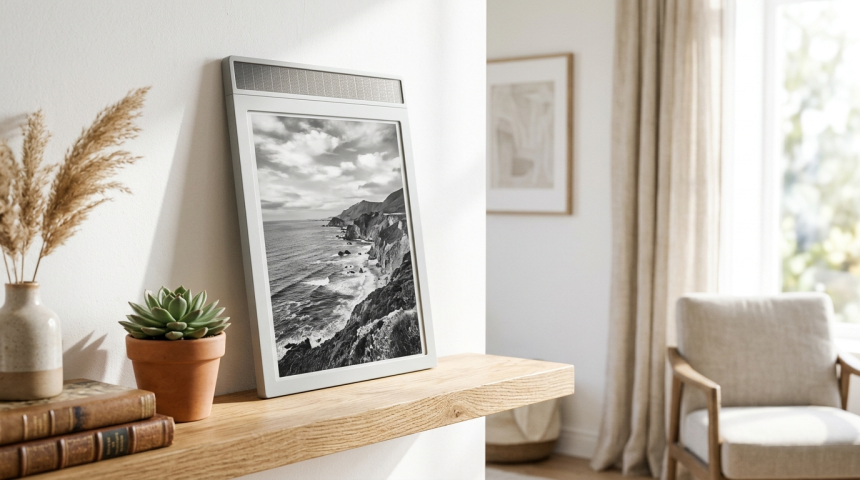
A newly surfaced ePaper display could bring digital art into homes without relying on a wall outlet. The gadget uses sunlight to show artwork and photographs, pairing a low-energy screen with solar power.
Its creators describe it as arguably the first ePaper display able to present art and photos using only energy from the sun. That claim has not yet been independently verified, but the idea points to a practical use for energy-efficient display technology.
How ePaper Reduces Energy Use
Traditional digital frames use LCD or LED screens. Those displays need a steady supply of electricity while operating, even when the image does not change.
ePaper works differently. Its pixels can retain an image with little or no continuous power. Energy is mainly needed when the screen changes, making the format well suited to artwork that remains in place for hours or days.
The display’s reported use of sunlight could further reduce its need for household electricity. It may also remove visible charging cables, helping it look more like framed art than consumer electronics.
“It’s arguably the first-ever ePaper display that can display art and photos using nothing but the power of the Sun.”
The device has also been presented as a strong home-decor option. Its appeal rests on a simple promise: owners may be able to change displayed images without repeatedly printing photographs or replacing physical artwork.
Questions About Light and Image Quality
Several practical details remain unclear. The available description does not identify the manufacturer, price, release date, screen size, storage capacity, or supported image formats.
It also does not explain whether the product needs direct sunlight. Indoor solar devices can perform differently based on window placement, season, weather, and room lighting.
Key questions for buyers will include:
- How long the display operates without sunlight
- Whether it contains a rechargeable battery
- How often users can change an image
- How accurately it reproduces colors and fine detail
Image quality will be another test. ePaper is known for a matte, paper-like appearance and good visibility in bright conditions. However, many models offer lower refresh rates and less vivid color than standard screens.
Those limits may matter less for still artwork. A slower refresh rate is unlikely to trouble users if images change only occasionally. Muted colors may also suit illustrations, posters, and black-and-white photography.
A New Role for Low-Power Screens
ePaper has long been linked with electronic readers, store labels, transit signs, and other products that show mostly static information. Home decor offers a different use, centered on design rather than utility.
A solar-powered frame could reduce cable clutter and lower ongoing energy use. It could also give photographers and artists another way to present rotating work inside homes, offices, galleries, or shops.
Still, its environmental value will depend on more than electricity use. Manufacturing, battery life, repair options, software support, and eventual disposal will shape the product’s total impact.
The concept is promising because ePaper and solar energy are a logical match. Both are best suited to devices that need modest amounts of power over long periods.
For now, the display remains an intriguing gadget with important unanswered questions. Verified specifications, independent testing, and pricing will determine whether it becomes a useful decor product or stays a niche experiment. Buyers should watch for details about indoor charging, image quality, and long-term support before making space on the wall.