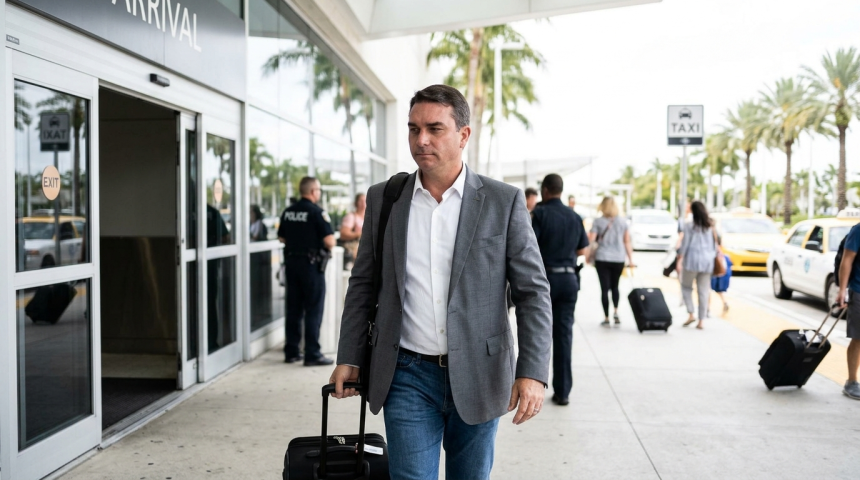
Brazilian Sen. Flavio Bolsonaro arrived in Miami after refusing an order to surrender his passports during a money laundering investigation, according to NBC News.
The order came from Brazil’s Supreme Court as authorities examined allegations involving the senator. His arrival in Florida also followed his father Jair Bolsonaro’s election defeat, adding political weight to an already sensitive legal dispute.
Passport Order Raises Enforcement Questions
Brazilian authorities sought Flavio Bolsonaro’s passports as part of the investigation. Such orders can limit foreign travel and help ensure that a person remains available during legal proceedings.
His reported refusal to comply, followed by his departure for Miami, could bring new scrutiny from the court. The next steps may depend on the order’s wording, when it was served, and whether he left Brazil before any travel restriction took effect.
Flavio Bolsonaro arrived in Miami after refusing to comply with a Brazilian Supreme Court order to surrender his passports.
NBC News correspondents Monica Alba and Danny Cevallos examined the legal and political questions surrounding the trip. The available account did not identify any criminal conviction or disclose the full evidence in the money laundering inquiry.
That distinction matters. An investigation can produce charges, close without prosecution, or remain open while evidence is reviewed. Bolsonaro must be treated as unconvicted unless a court rules otherwise.
A Powerful Family Under Pressure
Flavio Bolsonaro is a senator and the son of former Brazilian President Jair Bolsonaro. The elder Bolsonaro lost Brazil’s 2022 presidential runoff to Luiz Inácio Lula da Silva.
Jair Bolsonaro later traveled to Florida near the end of his term, skipping Lula’s inauguration. Flavio’s reported arrival in Miami may invite comparisons, though the two trips carry different legal and political circumstances.
The case also places attention on three institutions:
- Brazil’s Supreme Court, which issued the passport order.
- Investigators reviewing the alleged financial activity.
- U.S. authorities, if Brazil seeks help enforcing a future legal request.
International travel does not automatically shield a Brazilian citizen from a domestic investigation. However, cross-border enforcement can be slower and more complicated than action taken inside Brazil.
Political Stakes Extend Past One Investigation
The Bolsonaro family remains influential among Brazil’s conservative voters. Supporters have often described legal action involving the family as politically driven. Critics argue that public officials must face the same rules as other citizens.
The Supreme Court has also occupied a tense place in Brazilian politics. Its decisions have drawn praise from those who see the court as protecting democratic institutions. Opponents have accused it of exercising too much authority.
Those competing views make the passport dispute more than a procedural matter. It may become another test of public trust in Brazil’s courts after a bitter election.
The immediate questions are practical: whether Flavio Bolsonaro remains in the United States, whether Brazilian judges impose further measures, and whether investigators seek international cooperation. The broader issue is sharper. Brazil must show that legal orders carry force, while preserving due process in a case tied to one of its most powerful political families.