CircuitMess is promoting its new MAKERphone 2.0 kit as a way for smartphone users to understand, build and potentially repair their own mobile devices.
The company’s campaign centers on a common tension. People depend on smartphones for daily life, yet often feel disconnected from the machines themselves. CircuitMess links that unease to products that are difficult to inspect or fix.
“How would our relationship with them change if we built them ourselves?”
That question frames the MAKERphone 2.0 as more than a construction project. It presents the kit as an educational response to the closed design of many consumer phones.
Turning a Phone Into a Learning Project
Most smartphone owners interact with finished products. They can install apps and adjust settings, but the underlying electronics remain hidden from view.
CircuitMess argues that this distance limits users’ knowledge. Its promotional video says most people cannot repair their phones or even see the internal parts that make them work.
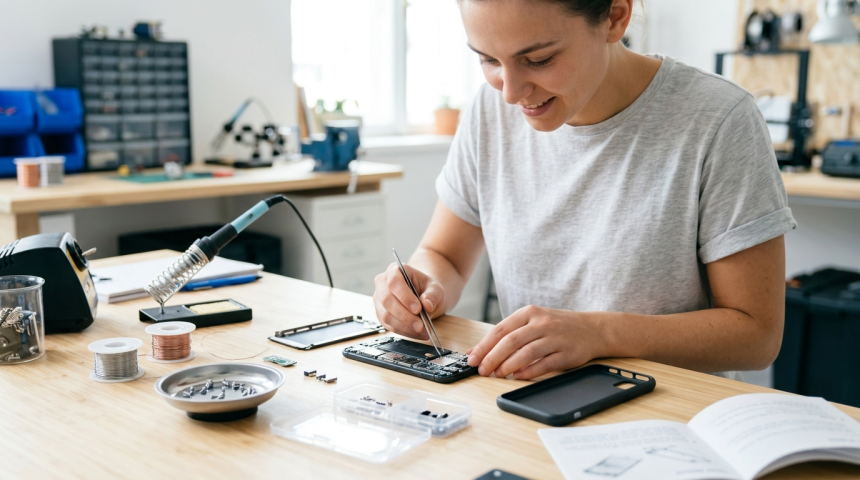
The MAKERphone 2.0 takes a different approach. Rather than giving buyers a sealed device, the kit asks them to participate in its construction. That process may help users connect each physical part with a practical function.
The project rests on three linked ideas:
- Building can make smartphone hardware easier to understand.
- Greater knowledge may give users more confidence when problems occur.
- Hands-on assembly may create a stronger personal connection to the finished phone.
This approach shifts the buyer’s role from passive consumer to active maker. The final product matters, but the assembly process is also part of what the customer receives.
Repairability Meets Digital Dependence
CircuitMess’s message reflects a wider concern about reliance on devices that many owners cannot service. Smartphones now support communication, work, navigation and entertainment. A hardware failure can therefore interrupt several parts of daily life at once.
Yet the campaign does not claim that every user wants to become a repair technician. Building a kit requires time, patience and an interest in electronics. Some consumers may still prefer a ready-to-use phone supported by professional repair services.
There is also an important difference between assembling a guided kit and diagnosing faults in a modern commercial handset. A kit can teach key principles without reproducing every feature or design challenge found in mass-market devices.
Still, practical education can reduce the mystery surrounding personal technology. Even limited experience with circuits, controls and assembly may help users ask better questions about durability and repair.
A Different Measure of Smartphone Value
Commercial phones are often judged by camera quality, speed, screen size and software. MAKERphone 2.0 asks buyers to consider another measure: how much they understand about the device they own.
That idea may appeal most strongly to students, hobbyists and families seeking a guided electronics project. It could also support classroom lessons that connect coding and hardware with an object learners already recognize.
The central claim remains open to testing. Building a smartphone may deepen a user’s attachment to it, but that experience will vary. Some builders may value the knowledge gained more than the finished device. Others may find the work less convenient than buying a standard phone.
CircuitMess has placed technical literacy and repair awareness at the center of the MAKERphone 2.0 campaign. Its success will depend on whether users see smartphone assembly as useful education, enjoyable work or both. The larger question is whether knowing how a device works can make digital dependence feel less alienating.