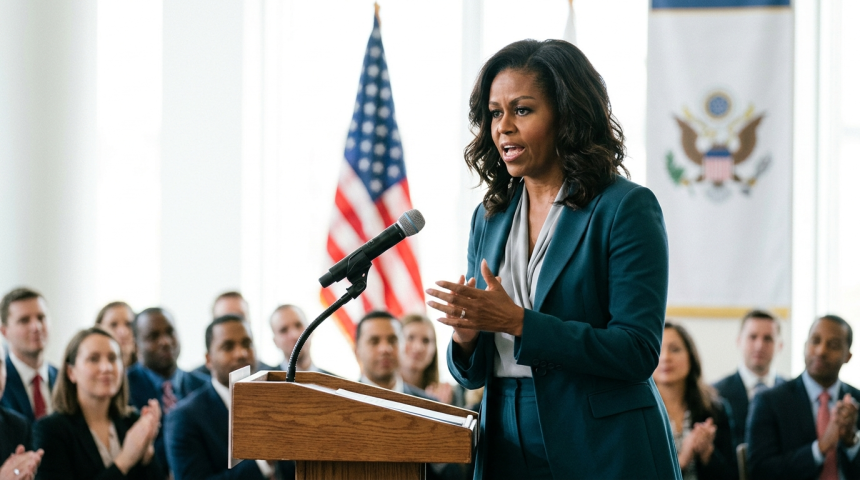
Michelle Obama praised former President Barack Obama while condemning the false claims that challenged his citizenship and loyalty during his political rise.
The former first lady linked her tribute to years of attacks against her husband. Those claims questioned whether he had a legal right to serve as president.
“The lies about your birthright, your patriotism,” Michelle Obama said, describing attacks aimed at the former president.
Her words recalled one of the most persistent falsehoods in recent American politics. The so-called birther movement claimed Barack Obama was born outside the United States, despite official records proving otherwise.
A False Claim With Lasting Reach
Barack Obama was born in Honolulu, Hawaii, on Aug. 4, 1961. Hawaii became a state in 1959, making him a U.S. citizen by birth.
State officials repeatedly confirmed the record. His campaign released a certification of live birth in 2008. The White House later published his long-form birth certificate in 2011.
Those disclosures did not end the conspiracy theory. Donald Trump became one of its most visible promoters before entering presidential politics. In September 2016, he publicly acknowledged that Obama was born in the United States.
The dispute was never supported by credible evidence. Yet it remained politically useful because it raised doubts about Obama’s identity, eligibility and connection to the country.
Several themes drove the attacks:
- False questions about Obama’s birthplace and citizenship
- Claims that treated official records as untrustworthy
- Broader doubts about his religion and national loyalty
Race and Political Belonging
Michelle Obama’s reference to “birthright” and “patriotism” placed the controversy in a wider debate about who is accepted as fully American.
Barack Obama was the nation’s first Black president. Critics of the birther movement have long argued that its appeal relied partly on racial prejudice and suspicion of his multicultural family history.
Some people who promoted the claims described their concern as a matter of constitutional eligibility. However, official documentation and statements from Hawaii authorities left no factual basis for that argument.
The former first lady’s remarks also showed the personal cost of a national conspiracy campaign. Political misinformation does not affect only candidates or election results. It can target families, identity and personal safety.
A Warning About Repeated Falsehoods
The birther episode offered an early example of how repetition can keep a disproven claim alive. Political figures, television coverage and online platforms helped the story reach large audiences.
Once distrust became central to the claim, further evidence often failed to persuade committed believers. Records meant to settle the matter were instead recast as part of the alleged deception.
Michelle Obama’s tribute therefore carried a message larger than praise for her husband. It presented his presidency as an achievement reached despite attempts to portray him as an outsider.
The episode remains relevant as election campaigns face new waves of misinformation. The key test will be whether political leaders, media outlets and online platforms correct false claims before repetition gives them wider influence.
Her remarks paired admiration with a direct rebuke. They also revived a clear lesson from the Obama years: official evidence may disprove a conspiracy, but its political effects can continue long after the facts are settled.