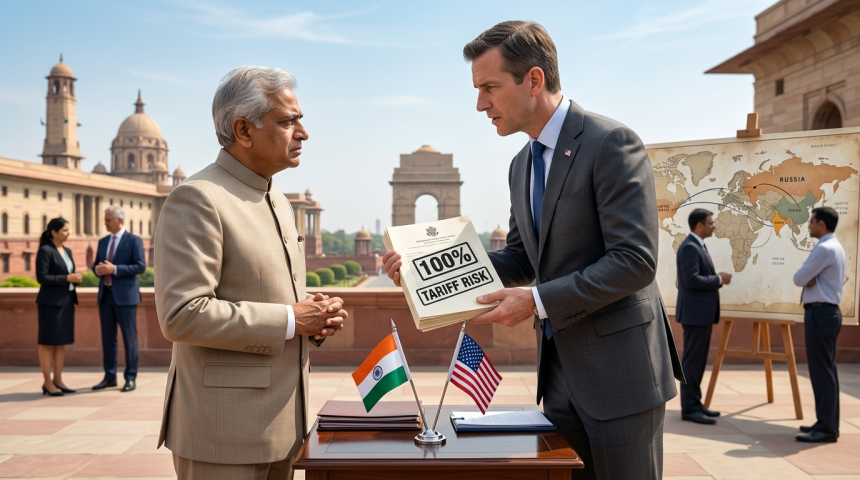
India faces the risk of US tariffs reaching 100% as Washington increases pressure on New Delhi over its continued purchases of Russian oil.
The tariff threat adds urgency to a diplomatic dispute that has strained ties between the United States and India for more than a year. It also places energy security, trade policy, and relations with Russia at the center of a difficult negotiation.
Russian Oil Purchases Draw Pressure
India’s continued purchases of Russian crude are the immediate source of the latest tension. Washington is using the prospect of steep tariffs to press New Delhi to reconsider those transactions.
A tariff of up to 100% could double the border cost of affected Indian goods before other expenses are included. The final impact would depend on which products face duties, how long the measures remain, and whether exemptions are granted.
The dispute reflects different national priorities. The United States is seeking greater economic pressure on Russia. India must weigh that demand against its own energy needs, costs, and established relationships.
Russian oil purchases can help India secure supplies and manage domestic fuel costs. However, continued buying may expose Indian exporters to wider commercial penalties from a major trading partner.
Trade Threat Raises Wider Stakes
The tariff risk could affect more than oil policy. Duties at the highest proposed level could weaken the price advantage of Indian products sold in the United States.
Businesses could respond by delaying orders, shifting supply contracts, or passing costs to customers. Indian producers may also seek other markets if access to US buyers becomes too expensive.
The key concerns include:
- The range of Indian products that could face new duties.
- The timing and duration of any tariff action.
- Possible exemptions for sensitive goods or industries.
- India’s willingness to change its Russian oil purchases.
The upper limit of 100% is significant, but it does not confirm that every Indian export would face that rate. Details on coverage and implementation will determine the economic cost.
A Partnership Under Sustained Strain
The latest warning comes after more than a year of pressure in the bilateral relationship. That longer period of strain suggests the oil dispute has become part of a broader test of trust and policy coordination.
For Washington, tariffs offer direct economic leverage. Supporters of that approach may view stronger penalties as necessary to change purchasing decisions that benefit Russia.
Critics may argue that severe duties could damage trade without producing a rapid shift in India’s energy strategy. They may also warn that economic pressure could make cooperation on other shared interests more difficult.
New Delhi, meanwhile, faces competing risks. Reducing Russian oil purchases could raise supply or cost concerns. Maintaining them could bring heavy US tariffs and uncertainty for exporters.
Negotiations Will Shape the Impact
The next phase will depend on whether both governments can separate the energy dispute from their wider relationship. A negotiated outcome could involve changes in purchasing levels, delayed tariffs, or limited measures aimed at selected sectors.
Failure to reach an agreement would increase the chance of retaliation or a longer trade conflict. Such an outcome could affect companies, workers, and consumers in both countries.
The immediate issue is Russian oil, but the larger question concerns how Washington and New Delhi manage disagreement between important partners. The tariff decision, its scope, and India’s response will show whether the strain can be contained or develops into a deeper economic rift.