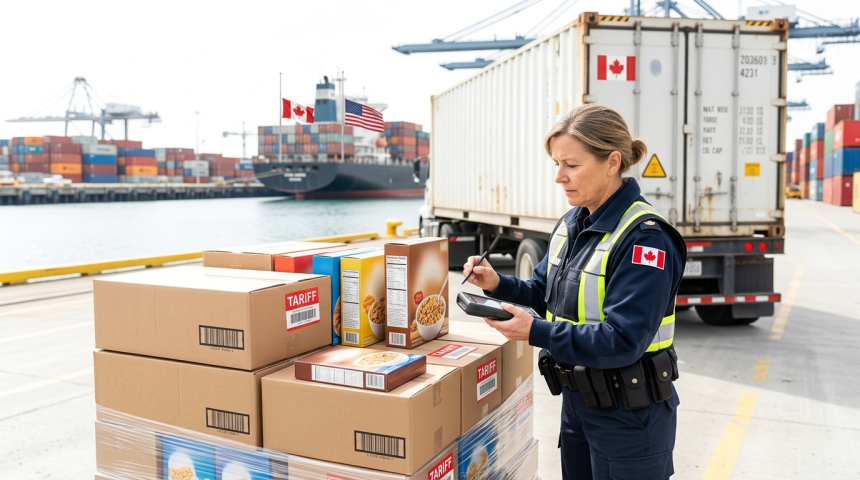
Canada has imposed counter tariffs on hundreds of U.S. products, betting that economic pressure will improve Ottawa’s position in negotiations with Washington.
The move places Mark Carney at the center of a renewed trade dispute between the neighboring countries. It also raises the risk of higher costs for businesses and consumers on both sides of the border.
Ottawa Seeks Negotiating Leverage
Counter tariffs are designed to answer trade measures imposed by another country. Ottawa’s approach uses added duties on American goods to increase the political and economic cost of the dispute.
Carney hopes the tariffs will give Canadian negotiators more leverage. The strategy depends partly on whether affected U.S. companies and regional leaders press Washington for a settlement.
Targeting hundreds of products can spread the impact across several industries. However, the scope also means Canadian importers may face higher expenses when purchasing goods from American suppliers.
The policy has several immediate goals:
- Respond to U.S. trade action with measures of similar weight.
- Protect Canada’s negotiating position during talks with Washington.
- Create pressure among U.S. exporters affected by reduced Canadian demand.
Businesses Face New Cost Pressures
Tariffs are collected at the border, but importers often pass at least part of the cost to customers. Canadian companies may also seek replacement products from domestic or overseas suppliers.
That adjustment can take time. Some businesses rely on established U.S. supply chains because of short delivery routes, shared standards and long-standing contracts.
Supporters of counter tariffs view them as a necessary defense against one-sided trade restrictions. Without a response, they argue, Washington would have less reason to change course.
Critics warn that retaliation can widen a dispute. Higher import costs may weaken investment, reduce sales and place added strain on industries that operate across the border.
A Closely Linked Trading Relationship
Canada and the United States share one of the world’s most closely connected commercial relationships. Goods can cross the border several times during production, especially in manufacturing.
That integration makes tariffs difficult to contain. A duty aimed at an American product may also affect a Canadian company that needs the item to complete its own goods.
Past trade disputes have shown why governments often choose products with political as well as economic value. Carefully selected duties can concentrate pressure in regions whose industries depend on Canadian buyers.
Negotiations Will Determine the Lasting Impact
The central question is whether Canada’s response produces talks or triggers further U.S. action. A negotiated settlement could limit the duration of the tariffs and reduce uncertainty for companies.
A prolonged dispute would carry wider risks. Businesses could delay orders, revise supply contracts or shift production while waiting for clearer trade rules.
Canada’s counter tariffs send a firm message, but their success will depend on results at the negotiating table. The next developments to watch are Washington’s response, the progress of bilateral discussions and any changes to the affected product list.
For Ottawa, the challenge is to apply enough pressure to win concessions without imposing lasting costs on Canadian households and employers. That balance will shape both the economic effect and the political judgment of Carney’s strategy.