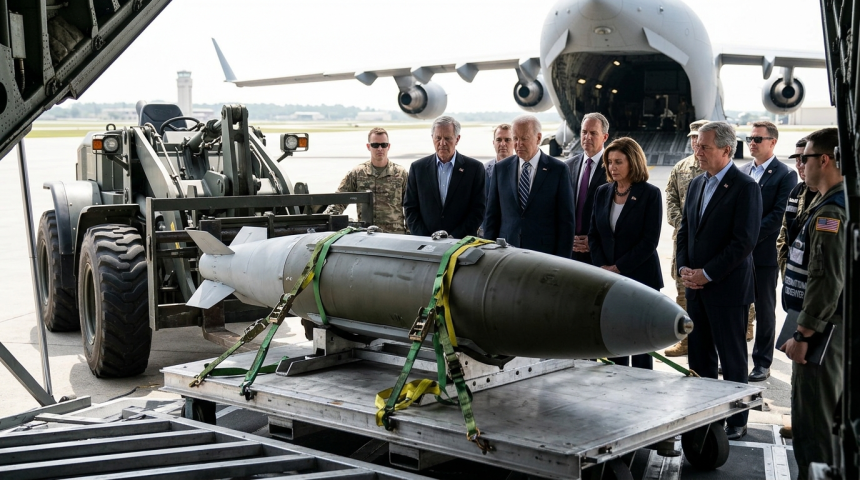
A pending transfer of a 2,000-pound munition linked to scores of incidents with civilian casualties is putting Democrats under fresh political pressure. The decision could test whether party leaders place tighter conditions on the delivery of heavy weapons.
The transfer’s timing, destination, value and approval process have not been disclosed. Those missing details limit firm conclusions. Still, the weapon’s reported record makes civilian protection a central issue for lawmakers reviewing the case.
Why the Weapon Draws Scrutiny
A 2,000-pound munition can cause severe damage across a wide area, depending on its design, guidance system and place of use. Its effects can be especially destructive in densely populated communities.
The munition has been described as being “involved in scores of incidents resulting in civilian casualties.” That account does not specify who documented the incidents or how direct the weapon’s role was in each case.
Those questions matter. A munition may be present in an attack without being solely responsible for unlawful harm. Investigators often assess target selection, intelligence, timing, proportionality and precautions before reaching a finding.
Even so, a reported pattern involving scores of incidents could prompt demands for greater disclosure. Lawmakers may seek answers on several points:
- Who will receive the munition and under what conditions?
- What reviews were completed before the transfer?
- How were earlier civilian casualty incidents investigated?
- Can delivery be delayed, restricted or canceled?
A Political Test for Democrats
The transfer creates a possible litmus test for Democrats because weapons policy can expose divisions within the party. Some members favor continued security assistance to partners. Others want deliveries tied to civilian protection rules and public accountability.
Moderate lawmakers may argue that withholding weapons could weaken an ally or reduce American influence. Progressive members may counter that supplying a weapon after repeated civilian harm creates legal, moral and strategic risks.
The debate may also test the executive branch’s ability to keep support within its own party. Democrats could pursue oversight hearings, request classified briefings or support measures that block or condition the transfer.
Legal and Humanitarian Questions
Arms transfers are generally reviewed under domestic law and government policy. The exact standards depend on the transfer mechanism, recipient and available evidence.
A key issue is whether officials believe the munition could be used in ways that violate international humanitarian law. That body of law requires parties to distinguish military targets from civilians and avoid excessive civilian harm.
Supporters of a transfer may point to guidance systems, targeting procedures or assurances from the recipient. Critics may argue that safeguards deserve little weight if past operations produced repeated civilian deaths.
The lack of public detail also creates an accountability problem. Without records identifying the incidents, investigators and lawmakers cannot easily assess whether the reported casualties reflect isolated failures or a wider pattern.
What Comes Next
The next steps will depend on how the transfer is structured and what authority lawmakers have to review it. Congressional notification, if required, could create an opening for formal objections and public debate.
Democrats will face pressure to explain not only whether they support the transfer, but which evidence guided their position. The most important facts will include the recipient, safeguards, prior investigations and intended military use.
The case may shape future debates over heavy weapons and civilian harm. If the transfer proceeds without added conditions, critics may view it as proof that casualty concerns carry limited weight. If it is delayed or restricted, the decision could signal stronger scrutiny of weapons tied to repeated civilian losses.