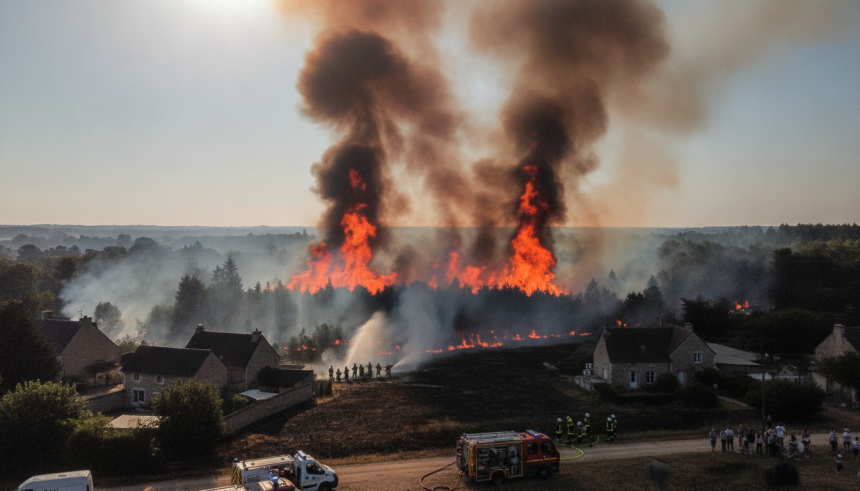
A fast-moving forest fire south of Paris forced a large response from French firefighters as a severe heatwave widened across Europe. The blaze, reported in wooded areas near the capital, came as health and weather agencies warned of extreme temperatures and a heightened risk of new fires. Emergency crews worked through the day to contain flames and protect nearby communities.
Local authorities advised residents to avoid smoke, stay indoors when possible, and follow heat safety guidance. The incident added pressure on services already stretched by heat-related calls. The exact cause of the fire had not been announced.
“French firefighters are battling a huge blaze in a forest just south of Paris as a devastating heatwave extends its deadly sweep across Europe.”
Heat, Drought, and Heightened Fire Risk
Extreme heat has become a recurring summer threat in France. Prolonged dry spells dry out soils and forests, making ignition more likely and spread faster. Firefighters often face shifting winds and dense smoke, which complicate ground operations.
Europe has seen severe heat seasons in recent years. The 2003 heatwave caused tens of thousands of deaths across the continent, prompting changes in heat-health plans. In 2022, wildfires in the Gironde region of southwest France burned more than 70,000 hectares, according to French officials, and forced mass evacuations at the height of summer.
Public health agencies have expanded alert systems to warn vulnerable populations. Shelters and cooling centers open in some cities during peak heat, and hospitals prepare for spikes in heat exhaustion and dehydration cases.
Response and Challenges on the Ground
In France, wildfire response typically combines ground crews with specialized vehicles and water tankers. When conditions allow, aircraft such as Canadair water bombers support containment lines. Terrain, access roads, and wind are key factors in how quickly crews can limit spread.
Fire managers also focus on preventing new ignitions. Bans on open flames, restrictions on certain outdoor work, and public advisories aim to reduce sparks. Rail and road operators sometimes slow or reroute traffic if smoke reduces visibility.
Officials often urge residents to keep a safe perimeter around homes, clear dry brush, and prepare a go-bag if evacuations become necessary. These steps can save minutes when a fire changes direction.
- Stay hydrated and avoid outdoor activity during peak heat.
- Follow local alerts on evacuations and road closures.
- Keep access routes clear for emergency vehicles.
Europe’s Heatwave Strain
The current heatwave has affected several countries, straining power grids and health systems. Schools and public events in some regions adjust schedules or cancel activities during the hottest hours. Tourism hubs face longer emergency response times as services juggle both visitors and residents.
Agriculture also feels the stress. Heat and low rainfall reduce yields, and smoke can harm vines and orchards. Water restrictions are common during extended dry periods, with local authorities balancing farm needs and household use.
Climate Signals and Future Seasons
Scientists have found that climate change is increasing the frequency and intensity of heatwaves in Europe. Warmer, drier conditions raise the likelihood of large fires. Studies from international climate bodies point to a longer fire season and more days of high fire danger in parts of the continent.
Urban planners are responding with shaded corridors, more trees, and reflective surfaces to reduce city heat. Forest managers are testing new tactics, from thinning dense stands to creating fire breaks near towns. Early detection tools, including satellites and lookout sensors, can help crews respond faster.
Longer term, experts say reducing greenhouse gas emissions and improving land management will be central to lowering risk. Preparedness, public education, and strong coordination among agencies also remain critical.
As firefighters work to contain the blaze south of Paris, attention turns to changing winds and overnight humidity, which can shift fire behavior. Residents should monitor official guidance on air quality and potential evacuations. With high temperatures forecast to persist, authorities warn that conditions could ignite more fires. The coming days will test emergency plans and highlight how quickly Europe must adapt to hotter, drier summers.