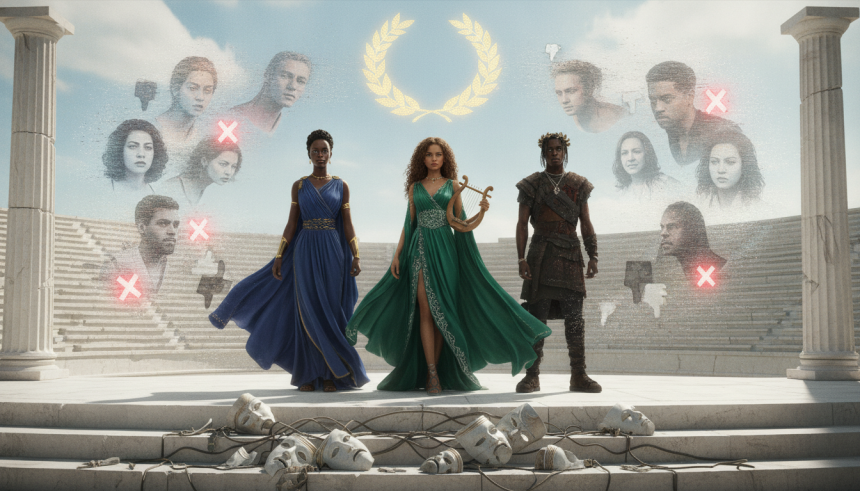
Online outrage flared this week after news spread that Lupita Nyong’o, Zendaya, and Travis Scott were attached to a new adaptation of a Greek epic. The project, still undisclosed publicly, has stirred debate over who gets to inhabit ancient myths and why it matters now. The dispute highlights a familiar clash between tradition-minded fans and supporters of inclusive casting.
Social media pushed the controversy into high gear within hours. Critics said the casting strays from historical settings. Others argued that Greek epics are myths, not documentaries, and can support wide creative choices. Industry watchers saw a culture fight rekindled by three headline-making names.
“Fan backlash has been gathering over the hiring of black performers Lupita Nyong’o, Zendaya and Travis Scott in an adaptation of a Greek epic.”
A Flashpoint Over Casting And Culture
Disputes over race and myth are not new. When the BBC series Troy: Fall of a City cast a Black actor as Achilles in 2018, the reaction was fierce. Similar storms greeted the diverse casting in The Little Mermaid and Amazon’s The Rings of Power. In each case, conversation rapidly split between fidelity to source material and the creative freedom of retelling.
Supporters of the new adaptation say Greek epics have been reinvented for centuries. From Roman poets to Renaissance painters to Hollywood, every era reshaped the stories for its audience. They argue that a modern retelling can widen the audience while keeping the bones of the tale intact.
Opponents frame the move as a break with classroom versions of the myths. They want visual worlds that match the marble statues and vases they associate with ancient Greece. Their concerns often mix aesthetics with worries about trend-driven decision making.
Artistic License Meets Audience Expectations
Casting choices are often the point where artistic freedom meets fan identity. Studios search for bankable stars and fresh angles. Viewers seek continuity with their mental picture of the source. That gap can fuel a feedback loop online, where outrage drives attention, and attention drives sales, at least sometimes.
Past examples suggest outcomes vary:
- The Little Mermaid faced heavy backlash but drew solid global ticket sales.
- Troy: Fall of a City drew criticism yet earned praise from some critics for performances.
- Hamilton recast the founding era with a largely nonwhite cast and became a cultural juggernaut.
Those cases point to a messy truth. Backlash does not always predict failure. Nor does controversy guarantee lasting cultural impact. Marketing, reviews, and the quality of the final product still matter most.
What History Says About Myth And Identity
Historians remind readers that Greek epics were oral stories long before they were texts. They were retold, trimmed, and expanded for new crowds. Ancient stages also relied on masks and stylized roles, not literal realism. That does not settle today’s debate, but it shows that reinvention is a feature of myth, not a bug.
Film scholars add that race in casting usually serves two functions. It signals who the story is for. It also reframes themes audiences think they already know. In a war epic, for example, diverse casting can sharpen questions about heroism, power, and fate.
Industry Stakes And The Road Ahead
Attaching Nyong’o and Zendaya signals a big-budget bet on prestige and global reach. Adding Scott, a music star, hints at a soundtrack strategy and youth appeal. If the project moves forward, early footage and trailers will shape opinion more than any tweet storm.
Studios have learned to prep for flare-ups. Expect clear messaging about the creative vision, historical advisors, and the reasons these performers were chosen. Expect metrics, too. If audience testing tracks well, momentum follows. If not, edits and reshoots often enter the chat.
The broader question is simpler than the noise. Can a fresh cast make an old story feel urgent without losing what made it last? That is the needle every adaptation tries to thread.
For now, the backlash is loud, but the work is ahead. When cameras roll and the first teaser drops, focus will shift from headlines to craft. Viewers will judge the performances, the script, and the world-building on screen. Until then, the debate over myth and representation will keep humming, as it has for years. Watch for the production to clarify its vision, show its first images, and let the story answer for itself.