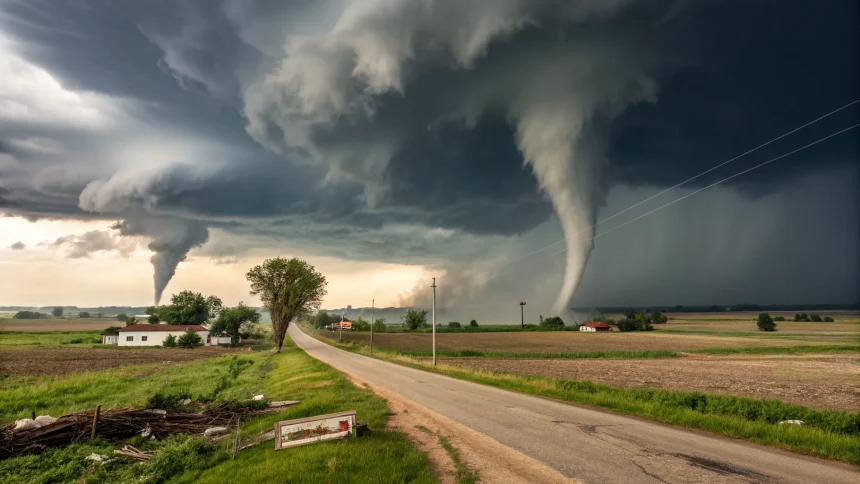
More than a dozen tornadoes tore through several Midwestern states, shredding homes, toppling trees, and leaving families to pick through rubble. The outbreaks, documented in stark footage and on-the-ground reporting, arrived fast and hit hard, scattering debris and lives across multiple towns.
Crews worked into the night as residents assessed what was left. NBC News correspondent Maggie Vespa surveyed the damage and heard from people bracing for a long recovery. The rush now is to secure shelter, restore power, and account for neighbors.
“Terrifying images of more than a dozen massive twisters making their way through several states in the Midwest have left communities completely destroyed.”
Scenes of Destruction and Survival
Blocks of neighborhoods were reduced to splinters. Roofs vanished. Cars flipped. Street signs bent like paper clips. First responders moved door to door, while volunteers brought water and tarps. In some places, power lines lay across rural roads, making access difficult and dangerous.
Vespa spoke with residents who described the same pattern: skies darkened, sirens sounded, and then a roar like a freight train. Many had minutes, sometimes seconds, to reach basements or interior rooms. For those without basements, bathtubs and closets had to do. Pets and keepsakes were grabbed in haste; plenty was left behind.
Local officials urged patience as damage assessments began. They emphasized staying clear of downed wires and unstable structures. Curfews were set in several hard-hit areas to prevent injuries and looting as night fell.
How the Region Prepared—and What Strained
The Midwest knows tornado season well. Communities stage warning drills. Schools run shelter-in-place exercises. Families keep weather radios handy. That preparation helped, but the sheer number of reported twisters and their size stretched response teams.
Emergency managers typically mobilize mutual aid across counties, pulling in additional ambulances, search teams, and public works crews. Hospitals activate surge plans. Utilities dispatch extra line workers. When storms stack up across state lines, those resources must spread thin, slowing the return of power and services.
- Temporary shelters often fill quickly after large outbreaks.
- Debris removal can take weeks, even with heavy equipment.
- Insurance adjusters face large backlogs following widespread claims.
Why Spring Brings Higher Risk
Spring is peak tornado season for much of the Plains and Midwest. Warm, humid air from the Gulf meets cooler air aloft, fueling powerful thunderstorms. If wind patterns twist with height, rotating storms can spawn tornadoes.
Forecasters can identify days with elevated risk and issue watches and warnings, but the exact track of each tornado remains hard to predict. Even small shifts in storm paths can spare one town and devastate the next.
Weather agencies advise heeding warnings immediately. A few minutes of lead time can mean the difference between a near miss and a life-threatening event. That message echoed across the region as residents credited alerts and sirens with getting them to shelter in time.
Recovery, Rebuilding, and the Long Haul
In the days ahead, attention turns from rescue to recovery. Damage surveys will classify the strength of each tornado, guiding federal and state disaster aid requests. Homeowners will document losses, and contractors will begin tarping and boarding damaged structures.
Communities often face a two-step challenge: short-term needs like shelter and medical care, then the longer rebuild of schools, small businesses, and public infrastructure. For rural towns, the loss of a single grocery store or clinic can ripple through daily life for months.
Maggie Vespa’s reporting highlights a familiar Midwestern reality: storms pass, but their mark lingers. People here have rebuilt before. They know the work is tough, the paperwork is tedious, and the progress comes house by house, block by block.
As forecasters watch the next systems, residents will be watching too. The key questions now are how quickly power and roads can be restored, whether aid arrives swiftly, and how communities can strengthen shelters and warning systems before the next round of storms.
For many, the first step is simple and hard: check on neighbors, clear a path, and start again.