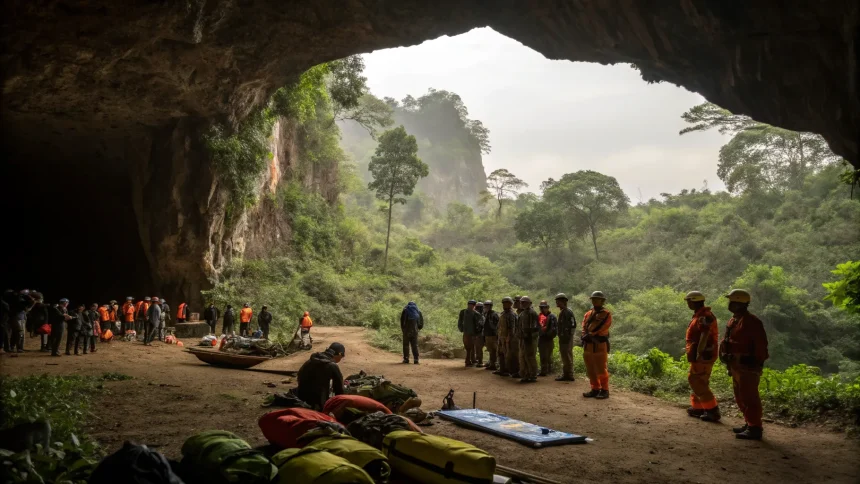
International rescue teams have halted efforts to find two gold miners believed trapped in a cave in Laos, officials said, leaving families and colleagues in limbo as hopes fade.
The suspension, announced without a new timeline, came in an area known for small-scale gold operations and rugged terrain. The decision ends an intense push to reach the men and raises urgent questions about mine safety and oversight in the country.
“International rescuers have indefinitely suspended the search for two gold miners believed trapped in a cave in Laos, officials said.”
Incomplete Details, Growing Concern
Authorities did not release names, a precise location, or a cause of the incident. It is also unclear when the miners became trapped. The lack of detail reflects the challenges of remote rescues in difficult conditions, where access routes are narrow and unstable and where sudden flooding can cut off teams without warning.
Search operations of this kind often rely on specialized equipment, trained cave and mine rescuers, and careful mapping. Halting work can signal high risk for rescuers, limited visibility, or structural instability underground. It can also point to limits in pumping, drilling, or ventilation capacity needed to push deeper into collapsed passages.
Mining Risks and Regional Context
Laos has pockets of gold extraction, including artisanal and small-scale operations. Such sites can exist near river systems and in karst formations, where caves are common and water moves quickly through limestone. During the wet season, these areas can flood within minutes.
Globally, mining remains one of the most hazardous industries, according to the International Labour Organization. Cave-ins, sudden water surges, and toxic gases are persistent threats. In many countries, small operations face added risk due to limited equipment, minimal ventilation, and fewer emergency exits.
Rescues in tight underground spaces require careful sequencing. Even a small shift can trigger new collapses. International teams bring expertise in rope systems, drilling, and underground communications. When those teams step back, it often reflects a sober assessment of danger.
Families Wait, Officials Weigh Options
The indefinite pause puts families in a painful hold. Communities around remote mines often depend on informal safety networks and word of mouth. With official updates scarce, rumors can spread quickly, raising stress for relatives.
Officials face a balancing act. Continuing work keeps hope alive but can expose rescuers to grave danger. Pausing buys time to rethink strategy and gather equipment. It also allows engineers to assess ground movement and water levels.
- Authorities did not set a date to resume operations.
- Details on the cave’s condition and access points remain limited.
- Officials have not released the miners’ identities.
What Drives a Suspension Decision
Incident commanders typically look at four factors: stability of rock and soil, water flow, air quality, and available escape routes. If two or more degrade at once, the mission can switch from rescue to risk management. Weather patterns also matter. Even a forecast of heavy rain can force a pause in a cave search.
Specialists often consider alternative tactics during a suspension. These can include drilling from the surface if geology allows, placing remote sensors to detect movement or sound, or creating new ventilation shafts. Each path requires time, equipment, and a clear safety case.
Calls for Safety and Oversight
The halt is likely to renew attention on mine safety standards in Southeast Asia. Advocates point to training gaps and the need for better emergency planning at small sites. They urge clearer reporting rules and rapid-response protocols when workers go missing underground.
Experts argue that community drills, mapped escape routes, and stocked rescue caches can reduce fatalities. Even simple measures—like routine air testing and water monitoring—help rescuers make faster decisions when minutes matter.
The Road Ahead
Officials did not signal whether the effort might shift from rescue to recovery. That choice depends on fresh assessments, weather, and any signs of life. International teams could return if conditions improve and a safer plan emerges.
For now, the pause leaves a hard truth: underground rescues are high-risk and time-sensitive. The next update will shape what comes next for the miners’ families and the region’s mining practices. Watch for new assessments from authorities, any change in weather forecasts, and signs of added equipment on site.
The suspension marks the latest turn in a difficult operation with many unknowns. It also highlights a broader need: safer mines, clearer plans, and faster alerts when things go wrong. The outcome in Laos may guide how similar sites prepare for the next emergency.