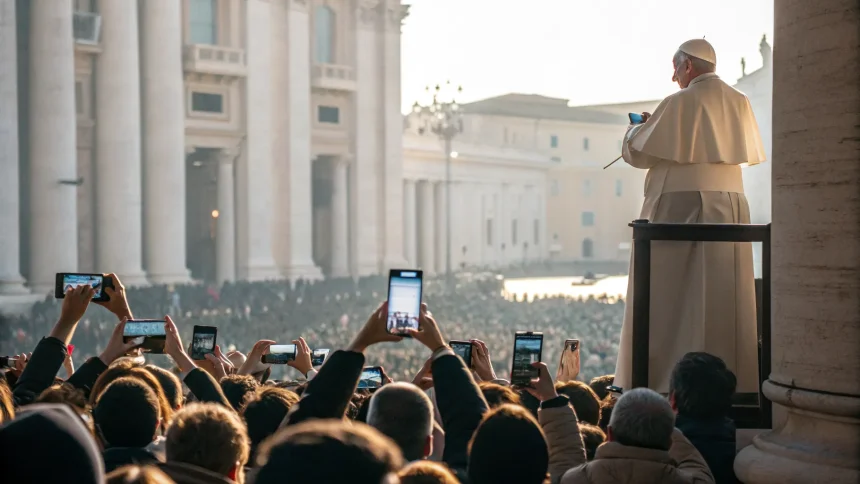
A viral video claiming to show Pope Francis’s final public remarks is misidentified, according to footage and chronology reviewed by reporters and church observers. The clip now circulating is from December 2023, not his Easter Sunday address the day before he died. The mix-up has spread quickly, creating confusion about the pope’s last message and its timing.
The late pontiff spent months urging an end to the war in the Gaza Strip. He repeated that appeal during Easter services, according to people present at the Vatican. The erroneous clip, however, has crowded out verified footage from his final day, complicating efforts to document his last public words.
What The Viral Video Shows
The post many users are sharing pairs a solemn message with claims that the speech was delivered in the pope’s final hours. That is false. The clip matches a December 2023 appearance, when Francis addressed the conflict and civilian suffering.
Pope Francis repeatedly called for an end to the war in the Gaza Strip, including during an Easter Sunday address delivered the day before he died.
But numerous social media posts claiming to show footage of his final speech are mistaken; the video spreading online shows separate remarks the pontiff made in December 2023.
The mismatch highlights how older videos can be repackaged during major events. Visual similarities in setting and tone made the mislabeling more believable to casual viewers.
The Pope’s Final Message on Gaza
Witnesses and church officials say the pope spent his final Easter Sunday urging an end to the fighting in Gaza and calling for the protection of civilians. That plea tracked with months of statements from the Holy See pressing for humanitarian access and prisoner exchanges. His last public appeal, delivered at a global moment of prayer, carried moral weight for Catholics and non-Catholics alike.
A Pattern of Appeals for Peace
From the first weeks of the war, Francis focused on the human toll. He urged cease-fires, condemned attacks on civilians, and sought corridors for aid. He met with families of hostages and with aid groups working in the territory. Vatican briefings across late 2023 and early 2024 repeated these themes, showing sustained attention to the crisis.
Religious leaders have long stepped into conflicts as moral voices. Francis continued that tradition, linking peace to relief for families on both sides and to regional stability. His approach emphasized dialogue and concrete steps to reduce harm.
Why Mislabeling Matters
Misidentified footage can distort the public record. It can also shift attention from what was actually said at a crucial moment. In this case, the December clip crowds out his verified Easter appeal.
The spread also reveals how grief and rapid sharing can fuel mistakes. People eager to honor a public figure may post first and verify later. Platforms often struggle to keep corrections as visible as the original claim.
- Check the event date against official schedules.
- Compare visual details, such as vestments and backdrop.
- Look for captions or transcripts from trusted outlets.
The Role of Platforms and Fact-Checkers
Social platforms face renewed pressure to label old videos and curb false captions. Fact-checkers moved quickly to flag the error, but corrections rarely travel as far as the initial posts. Clearer provenance tools, such as visible upload dates and event tags, could help users spot recycled content.
What To Watch Next
Expect continued efforts to surface the authentic Easter address and place it in proper context. Church media are likely to publish curated archives from his final week. Researchers will track how fast corrections overtake the miscaptioned clip, if at all.
Pope Francis’s final public focus remained consistent with his long-standing message: stop the war and protect civilians. As the record is clarified, the substance of that appeal stands out. The task now is to match the right words with the right moment, and to learn how not to repeat the same mistake the next time a leader’s final message matters most.