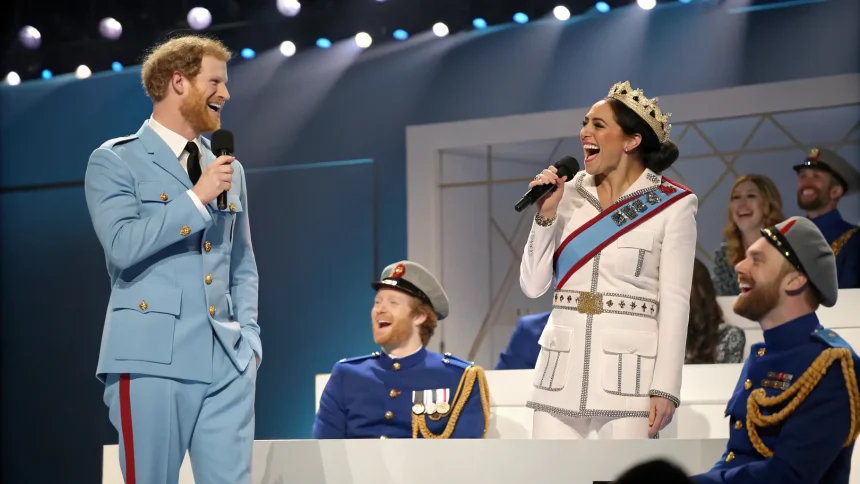
A sketch show took aim at Prince Harry and Meghan Markle this week, rolling out a sharp spoof as the King visited the United States, and sparking fresh debate over where satire ends and spite begins.
The bit aired during the King’s US stop, with writers stacking several bold jokes about the visit and the Sussexes’ relationship. The timing turned a comedy segment into a cultural flashpoint, pulling royal watchers, media critics, and free-speech advocates into the same noisy room.
The sketch show ridiculed Prince Harry and Meghan Markle’s relationship in one of several risky takes on the King’s trip to the US this week.
Why This Sketch Hit a Nerve
Harry and Meghan have lived in the public eye since stepping back from royal duties in 2020. Their move to California, a headline-making interview with Oprah Winfrey in 2021, and ongoing media projects have kept them at the center of both fandom and backlash.
Satire is routine for royal subjects. From Britain’s “Spitting Image” to the global late-night circuit, the Firm has long been a target. But timing matters. Pairing jabs at the Sussexes with the King’s American trip raised the stakes and sharpened reactions.
The couple’s well-documented legal fights with UK tabloids also frame the moment. Meghan won a privacy case against the Mail on Sunday in 2021. Prince Harry secured a judgment against Mirror Group Newspapers in 2023. Those cases were not about parody, but they fueled a wider debate about press behavior and public figures’ rights.
Comedy’s Line: Free Speech vs. Fairness
Satire enjoys wide protection in the United States under the First Amendment. In the UK, defamation and privacy law can bite harder, though parody still has room to breathe. This split often shapes how shows write and where they push.
Critics argue that recurring jokes about the Sussexes can tilt into character attacks, especially when they hinge on personal motives or mental health. Supporters counter that the couple are powerful public figures who monetize their story, and that scrutiny—comedic or otherwise—comes with the territory.
- Supporters of the sketch call it fair comment on famous figures.
- Detractors see overreach and needless personal digs.
- Legal experts see little risk if jokes plainly read as satire.
A Royal Visit, A Media Mirror
The US trip itself offered a ready-made stage. Royal tours have long doubled as public diplomacy and public theater. Jokes about protocol, pageantry, and family drama write themselves when the monarchy meets American showbiz culture.
The segment’s “risky takes” riffed on that contrast. Whether the jokes landed or flopped, they served a clear purpose: keep the show in the headlines while the royals were already there. In the attention economy, that’s a proven play.
Audience Reaction and Industry Impact
Early chatter suggested a split audience. Some viewers praised the writers for not tiptoeing around royal subjects. Others rolled their eyes at what they saw as recycled punchlines.
For producers, controversy can be a feature, not a bug. Spikes in online clips, late-night panel debates, and next-day coverage often follow edgy royal humor. The question is whether short-term buzz erodes long-term trust with viewers who want jokes that punch up, not down.
What the Data Says About Public Sentiment
Polling in recent years has shown a complex picture of royal favorability, with younger Americans less invested in royal tradition and more open to satire. Meanwhile, UK polling has flagged growing fatigue with royal drama, even as major events still draw big audiences.
That mix gives comedy writers a wide lane, but not a blank check. Viewers are quick to reward smart, fresh angles and just as quick to punish lazy shots.
What to Watch Next
If the sketch pulls strong streams and social traction, expect more royal bits across shows on both sides of the Atlantic. If backlash dominates, writers may pivot to larger themes—power, media, and celebrity—using the royals as supporting characters rather than the main act.
The bigger story is unchanged: the monarchy is global content, and every tour, lawsuit, and confession thread feeds the writers’ room. For Harry and Meghan, that means their public narrative remains fair game, even when the jokes sting.
The week closes with two takeaways. First, satire still tests limits, especially when royalty and American TV share a spotlight. Second, audiences demand sharper jokes and fairer aims. The next punchline will arrive soon enough. The smarter one will stick.