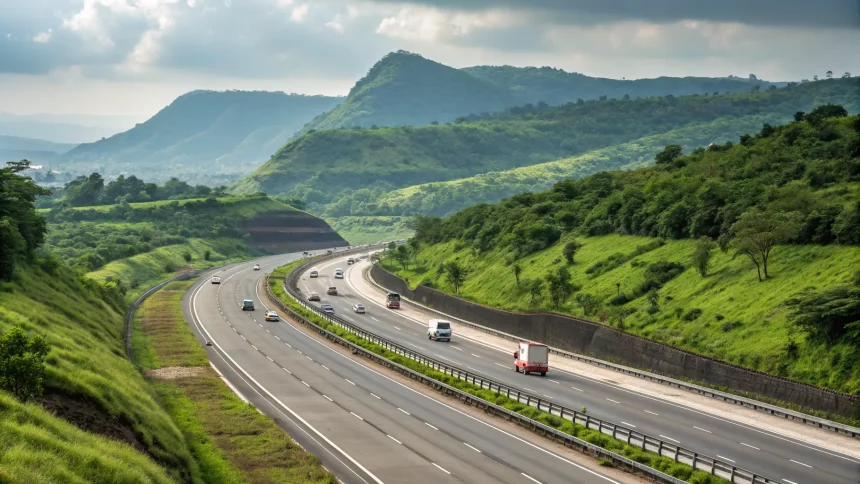
Mumbai marked a major upgrade to one of India’s busiest road corridors as Maharashtra Chief Minister Devendra Fadnavis inaugurated the Mumbai-Pune Expressway “Missing Link” project. Framed as a fix for long-standing choke points in the Western Ghats section, the project is designed to shorten the route and ease chronic congestion between the two cities.
Speaking at the ceremony, Fadnavis said the new stretch will ease gridlock on peak days and during monsoon disruptions. “This project will not only reduce the distance between Mumbai and Pune but also will ensure that there is no traffic jam,” he said.
Why the Link Matters
The Mumbai-Pune Expressway carries thousands of commuters and heavy trucks every day. It is a vital connector for finance, manufacturing, and the port network. The steep ghat curves and accident-prone bends near Khandala have long slowed traffic and caused frequent pileups.
Planners envisioned the Missing Link to straighten the alignment and shield vehicles from landslide-prone slopes. Built by the Maharashtra State Road Development Corporation, the new section includes long tunnels and a valley-spanning bridge to bypass sharp turns that have caused long queues, especially on weekends and holidays.
Officials expect shorter travel times, fewer bottlenecks, and safer driving conditions during the monsoon, when rockfalls have forced repeated closures on the old alignment.
What Changes for Drivers
For daily commuters, even a small cut in distance can save time and fuel. Logistics operators say more predictable travel helps them plan deliveries and keep goods moving between the Mumbai Metropolitan Region and Pune’s industry hubs.
- Fewer hairpin bends and steep gradients compared with the ghat section.
- Reduced exposure to landslides and fog-prone curves.
- More stable travel times for buses and freight carriers.
Highway patrol officials expect fewer crashes on the new alignment, citing better sightlines and stricter speed management inside the tunnels. Toll and traffic control systems are set to be integrated with the rest of the expressway to manage flow during peak hours.
Engineering and Safety Considerations
The most challenging work involved deep tunneling through the Ghats and constructing a high viaduct over a valley. Engineers say sensors inside the tunnels will monitor air quality and equipment performance, with ventilation, firefighting systems, and emergency exits installed at intervals.
Authorities say the infrastructure is designed to stay open during heavy rain, with drainage and rockfall protection along vulnerable slopes. Maintenance teams will monitor the old routes and the new bypass to manage incidents and diversions as needed.
Environmental Questions and Local Impact
Environmental groups have raised concerns about habitat disturbance in the Ghats. They want stronger safeguards for wildlife movement and tighter checks on blasting residue and runoff. State officials say clearances were obtained and that mitigation steps, including green cover restoration and slope stabilization, will continue during the maintenance phase.
Local businesses near the old ghat stretch are bracing for reduced stopover traffic. Roadside vendors and small hotels may see fewer customers as vehicles skip the scenic bends. Tourism bodies are urging signposted exits and local loops to keep visitors connected to hill stations and viewpoints.
Economic Stakes and What to Watch
The expressway underpins trade flows across western India. Any gain in reliability helps factory schedules, warehouse planning, and port linkages. Analysts expect fewer weather-related shutdowns to cut costs for truckers and bus operators.
Commuter groups will watch how quickly bottlenecks shift to entry and exit points near Mumbai and Pune. They are also tracking how toll policy and lane discipline are enforced, especially inside the tunnels where speed changes can trigger rear-end crashes.
“This project will not only reduce the distance between Mumbai and Pune but also will ensure that there is no traffic jam,” Chief Minister Devendra Fadnavis said at the inauguration.
The Missing Link opens with high expectations from drivers, officials, and businesses. Early weeks will test the new systems during rain and festival rush. If the bypass delivers steadier travel and fewer crashes, it could reset the commute between Maharashtra’s two major cities and shape future upgrades on other mountain corridors across the state.