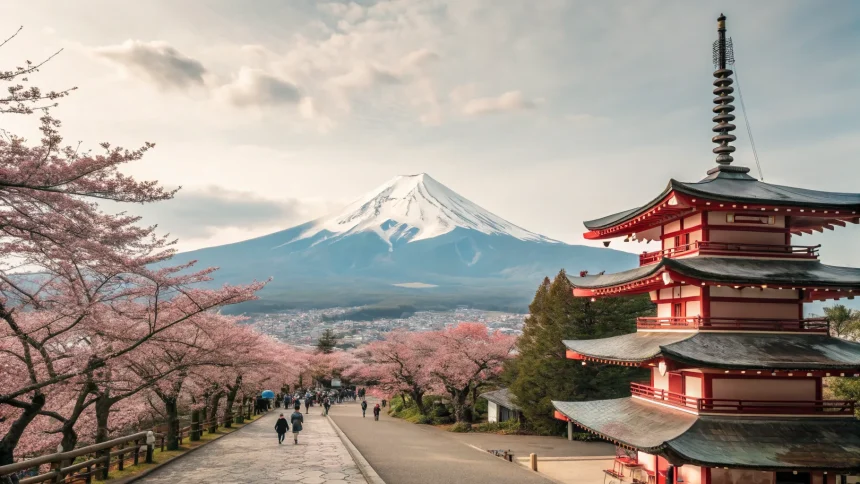
A single picture has changed the pace of a quiet Japanese town. A widely shared image showing snow-capped Mount Fuji, a red pagoda, and pink cherry blossoms has drawn waves of visitors seeking the same view. The surge arrived quickly, carried by social media shares and travel posts during peak blossom season.
The town, known for calm streets and shrine paths, now faces heavy foot traffic. Locals say the mood shifted as day-trippers and influencers crowded narrow walkways to frame the mountain, the pagoda, and the trees in one shot. Officials are weighing how to keep the setting peaceful without shutting out visitors.
How One Image Sparked a Crowd
“A viral photo of snow-capped Mount Fuji, a red pagoda and cherry blossoms has brought many tourists to a peaceful Japanese town.”
The composition is simple and striking. It mixes seasonal color, a well-known mountain, and an elegant shrine tower. Travelers recognize it at a glance. Many arrive at dawn or sunset to match the light and angle they saw online.
Local guides say the scene hits all the notes people expect from spring in Japan. It is easy to share and easy to imitate. The feedback loop is fast. More photos lead to more visits, which create even more posts.
Context: Tourism Rebounds With Social Media
Japan’s visitor numbers have climbed back since borders reopened. Blossom season has always brought crowds, but social platforms now set the pace. A single post can shift itineraries within days.
Similar hotspots across the country have seen quick spikes tied to trending photos. That pattern often brings short, sharp waves of people, with buses arriving at the same hour and leaving little time to spread out the flow.
A Town Balancing Peace and Popularity
Residents welcome the interest but worry about strain on daily life. The streets near the pagoda and park areas are narrow. Trash bins and restrooms fill quickly. Lines form on steps and viewing decks as people wait for the same frame.
Shop owners see more sales but must handle longer hours and crowd control. Photographers ask for quiet, while families want space to walk and pray. The competing needs play out on small paths built for a slower pace.
Strain on Local Spaces
- Congestion on stairs and lookout points.
- Safety concerns near steep paths and railings.
- Overflowing bins during peak hours.
- Noise and flash use at dawn and dusk.
These are common stress points at seasonal sites. Without clear guidance, visitors cluster around a few marked spots and block routes others need.
Managing the Surge
Local authorities can ease pressure with small steps. Clear signs in multiple languages help. Marked queues on stairs and simple “no tripods” zones reduce bottlenecks. Timed entry during the busiest windows can steady the flow.
Guides recommend alternate viewpoints nearby. Spreading visitors across several decks keeps lines short and still delivers the same mountain-and-pagoda feel. Basic amenities, like added restrooms and more frequent trash pickup, make a quick difference in spring.
What Visitors Can Do
Travelers can keep the site beautiful with a few habits. Arrive early or off-peak. Follow posted routes. Pack out trash if bins are full. Keep voices low near prayer areas. A great photo does not need a blocked path or a risky perch.
What Comes Next
The town’s future with this famous view depends on balance. The photo will keep drawing people while the blossoms last, and likely again next year. Smart signs, simple rules, and more space to spread out can protect the calm that made the image so appealing.
For now, the iconic scene is both an invitation and a test. The community is learning how to welcome guests while guarding the quiet moments that define the place. Expect small fixes first, then longer-term upgrades if the crowds keep returning.