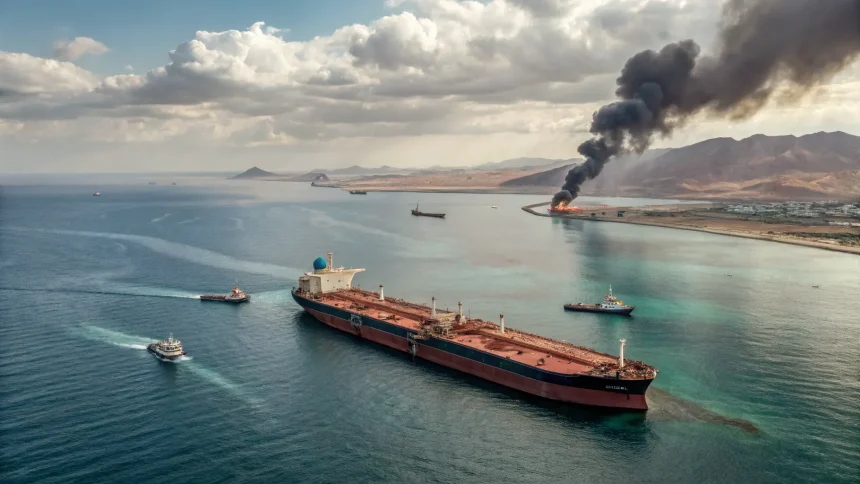
A large supply shock has hit the energy market as fighting involving Iran disrupts flows, shipping, and infrastructure across key routes. The cut to global oil supply is estimated at 9 million barrels per day, according to BloombergNEF, an amount that could reshape economic forecasts and fuel policies worldwide.
The disruption lands at a time when many countries are managing inflation and fragile growth. Energy officials and traders are weighing how long the shortfall could last and which producers, if any, can step in. Governments are also studying emergency options to ease pressure on prices and consumers.
“The Iran war has cut global oil supply by about 9 million barrels per day,” BloombergNEF estimates.
Scale And Context
Global oil demand typically sits near 100 million barrels per day. A 9 million barrel loss would be near a tenth of daily consumption. Few disruptions in recent decades have approached that level.
Past shocks offer a guide. The 1973 embargo and the 1990 Gulf crisis each removed several million barrels per day and led to price spikes and recessions in some economies. A hit of this size could have wider effects across transport, manufacturing, and power markets, depending on duration and geographic spread.
Geography matters. Key flows around the Middle East rely on vulnerable chokepoints such as the Strait of Hormuz and major export terminals. Any sustained blockage or damage can ripple through shipping schedules, insurance costs, and refinery plans far from the region.
Market And Economic Impact
The immediate market response centers on price risk, inventory drawdowns, and time spreads. Refiners face tighter crude supply and may shift grades, run rates, or maintenance plans. Airlines and shippers could see fuel bills rise, with costs passed on to consumers.
Central banks will track the shock’s pass-through to inflation. If fuel and transport prices jump, headline inflation can rise, complicating interest-rate paths. That trade-off is sharp for countries that import most of their energy and already face weak growth.
Exporters may benefit from higher prices but still confront uncertainty and logistics strain. Producers outside the conflict zone could capture market share if they can lift output or reroute barrels.
What Producers And Policymakers Can Do
Several levers are under review around the world:
- Strategic stock releases to ease short-term tightness.
- Production increases by countries with spare capacity.
- Temporary fuel tax relief or subsidies to shield households.
- Demand management, such as efficiency measures and conservation campaigns.
The ability to fill a 9 million barrel per day gap is limited. Some producers maintain spare capacity, but not at this scale. Unplanned outages and maintenance elsewhere could tighten the market further. U.S. shale producers might respond, yet new supply takes time, depends on financing, and faces service constraints.
Shipping, Insurance, And Security Risks
Security risks to tankers and ports add a second layer of stress. Higher insurance premiums, route diversions, and port delays can reduce effective supply even if barrels exist on paper. Longer voyages raise freight costs and tie up vessels, reducing flexibility.
Refiners may seek alternate crude, but grade mismatches can limit options. Some facilities are tuned to specific blends and cannot switch quickly without yield losses or extra costs.
Consumers And Industry Responses
Households could see higher gasoline, diesel, and heating costs. Energy-intensive industries may cut output or pass on costs. Governments may target the most exposed sectors with time-limited relief.
Utilities in regions that rely on oil-fired power may face price spikes. Where possible, fuel switching to natural gas or coal could ease strain, though environmental rules and logistics set limits.
Outlook And Key Variables
The path from here hinges on three questions: how long the conflict endures, how much infrastructure is damaged, and how quickly replacement barrels can flow. Diplomatic efforts that reduce risks to shipping lanes could bring partial relief even before production recovers.
Market participants will watch inventory levels, refinery margins, tanker rates, and announced policy actions for early signals. Clear communication from producers and governments can reduce volatility and help coordinate responses.
The coming weeks will test the resilience of the oil system and the policy toolkit built after prior shocks. If the disruption eases, prices and trade flows could stabilize as spare capacity and stocks fill the gap. If it persists, deeper demand restraint and broader fiscal measures may be needed. Either way, energy security will move to the center of economic planning, and the scale of this cut will shape decisions on supply diversification and conservation for months to come.