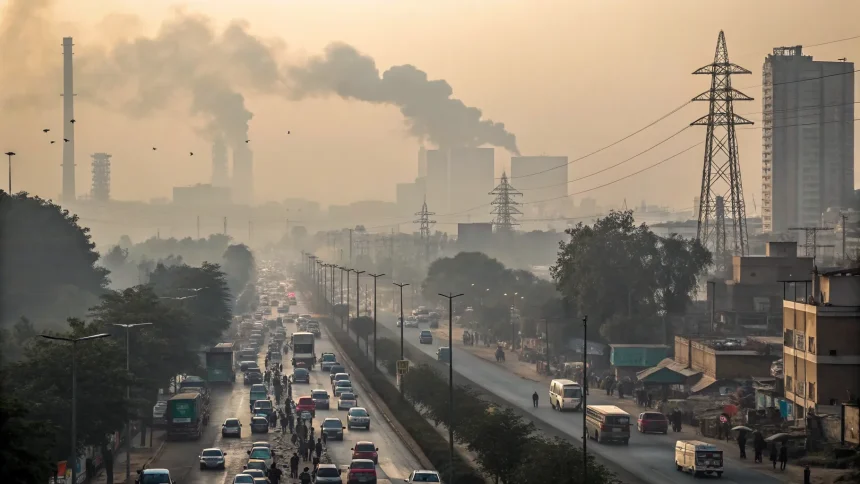
South Asia’s air crisis stood out again as the year’s starkest environmental warning, with the top 25 most polluted cities located in India, Pakistan, and China, according to new data from IQAir. The Swiss air quality firm released its annual report this week, drawing attention to fine particle pollution in major urban centers across the region and renewing pressure on governments to act.
The report highlights where the air is worst and why communities face repeated smog waves. It points to rapid urbanization, coal use, traffic, industry, and seasonal burning as key drivers. Public health experts say the costs are rising, from hospital visits to lost workdays and shortened lives.
What the New Rankings Show
“The world’s top 25 most polluted cities were all in India, Pakistan and China,” Swiss air quality monitoring firm IQAir said in its annual report.
The concentration of the worst-hit cities within three neighboring countries is not new, but it is stark. Cities in northern India and Pakistan often suffer thick winter smog. Parts of northern and western China also battle heavy pollution episodes tied to coal heating, industry, and traffic. IQAir’s rankings are based on PM2.5 levels, the tiny particles that lodge deep in the lungs and enter the bloodstream.
Why PM2.5 Matters
PM2.5 is linked to heart disease, stroke, lung cancer, asthma, and other chronic conditions. The World Health Organization advises an annual average limit of 5 micrograms per cubic meter. Many cities in the report exceed that level by wide margins, exposing millions to daily health risks.
- Fine particles can trigger breathing trouble and heart stress.
- Children, older adults, and outdoor workers face the highest risks.
- Even short spikes in pollution can raise hospital admissions.
Regional Drivers and Seasonal Smog
In India and Pakistan, winter brings temperature inversions that trap pollutants close to the ground. Crop residue burning in some states and provinces adds to the haze. Heavy traffic, diesel generators, brick kilns, and coal-fired power further load the air. Construction dust and unpaved roads worsen the problem in growing cities.
China has tightened controls for more than a decade, cutting coal use in some regions, upgrading industrial standards, and expanding clean heating. Progress has been uneven, and some industrial hubs still record high PM2.5 on bad days, especially in winter.
Health and Economic Costs
Doctors warn that repeated exposure to dirty air reduces lung function and shortens life expectancy. The WHO estimates millions of premature deaths each year are linked to air pollution. Economists point to lost productivity, increased health spending, and learning setbacks for children who miss school or struggle with respiratory illness.
Outdoor workers—drivers, street vendors, and construction crews—often lack protective gear or safe indoor options. Families spend more on masks and air purifiers, a burden for low-income households.
Policies, Progress, and Gaps
Governments across the three countries have launched clean air plans. Steps include tighter vehicle emission standards, shifts to cleaner fuels, scrubbers on factories, and restrictions on open burning. City authorities have piloted smog alerts, odd-even traffic rules, and dust control at worksites.
Experts say enforcement and coordination remain weak. Pollution drifts across city and state borders, so piecemeal measures fall short. Cleaner transport, reliable power that reduces diesel backup, and controls on small industries are often cited as priority areas.
What to Watch Next
Analysts expect more air monitors in smaller cities, giving clearer readings and accountability. Electric buses and two-wheelers are gaining share, though charging networks and grid reliability lag behind demand. Some regions are testing crop residue collection and bioenergy projects to reduce field burning.
Public pressure is rising as real-time air quality apps make daily exposure visible. Health systems are also adjusting, with more emphasis on prevention and alerts for vulnerable groups during high-smog days.
The latest rankings send a clear message: the worst pollution remains concentrated in South Asia and parts of China, where millions breathe unhealthy air much of the year. The path forward is well known—clean power, cleaner transport, industrial controls, and strong enforcement. The pace of action will decide whether next year’s list looks any different, and how much relief reaches the streets, schools, and hospitals now bearing the load.