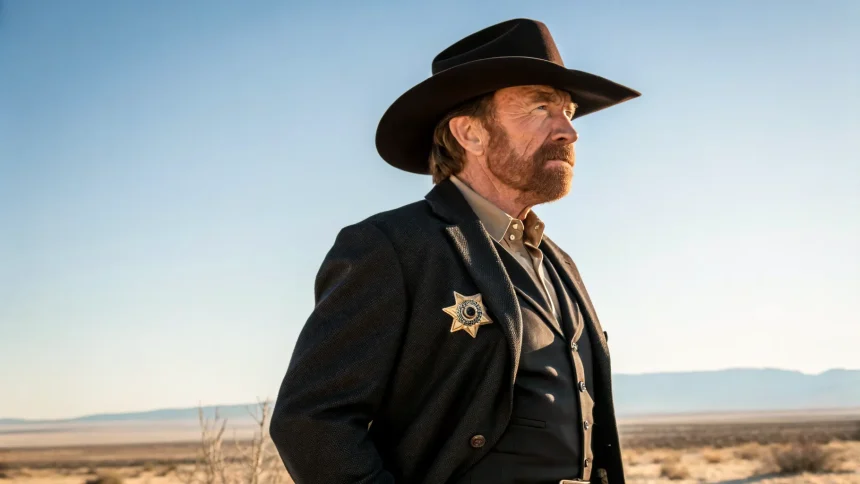
As Cordell Walker, a stoic Texas lawman with a swift roundhouse and a firm moral compass, martial artist and actor Chuck Norris helped define a prime-time vision of frontier justice that still echoes across television.
Set in Texas and filmed largely on location in the 1990s, the series fused martial arts action with simple, clear-cut ethics. It offered viewers a weekly dose of high-stakes drama resolved by grit, community loyalty, and a signature kick. That mix turned Walker into a pop culture fixture and gave Norris one of the most recognizable roles of his career.
How Walker Became an Icon
Walker, Texas Ranger ran for eight seasons on CBS and later found a second life in syndication. The show leaned on brisk fight scenes and tidy endings. It also highlighted civic duty, friendship, and personal honor. Viewers knew what they would get each week, and that reliability built a broad audience.
Norris brought a champion kickboxer’s timing to TV action. He also played Walker with a steady calm that contrasted with the chaos around him. The onscreen persona merged Western archetypes with modern crime drama. The result became familiar family-night television, especially on weekends.
The martial artist and actor was best known for playing Cordell Walker, a lawman who dispensed Lone Star justice with roundhouse kicks and an old-school moral code.
What the Character Stood For
Walker’s code was direct. Help neighbors. Stand up to bullies. Respect the badge. That approach appealed to viewers looking for clear heroes in complicated times. The show also celebrated Texas settings, from wide ranch roads to Dallas skylines, which gave it a strong sense of place.
- Signature move: the roundhouse kick
- Defining trait: unwavering ethics
- Recurring theme: community over self-interest
A Legacy That Keeps Moving
The franchise has continued to evolve. The CW’s “Walker,” starring Jared Padalecki, reframed the concept for a new audience, trading some of the old show’s hard edges for serialized family drama. The modern version explores grief, politics, and policing with more nuance while tipping its hat to the original’s Texan spirit.
Norris’s Walker also inspired a long tail of memes, parodies, and references. The character’s stoicism and fabled toughness became internet shorthand. That online afterlife helped introduce younger viewers to the original series through clips and compilations.
Praise, Critique, and the Middle Ground
Supporters say the show’s clarity was its strength. Every episode offered a swift moral reckoning. Families watched together. Critics argued that the formula simplified difficult issues and leaned on vigilante-style resolutions. They also noted that the action sometimes overshadowed legal process and community policing models.
Both views can be true. The character anchored a weekly morality play that delivered catharsis. At the same time, modern crime dramas now tend to explore gray areas that the 1990s format treated in black and white.
Why It Still Matters
As streaming services resurface older shows, Walker remains easy to revisit. The episodes are self-contained. The stakes are personal. The hero is consistent. Those traits travel well across platforms and generations.
The series also serves as a case study in how action television can shape regional identity on screen. Its Texas settings, rituals, and iconography introduced viewers around the world to a stylized version of the state’s culture and law enforcement.
The Walker legend endures because it’s simple and sturdy: a guardian with a kick and a code. New adaptations will likely continue to tweak the formula. They may add nuance, shift the tone, or modernize the cases. But the core promise is hard to beat—a determined ranger who believes the right choice is the only choice. That’s a story audiences keep returning to, boots and all.