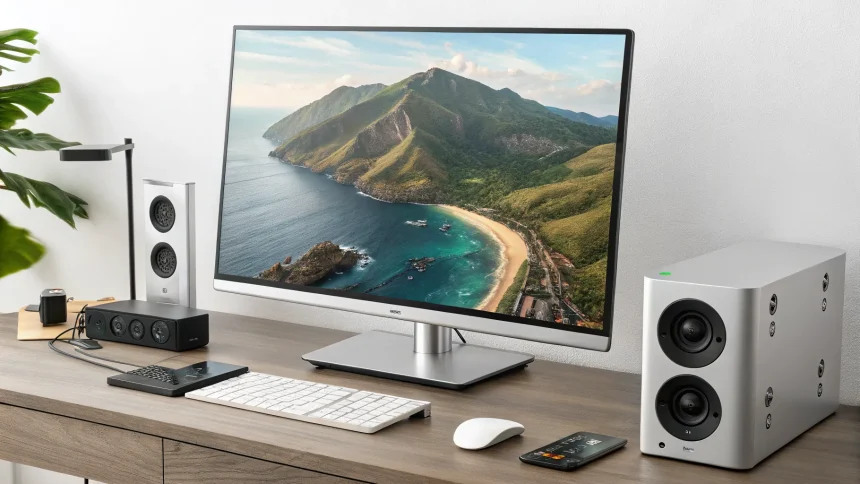
A new line of displays is arriving with upgraded cameras, enhanced sound systems, and Thunderbolt 5 connectivity, signaling a push to make monitors do more than show pixels. The announcement points to a shift in how people expect screens to handle video calls, audio, and high-speed links in one setup. The move matters for office workers, creators, and gamers who want fewer cables and better built-in tools.
The new displays come with better cameras, new sound systems, and Thunderbolt 5 ports.
While details on sizes, prices, and release timing were not disclosed, the feature mix suggests an effort to simplify desks and improve day-to-day use. It also hints at how display makers are responding to steady demand for hybrid work gear and creator-ready connections.
Why Built-In Cameras and Sound Are Back in Focus
During the last four years, video calls turned from a nice-to-have into a daily task for many offices and schools. Monitors that add higher-quality webcams and mics cut the need for separate devices and cables. Better speakers also help when external soundbars are not practical.
Users have long complained that many monitor webcams are grainy and poor in low light. If the new models raise image quality and improve noise handling, they could offer a simple upgrade for large teams. Integrated audio would also remove a common pain point for hot-desk setups.
What Thunderbolt 5 Could Change
Thunderbolt 5 is the latest high-speed standard backed by Intel. It targets up to 80 gigabits per second of bandwidth, with a mode that can reach up to 120 gigabits for displays. That allows more external monitors, faster storage, and high-performance docks over a single cable. It also supports power delivery, which can charge laptops through the display if implemented by the maker.
For creators, that bandwidth helps with large files and external GPUs in supported systems. For offices, it means simpler docking, fewer dongles, and cleaner desks. Gamers may see higher refresh rates on high-resolution panels when paired with capable hardware.
Key Additions at a Glance
- Upgraded webcams for clearer video calls.
- New integrated sound systems for meetings and media.
- Thunderbolt 5 ports for higher bandwidth and single-cable setups.
Compatibility and Trade-Offs
Shifting to Thunderbolt 5 will raise questions about backward compatibility and cabling. Most vendors maintain support for older USB-C and Thunderbolt versions, but speeds and features can vary by port and cable. Buyers should check laptop support, power delivery limits, and the number of display streams.
Integrated webcams and speakers improve convenience, yet some professionals still prefer external gear for top-tier image or audio quality. The choice often comes down to cost, desk space, and how much performance is needed for work or streaming.
Market Context and Demand
Monitor sales surged earlier in the remote work boom, then cooled as upgrades slowed. Interest is returning in models that combine screen quality with smart I/O. Vendors are responding with hubs, KVM features, and high-refresh or color-accurate panels.
Adding strong video and audio features could help these new displays stand out without forcing buyers into full conferencing bars. For IT teams, single-cable docking reduces setup time and support tickets. For freelancers and small studios, it can cut gear costs and travel weight.
What to Watch Next
Real-world performance will depend on camera sensors, mic arrays, and speaker tuning, which were not specified. Power delivery limits on Thunderbolt 5 also matter, as some workstations need higher wattage. Early reviews will likely focus on webcam quality, fan noise if any, and how well the displays manage multiple inputs.
Software support is another factor. Reliable firmware, easy updates, and clear on-screen controls can make or break a complex monitor. If the new models deliver on video clarity, audio presence, and high-speed connectivity, they could become default picks for modern desks.
The next few months should reveal panel specs, color performance, and pricing tiers. Buyers should track compatibility lists and look for tested cables. If execution matches the promise, single-cable desks with better calls and faster workflows may soon be standard.