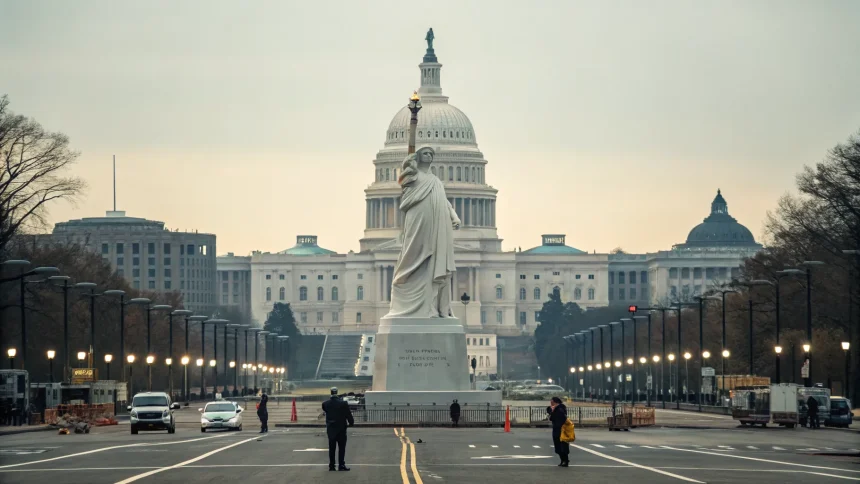
A 12-foot statue unveiled by a group calling itself The Secret Handshake drew a swift rebuke from the White House, igniting a fresh clash over public art, politics, and space. While details about the work, its location, and its message remain scarce, the size and speed of the response signal a dispute that could grow beyond the installation itself.
What We Know
The organizers announced the display and connected it to their group’s identity. The federal response framed the installation as objectionable, though officials did not release additional context alongside the condemnation reported here.
“The 12-foot statue was unveiled by The Secret Handshake group.”
“The White House has condemned the display.”
- The work’s height is 12 feet.
- The unveiling was led by The Secret Handshake group.
- The White House issued a public condemnation.
Context: Art, Protest, and Permission
Public installations often collide with rules, politics, and taste. Large works can require permits to address safety, crowd control, and property concerns. When an installation appears without clear approval, questions follow: Who funded it? Who allowed it? Who is accountable for upkeep and safety?
Disputes over public art are not new. Debates over monuments, guerrilla installations, and protest sculptures have tested city halls and courthouses for years. The common thread is visibility. Put something tall in a shared space and people will argue about what it says and who it serves.
Even without specifics on this piece’s imagery or site, the White House reaction elevates the stakes. Federal criticism can pressure local officials, influence law enforcement responses, and shape public opinion before a city or venue weighs in.
Reactions and Message
The Secret Handshake group staked clear ownership by unveiling the statue under its name. That move suggests the group views the work as part of its identity or mission, even if the content of the piece is not yet public here. The White House’s condemnation signals concern about the work’s message, placement, or timing.
Such standoffs often hinge on meaning. Is the piece satirical, celebratory, or accusatory? Location can be the message, too. A sculpture near a civic building reads differently than the same piece in a private gallery. Without those specifics, the dispute centers on principle: who decides what belongs in shared space.
Rules, Risks, and Responsibility
At 12 feet, the structure is not trivial. Officials typically examine structural stability, insurance, and emergency access for large works. If the installation bypassed normal review, removal or fines could follow. If it was approved, the controversy shifts to political taste rather than procedure.
Online debate often accelerates these fights. Supporters call it expression; critics call it provocation. What starts as art criticism can turn into security planning if crowds gather. That makes clarity on permits and stewardship essential. Who maintains it if storms hit? Who pays if it falls?
Why It Matters
The clash highlights a broader tension. Public spaces are stages for speech, but stages come with rules. When federal leaders weigh in, local choices can get nationalized fast. That can rally supporters on both sides, increase legal scrutiny, and shorten the timeline for decisions about removal or protection.
The episode also hints at a trend: groups using large-scale works to command attention. Size forces a response. Condemnation can amplify a message as much as celebration does, sometimes more.
What To Watch
- Whether local authorities confirm permits or order removal.
- Any further explanation from The Secret Handshake group about the piece’s meaning.
- Follow-up statements from the White House clarifying its concerns.
- Potential legal action over property, safety, or speech rights.
For now, two facts are set: the group unveiled a 12-foot statue, and the White House condemned it. The rest depends on what the work depicts, where it stands, and how officials, courts, and the public choose to respond. Expect quick moves on permits and security, and a longer debate about the line between expression and disruption. In other words, the next chapter will be written where art meets authority—and where every inch of height seems to raise the volume.