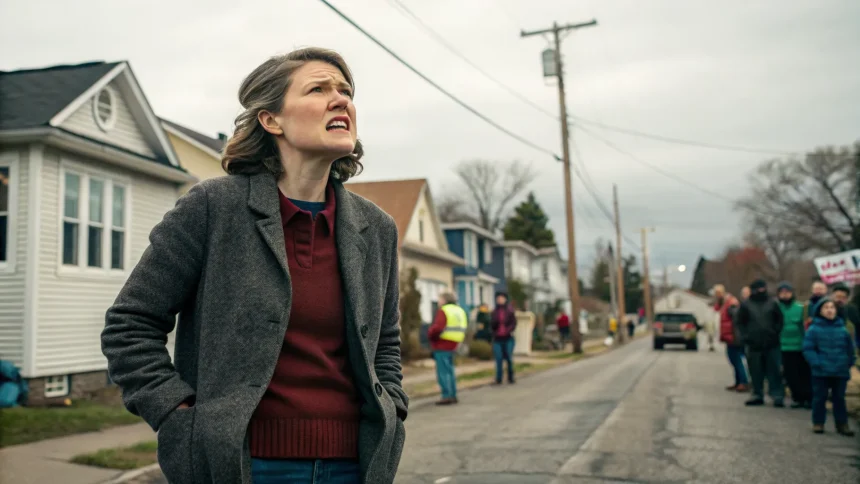
Hannah Spencer, a former plumber turned candidate, won a key race that many had framed as a test of nationalist populist strength. Her victory challenges claims of a broad surge aligned with the Trump administration and spotlights voter interest in grounded, local-focused leadership.
The result arrives amid heated debate over whether nationalist populists are expanding their reach across races. Spencer’s working-class background and practical message set her apart in a contest expected to track national storylines. Instead, the outcome hints at a more complex political map, where local credibility can outweigh partisan branding.
A Blue-Collar Profile With Local Appeal
Spencer’s path from the trades to elected office offers a familiar yet powerful narrative. Voters across regions have shown interest in candidates who reflect daily economic concerns. Her years as a plumber gave her a direct line to issues like job security, cost of living, and infrastructure maintenance.
That biography helps explain why some swing voters break from national trends. It also shows how personal trust and service records can shape turnout. The campaign leaned on door-to-door outreach and community events, according to people close to the effort. That grassroots focus can beat high-dollar messaging when voters want problem-solving over performance.
Challenging a Simple Storyline
The victory for Hannah Spencer, a plumber before she entered politics, complicates the wider narrative of a surge by nationalist populists backed by the Trump administration.
This assessment highlights a key tension. Many recent contests have been interpreted as validation for nationalist populist strategies. Yet Spencer’s win suggests that the political climate is less binary. Voters often weigh local services, safety, and affordability more than national ideological branding.
Supporters of nationalist populists argue that one race proves little. They point to areas where endorsements and culture-war themes still drive turnout. Others say Spencer’s win shows fatigue with broad-brush slogans and a renewed demand for practical results, especially on wages, utilities, and public works.
Signals From the Ground
Several factors likely shaped the outcome:
- Local issues, such as roads, water systems, and energy costs, appeared to dominate conversations.
- Spencer’s hands-on trade experience helped her claim credibility on infrastructure planning and spending.
- Moderate voters looked for steadiness and clear plans, rather than sharp national rhetoric.
Campaign veterans note that candidate quality still matters. Where voters know the person on the ballot, biography and trust can blunt nationalized messages. Spencer’s profile fit that mold. Her policy focus and calm tone appealed to constituents wary of constant conflict.
Implications for Parties and Movements
For nationalist populists, Spencer’s win poses a tactical problem. If local races turn on service delivery and budgets, national endorsements may lose impact without strong ground games. For their rivals, the lesson is not to overread a single result. A message built on practical competence can work, but it must match district needs.
Parties on both sides may recalibrate. Expect more candidates who can speak to trades, small business, and municipal fixes. Expect fewer campaigns driven by viral moments that fail to address utilities, zoning, or permitting backlogs.
What to Watch Next
Observers will look for repeat patterns in upcoming primaries and municipal races. Do voters continue to reward candidates with hands-on experience? Do national endorsements move numbers when local concerns are top of mind? The answers will shape fundraising, messaging, and recruiting.
Spencer’s victory, while a single data point, presses campaigns to test assumptions. The race hints that political strength may come from credibility built block by block. If that holds, attention will shift from headline battles to the quieter work of fixing what voters see every day.
Spencer’s win stands as a reminder that elections are won where people live and work. The biggest takeaway is straightforward: show a plan, show up, and show results. Parties that do so will likely have the edge in the contests ahead.