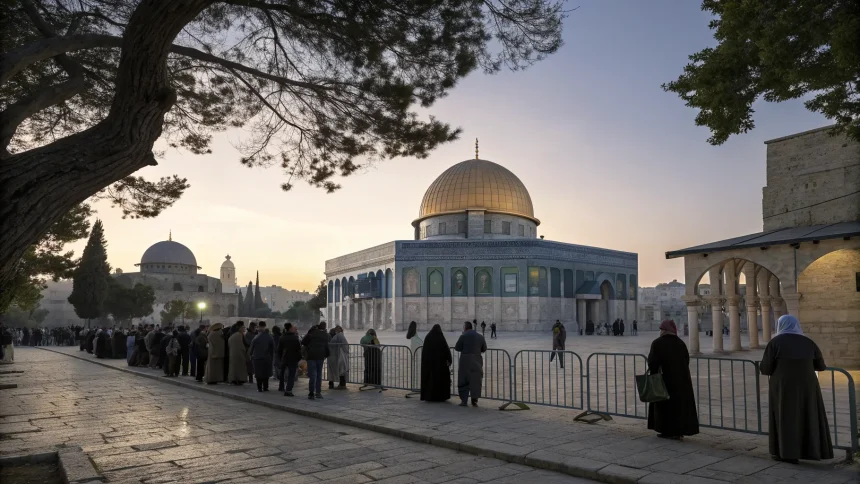
Before sunrise, an Associated Press photographer documented Palestinians lining up to enter Al-Aqsa Mosque during Ramadan, revealing a quiet, tense routine that starts in darkness and ends in prayer. In Jerusalem’s Old City, worshippers moved through gates and checks to reach one of Islam’s most sacred sites, during the month marked by fasting, reflection, and community.
The scene mixes devotion and delay. People arrive early, some from nearby neighborhoods and others from across checkpoints. Security officers direct foot traffic. Metal detectors hum. Bags are searched. Inside the compound, the courtyards fill as dawn breaks.
Why It Matters Now
Ramadan brings a surge of worshippers to Al-Aqsa, known to Muslims as the Noble Sanctuary and to Jews as the Temple Mount. Access and crowd control shape who can pray and when. In recent years, entry rules have shifted, with age limits and permits often debated and adjusted. Each day begins with the same question for many families: Will everyone get in?
The compound’s status is at the heart of the city’s politics and faith. The site is managed by the Islamic Waqf. Israeli police control access at the gates. Small changes at the entrances can ripple across the city and far beyond. The photos capture that fragile morning balance.
Pre-Dawn Rituals and Roadblocks
For many Palestinians, the route is as familiar as it is uncertain. It starts with a plan made the night before and a wake-up call hours ahead of the first prayer. Then comes the walk, the bus ride, or the drive to a checkpoint or city gate. The lines form well before light.
- ID checks at entry points
- Security screening and bag searches
- Waiting in narrow alleys near Old City gates
- Final screening at the compound entrances
- Quick steps to secure a prayer spot before the call to prayer
Elders often move to the front. Parents guide children through turnstiles. Volunteers hand out water and dates for those who will fast after sunrise. The photos show tired faces and steady patience. The mood is focused. Conversations stay low. Everyone watches the clock.
A Site Heavy With History
Al-Aqsa Mosque sits atop a hill that anchors centuries of faith and contest. It is the third holiest site in Islam. The larger compound also includes the Dome of the Rock. For Jews, the plateau is where the First and Second Temples once stood. Tension and reverence live side by side here, and even small confrontations draw wide notice.
During Ramadan, nightly prayers, Friday gatherings, and special observances add pressure to entrances and exits. Crowd management becomes a daily test. The visual record from before dawn shows the system under strain, yet still functioning. It is orderly, but not effortless.
Security, Access, and Daily Life
Rules shape the flow. They can differ by day, by gate, or by the expected size of the crowd. Some worshippers travel from the West Bank and wait for hours, depending on the permits in place. Others live steps away and still line up in the dark to be sure they get inside on time.
The images suggest a few themes. Access is not guaranteed. Time is precious. The path to prayer is as much about endurance as it is about faith. Security personnel aim to prevent clashes and keep order. Worshippers aim to reach the mosque with dignity and calm.
What the Images Reveal
The photographer’s early arrival shows what most people never see: the preparation before the moment of worship. The pictures highlight small scenes that tell a bigger story. A boy clutches his father’s hand. A woman adjusts her scarf while waiting in a metal line. An officer waves a group forward, then holds up a palm to pause the next group.
Inside the complex, the pace changes. Shoes come off. People spread prayer rugs. The dawn call rises over the limestone. Tension gives way to routine. By then, the lines, the scans, and the searches fade, if only for a while.
What to Watch
As Ramadan continues, attention will focus on crowd size, the ease of entry, and any shifts in rules. Religious leaders will urge calm and patience. Security officials will watch for flashpoints. Families will plan their routes and hope for smooth mornings.
The photos offer a simple truth. Faith draws people to Al-Aqsa before the city wakes. The path is not simple, yet they keep walking. The story each morning is the same, and still urgent: arrive early, wait your turn, and make it to prayer.
What comes next depends on policy, restraint, and a bit of luck at the gates. For now, the pre-dawn lines tell the story best—quiet determination on the road to a sacred place.