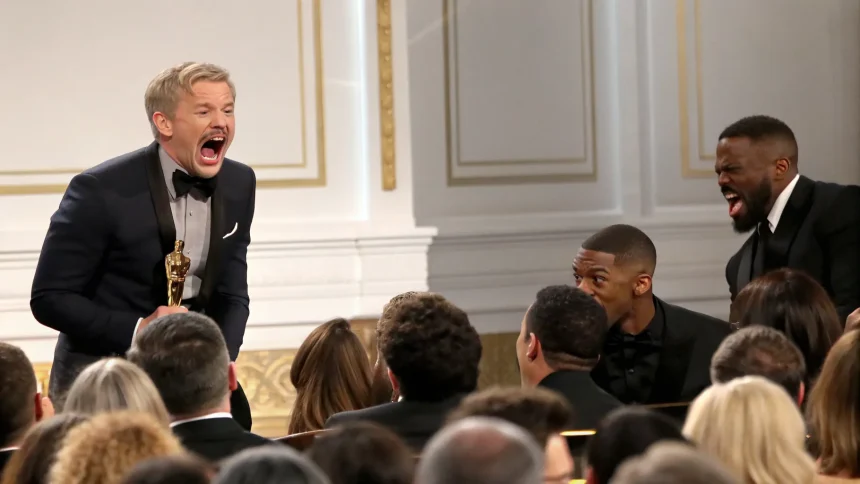
A London awards ceremony was jolted when Tourette’s campaigner John Davidson shouted during a live presentation by Michael B. Jordan and Delroy Lindo. The moment came as the actors, both Black, presented the award for special visual effects. The interruption sparked debate over live broadcasts, disability awareness, and the harm of racist language.
The incident placed two truths in sharp relief. A racial slur, even when not directed at anyone, can wound. Tourette syndrome can cause involuntary outbursts that the speaker cannot control.
What Happened Onstage
“Tourette’s campaigner John Davidson could be heard shouting the N-word as Black stars Michael B Jordan and Delroy Lindo presented the award for special visual effects in London.”
The disruption occurred during a quiet moment before the winner was announced. Presenters paused, then continued with the script. Security did not remove the campaigner, and the show moved forward.
Viewers were left to piece together what happened, while attendees exchanged uneasy looks. The clip spread quickly online, with many asking how to weigh intent, impact, and access.
A Campaigner Known For Advocacy
John Davidson is one of the United Kingdom’s most visible advocates for people with Tourette syndrome. He has spent years speaking about stigma, bullying, and the daily work of managing tics.
He rose to public attention as a teenager and has since used that platform to press for empathy and better support services. His message has been consistent: the condition is neurological, not a choice.
Understanding Tourette Syndrome And Coprolalia
Tourette syndrome is a neurodevelopmental disorder marked by motor and vocal tics. Symptoms can wax and wane and often start in childhood.
A small minority of people with Tourette experience coprolalia, which involves involuntary utterance of obscene or taboo words. Estimates vary, but clinicians place it well under one in five cases.
- Tics are involuntary and can intensify with stress.
- Coprolalia does not reflect a person’s beliefs or intent.
- Treatment can reduce tics but is not a cure.
Experts stress that context matters. An involuntary tic can still cause harm, especially when it repeats slurs that carry a long history of violence and exclusion.
Live TV, High Stakes
Live events carry obvious risks. Microphones pick up background noise. Delays are brief. Producers rely on on-site protocols to manage disruptions.
Award shows often add content delay systems and train presenters to pause and reset. Venues may brief security and accessibility teams on how to respond without escalating the situation.
Those safeguards can blunt impact, but they cannot erase what people hear. When the word is a slur, the fallout is immediate and personal.
Balancing Harm And Intent
The ethical knot here is tight. The outburst likely stemmed from a neurological condition. The word itself carries deep pain, especially for Black audiences and artists onstage.
Disability advocates urge understanding and accommodation. Anti-racism advocates emphasize the damage caused by hearing that word in public spaces.
Both can be true. Event planners face a practical question: how to protect attendees while respecting disability rights. Clear guidelines, trained staff, and smart staging can help.
What Organizers Can Do Next
Policy updates after such moments tend to focus on prevention and care. That includes preparation before the show and response afterward.
- Extend content delays for sensitive segments.
- Brief presenters on pause-and-proceed protocols.
- Position trained staff to assist guests with tics discreetly.
- Offer public explanations that do not shame individuals.
- Center those harmed, including onstage talent and attendees.
The London ceremony will be remembered for a wince-inducing interruption. It also spotlights a larger conversation that often gets rushed. People with Tourette deserve understanding. Audiences deserve safety. Organizers have to plan for both.
Expect future broadcasts to tighten delays and rehearse contingencies. Watch for venues to expand accessibility training while setting clear, compassionate response plans. The goal is simple: protect people from harm without punishing disability. Getting there takes care, accountability, and better planning before the lights come up.