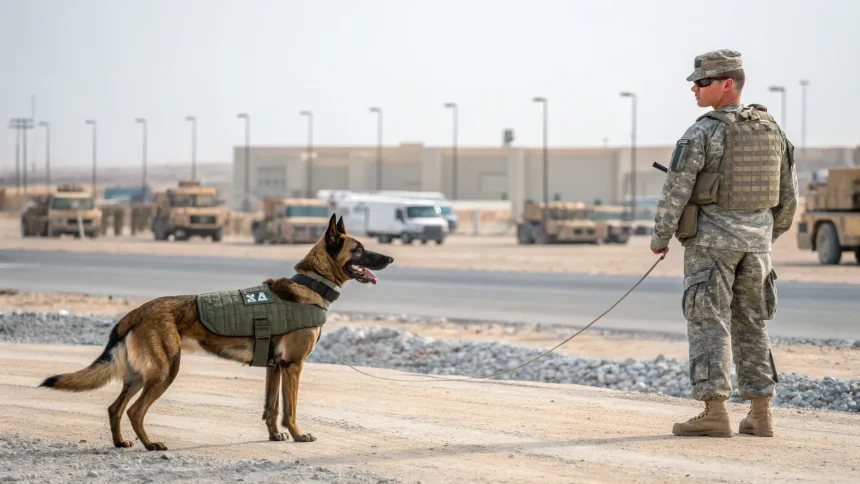
The Pentagon’s internal watchdog has urged the military to scale back its ranks of military working dogs until there are enough trained caretakers to meet welfare standards. The recommendation comes amid ongoing staffing constraints across units that rely on dogs for patrol, detection, and protection missions.
The guidance, issued by the Pentagon inspector general, states that the force should match the number of animals to the number of handlers and support personnel available. It signals a shift toward prioritizing daily care and training time over sheer capacity. The recommendation could affect bases in the United States and abroad where canine teams play critical roles in security operations.
The Pentagon inspector general recommended the military reduce the number of military working dogs until there are enough caretakers to provide all dogs with satisfactory care.
What the Watchdog Found
The inspector general’s statement highlights a simple equation: too many dogs and too few caretakers leads to gaps in care. The concern centers on basic needs such as exercise, medical attention, and consistent training. Without enough handlers, even well-trained dogs can lose proficiency and face higher health risks.
While the watchdog did not share numbers in the statement, the directive points to a persistent staffing challenge. Units often depend on a small pool of handlers, veterinary staff, and kennel support. When that pool shrinks, the strain shows first in kennel schedules and training quality.
Strain on Handlers and Kennels
Handlers are the backbone of canine programs. They manage training, patrol duties, and daily care. When short-staffed, they take on longer shifts and more dogs per person. That increases fatigue and limits the time each animal receives for exercise and drills.
Veterinary technicians and kennel managers also face pressure. Routine checks, vaccinations, and enrichment activities can slip when teams juggle too many animals. Small issues then risk becoming bigger medical or behavioral problems. The inspector general’s advice aims to prevent that cycle.
Security and Mission Readiness
Military working dogs are force multipliers for base security and explosives detection. They screen vehicles, sweep facilities, and support deployments. Reducing the number of teams could mean tighter scheduling and fewer patrols.
Commanders may have to prioritize missions where canine skills are essential. That could include explosive detection for high-risk events, critical infrastructure sweeps, and specialized patrols. In the near term, leaders will weigh risk against the time needed to rebuild staffing.
Possible Paths Forward
The recommendation points to several practical steps. Units could pause new dog assignments until handler training pipelines catch up. Kennels might rebalance workloads across installations. Veterinary teams may receive targeted support to manage backlogs.
- Align dog assignments with available handlers and kennel staff.
- Adjust training and certification schedules to protect quality.
- Prioritize missions that require canine capabilities most.
A measured drawdown can also create space for refresher training. That helps maintain detection accuracy and obedience standards. It also gives new handlers more supervised time with their dogs, improving safety and performance.
Animal Welfare and Public Trust
The inspector general’s message speaks directly to animal welfare. Dogs that receive regular care, exercise, and attention are healthier and more effective. Transparent steps to protect welfare can also build public confidence in the program.
Advocates for service animals have long urged clear staffing ratios and humane kennel conditions. The recommendation aligns with those priorities. It suggests the military will be judged not only on mission results, but on how it treats the animals that support those results.
What Comes Next
Implementation will depend on each service branch and installation. Leaders will review staffing levels, mission demands, and kennel capacity. They will likely phase in changes to avoid sudden gaps in coverage.
The central test will be balance. The military must protect bases and personnel while meeting high standards of care for its dogs. Matching the number of animals to the number of skilled caretakers is the standard the watchdog has now set.
The recommendation signals a clear priority: safeguard the health and training of every working dog. The next few months will show how quickly units can staff up, adjust schedules, and keep vital missions on track.