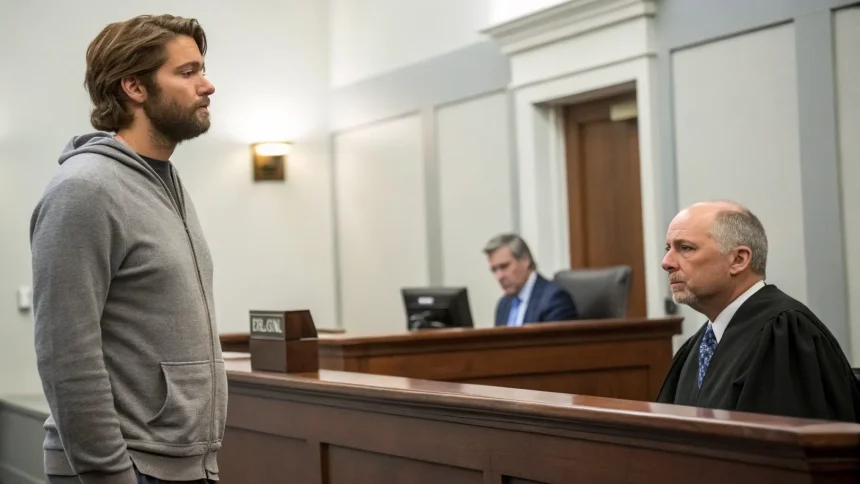
In a brief court appearance, Nick Reiner pleaded not guilty to murder charges in the deaths of his parents, Rob and Michele Reiner, a case that prosecutors say could carry the death penalty if it results in a conviction.
The plea sets up a lengthy legal fight over the circumstances of the killings and how the state may pursue punishment. The case has drawn attention for its severity and the possibility of capital charges.
The Charges and the Plea
Reiner faces two counts of murder in connection with the deaths of his parents. He entered a not guilty plea, which means the case will move into pretrial motions and evidence review.
At this early stage, few details about the investigation have been made public. Prosecutors have not laid out a full timeline in court. Defense attorneys have not commented beyond the plea.
“Nick Reiner pleaded not guilty to murder charges in the killings of his parents, Rob and Michele Reiner.”
The court will next decide scheduling and any limits on what can be presented to a jury. Bail, if considered, would likely hinge on the severity of the charges.
Death Penalty on the Table
Prosecutors signaled they may seek the death penalty if a jury finds Reiner guilty. That decision requires separate filings and a formal notice to the court.
“NBC News’ Morgan Chesky reports on the prosecution’s potential use of the death penalty if Reiner is found guilty.”
Capital cases unfold in two phases. If a jury convicts, the same jury hears additional evidence on punishment. Aggravating and mitigating factors then guide the final decision.
How Capital Cases Proceed
States that allow capital punishment have strict rules for seeking it. Prosecutors typically weigh the nature of the crime, the number of victims, and any prior record.
Defense teams can present evidence about the defendant’s background, mental health, and other circumstances. Judges instruct jurors on how to weigh that information.
Appeals in capital cases can last for years. Automatic review is common, and courts scrutinize both the verdict and the sentence.
Wider Context and Trends
Nationally, the use of the death penalty has declined over the last decade. Some states retain it but rarely pursue it. Others have paused executions through policy or practice.
Jury selection in potential capital cases tends to be longer and more complex. Lawyers must find jurors willing to consider both life without parole and death.
Public opinion on capital punishment remains mixed. Support often rises in cases involving multiple victims, but concerns about cost and fairness persist.
What to Watch Next
The next phase will likely focus on filings and hearings that shape the trial. Key decisions include whether prosecutors formally notice a capital case and how evidence is handled.
- Any motion from prosecutors to seek the death penalty
- Defense motions to suppress or limit evidence
- Scheduling for pretrial hearings and jury selection
If the state files a notice to seek death, both sides will adjust strategy. The defense may bring in mitigation specialists. The prosecution may call experts on forensics or victim impact.
Balancing Justice and Process
Two grieving families’ stories will be told in court: those of Rob and Michele Reiner, and that of the accused. The legal system must handle both with care.
The not guilty plea preserves Reiner’s rights and forces the state to prove its case. A potential capital filing would raise the stakes and the scrutiny on every step.
For now, the case sits at the starting line. The big questions—what happened, why it happened, and how punishment should be decided—will be answered in court, not speculation.
As the case advances, watch for the state’s formal decision on capital punishment and the court’s rulings on evidence. Those choices will shape the trial’s course and its outcome.