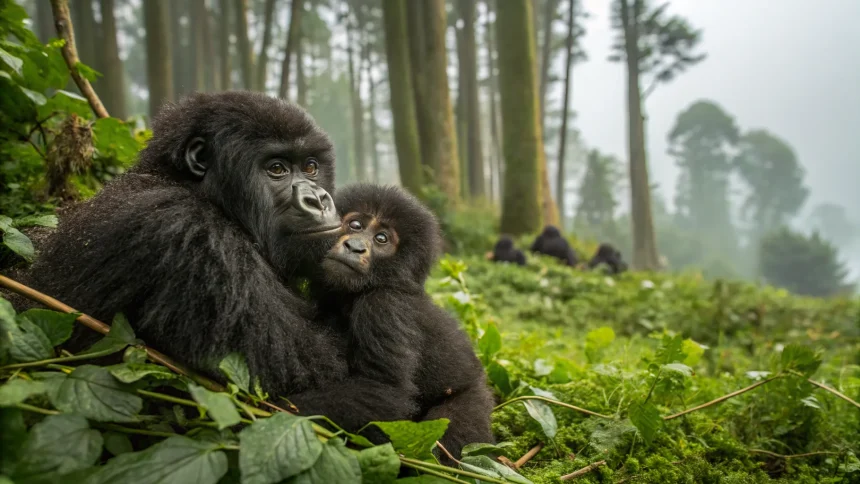
Virunga National Park has announced the birth of rare male twins, a hopeful start to the year for one of the world’s most endangered great apes. The twins arrived on January 3 in the Democratic Republic of the Congo, adding fresh momentum to a fragile conservation success story in Central Africa.
Park staff reported the birth inside the protected area, home to mountain gorillas and a well-known frontline for wildlife protection. The news signals progress after years of security challenges, disease threats, and habitat pressure that have tested the park and its rangers.
Why Twin Births Matter
Twin births among mountain gorillas are rare in the wild and demand extra care from the mother and her group. Both infants must compete for milk and attention. This can strain the mother and raise risks for the newborns during their first months of life.
“The male twins were welcomed on Jan. 3 in the Virunga National Park in the Democratic Republic of the Congo.”
The park did not release further details about the mother or her group, but such births are often watched closely. Rangers typically increase monitoring to track feeding, bonding, and group protection, especially if the twins are born to a first-time mother.
Gorillas On The Edge, With Signs Of Hope
Mountain gorillas, a subspecies of the eastern gorilla, live in only two regions: the Virunga Massif, which spans DRC, Rwanda, and Uganda, and Uganda’s Bwindi Impenetrable National Park. Their global population has grown over the past decade due to ranger protection, veterinary care, and regulated tourism. Even with these gains, they remain classified as Endangered by the International Union for Conservation of Nature.
Virunga’s rangers face dangers that go far beyond wildlife protection. Armed groups operate in the region, and poaching, charcoal production, and land pressures complicate daily patrols. The park has invested in community projects and tourism to create jobs and funding, but instability often disrupts operations.
Inside Virunga’s Conservation Playbook
The twin birth highlights conservation tactics that have helped stabilize gorilla numbers:
- Daily patrols to dismantle snares and deter poaching.
- Close monitoring of family groups to track births and health.
- Rapid veterinary response to injuries and disease outbreaks.
- Strict tourism limits to reduce stress and disease transmission.
These steps are labor-intensive and costly. Yet they have proven effective when backed by steady funding, cross-border coordination, and strong local partnerships.
Health Risks And Early Days
First weeks are critical for gorilla infants. The mother must carry, nurse, and shield them, often with help from the group’s silverback and other females. For twins, feeding can be a challenge if one infant lags in weight or clings less strongly.
Veterinary teams watch for respiratory disease, wounds from falls, and signs of maternal fatigue. If an infant weakens, survival odds drop quickly. That is why the park’s monitoring protocols, refined over years of fieldwork, can make a difference.
Regional Stakes And What Comes Next
Virunga’s gorillas are more than a conservation symbol. They are central to a tourism economy that supports local jobs and helps pay for ranger operations. Stability brings visitors. Visitors help fund protection. That cycle is fragile but powerful when it holds.
Experts say the next steps will focus on sustained monitoring of the twins, continued anti-poaching patrols, and careful management of any tourist access. Cross-border coordination with Rwanda and Uganda also remains important, since gorilla families range across national lines in the Virunga Massif.
Reading The Signals
One birth does not change the outlook. But two, at once, sends a clear signal that healthy groups can thrive when protected. The coming months will test the resilience of the mother and her family, and the capacity of the park to maintain security and care.
For now, the news offers a bright marker at the start of the year and a reminder that patient protection works. If the twins grow strong, they will add to a fragile recovery and draw fresh attention to a park that guards life under pressure.