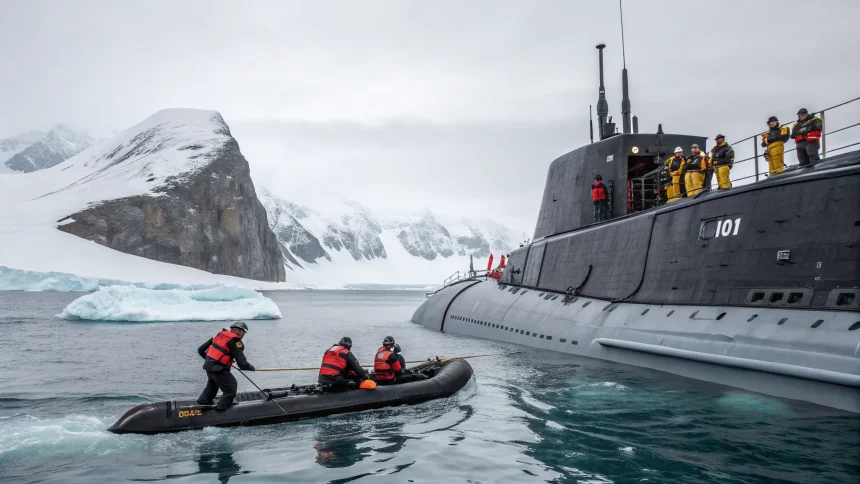
Denmark’s military reported that its Arctic command evacuated a crew member from a U.S. submarine off Greenland for urgent medical care, highlighting the high-stakes demands of rescue operations in the far north. The operation took place off the coast of Greenland, where Denmark’s Joint Arctic Command oversees search and rescue. The nationality of the sailor, the submarine’s identity, and the patient’s condition were not disclosed.
“Denmark’s military says its arctic command forces evacuated a crew member of a U.S. submarine off the coast of Greenland for urgent medical treatment.”
The statement points to close cooperation between Danish authorities and the United States in a region where extreme weather, large distances, and limited infrastructure can turn medical events into life-and-death emergencies. It also reflects standing rescue responsibilities Denmark holds for Greenlandic waters.
A High-Stakes Rescue in Arctic Waters
The Arctic presents a unique mix of hazards for mariners and submariners alike. Sea ice, freezing temperatures, and fast-changing conditions can slow or block standard routes for ships and aircraft. Medical issues at sea often require quick coordination among military units, civilian providers, and, at times, allied partners.
While the military gave few details, such evacuations typically require careful planning to locate the vessel, stabilize the patient, and choose a safe transfer point. Nighttime operations, low visibility, and icing risks can complicate flight or small-boat approaches. Even in calm weather, distances between ships and shore-based hospitals can be vast.
Who Responds in Greenland’s Waters
Denmark’s Joint Arctic Command is responsible for search and rescue, fisheries inspection, and maritime safety around Greenland and the Faroe Islands. Headquartered in Nuuk, the command coordinates with local authorities and allied militaries when incidents involve foreign vessels, including those of NATO members.
- Large search areas and sparse infrastructure demand flexible rescue plans.
- Cold exposure and hypothermia risks raise the urgency of evacuations.
- Limited daylight in parts of the year can reduce flying windows.
Greenland’s communities, ports, and airfields are spread across a coastline longer than that of many countries. That geography influences how Denmark stages patrols and prepares for medical emergencies at sea.
U.S.-Danish Cooperation in the High North
Denmark and the United States maintain long-standing defense ties in the Arctic. The United States operates strategic facilities in Greenland under defense agreements with Denmark, and both countries are NATO allies. Coordination on safety and rescue reflects shared interests in keeping sea lanes open and supporting crews in distress.
In the Arctic, allies often coordinate under international search and rescue frameworks. These frameworks set out who leads a response in specific regions and how countries assist each other. Clear lines of responsibility help reduce delays when a vessel calls for help far from shore.
Why Timely Evacuation Matters
Medical issues aboard submarines can escalate quickly due to limited space, pressurization concerns, and the need to maintain secure operations. Getting a patient to definitive care is often the best option if on-board treatment is not enough.
In practice, that can mean surfacing in safe waters, arranging a rendezvous with a rescue asset, and moving the patient through cold, wet, and unstable conditions. Every step requires training and coordination to avoid putting rescuers or other crew at risk.
What We Know and What Comes Next
The Danish military did not release the sailor’s condition or the name of the submarine. There was no indication of environmental damage or other safety risks connected to the incident. The focus remained on delivering urgent medical treatment as quickly as possible.
Analysts tracking Arctic operations will watch for follow-up details, including whether winter conditions or sea ice complicated the response. They will also look for lessons on response time, staging, and communication—issues that shape future rescues in remote waters.
As shipping, research, and defense activities continue in the Arctic, more missions will rely on rapid coordination among allies. This evacuation underscores three takeaways: the importance of trained rescue forces in Greenland’s waters, the value of clear international roles, and the need to move fast when minutes matter.
For now, the successful transfer for treatment stands as the latest reminder that medical emergencies at sea do not wait for ideal weather or location. Preparedness, standard protocols, and steady cooperation remain the keys to getting people home safe.