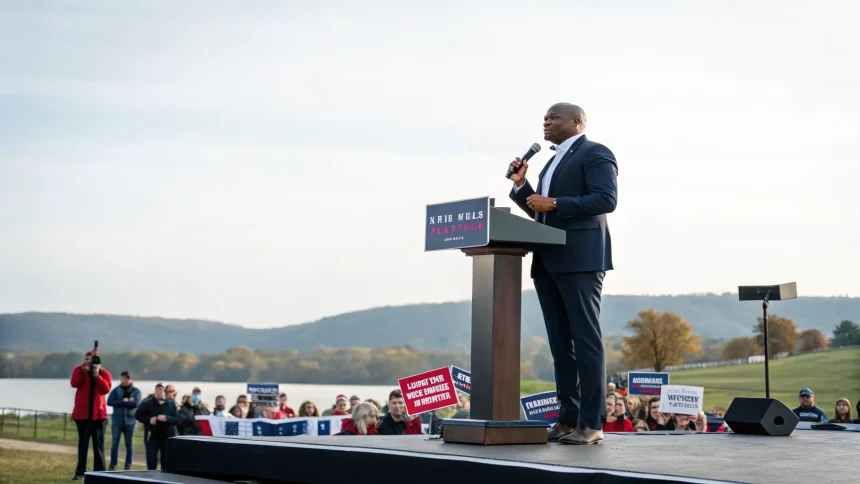
Maryland Gov. Wes Moore is embracing a public confrontation with former President Donald Trump, turning a brief flare-up into a full-throated contrast in style and priorities. The first-term Democrat, leading a deep-blue state, appears ready to use the moment to sharpen his profile while testing a familiar tactic in modern politics: pick a fight with a national figure and keep it going.
After finding himself at the center of a high-profile skirmish with President Donald Trump, Maryland Gov. Wes Moore is leaning into the clash.
The exchange arrives as both parties look for energy and headlines. For Moore, the dispute offers a chance to define himself on a bigger stage. For Trump, it provides another foil as he rallies his base and drives news coverage.
Why the Confrontation Matters
Maryland seldom plays in national partisan brawls. Yet Moore, a rising Democrat with a veteran and nonprofit background, has drawn attention since taking office. He leads a state where Democrats hold wide power, but national fights still shape local agendas, donor interest, and media oxygen.
For Trump, conflict with prominent Democrats is a tested method to unify supporters and frame issues on his terms. Even a short exchange can dominate the conversation, pulling state leaders into a national narrative they did not ask for—but can learn to use.
Moore’s Political Calculus
Leaning in signals that Moore sees advantage in the spotlight. It can help with fundraising, message discipline, and mobilizing voters who want a clear contrast with Trump-era politics. It also gives Moore a national microphone on issues he favors, from economic mobility to public safety.
The move fits a broader pattern in which state leaders step into national debates to gain leverage at home. It is also a test: managing a headline fight while keeping the day job focused on budgets, schools, and infrastructure.
Trump’s Playbook and Response
Trump’s formula is familiar: pick sharp targets, force rapid reactions, and keep the frame on strength, loyalty, and grievance. The former president thrives in fast cycles and public spats, where attention is a resource and escalation is a tactic.
A clash with a Democratic governor in a safe blue state is low risk for him. Even if he loses no votes there, he can still raise money, rally supporters elsewhere, and shape the media’s topic list for days.
What Each Side Gains—and Risks
- Moore’s gains: National exposure, a clear contrast with Trump, and momentum with Democratic donors and activists.
- Moore’s risks: Overexposure, distraction from state policy work, and blowback if the fight seems more theater than substance.
- Trump’s gains: A new foil, fresh attention, and a chance to unify supporters with familiar themes.
- Trump’s risks: Helping elevate a younger rival and hardening suburban resistance in nearby swing regions.
Signals To Watch
How Moore frames the dispute will matter. If he ties it to kitchen-table concerns—prices, jobs, safety—he keeps the focus on governing outcomes rather than personalities. If he gets dragged into a daily back-and-forth, the story can turn into noise.
Public reaction is the other tell. Sustained engagement from Maryland voters and small-dollar donations would show the clash has legs. A shrug would suggest the moment was more media flash than political shift.
A Wider Trend in Statehouse Politics
State leaders have become frontline messengers in national fights. Governors use their platforms to punch up, while Washington figures look for high-profile foils. It is a feedback loop: media heat drives political incentives, which create more heat.
Maryland’s political math gives Moore room to maneuver. He can challenge a polarizing national figure with less risk of backlash at home than leaders in swing states might face. But the same cushion can also raise expectations to deliver results, not just headlines.
The bottom line is simple: Moore is not backing away, and Trump never does. The next phase will show whether this clash changes minds or just fills feeds. Watch for concrete moves—policy speeches, fundraising hauls, and travel schedules—over the next few weeks. If those trends break Moore’s way, he will have turned a flashpoint into a springboard. If not, the fight will fade, and Maryland politics will return to its usual, quieter grind.