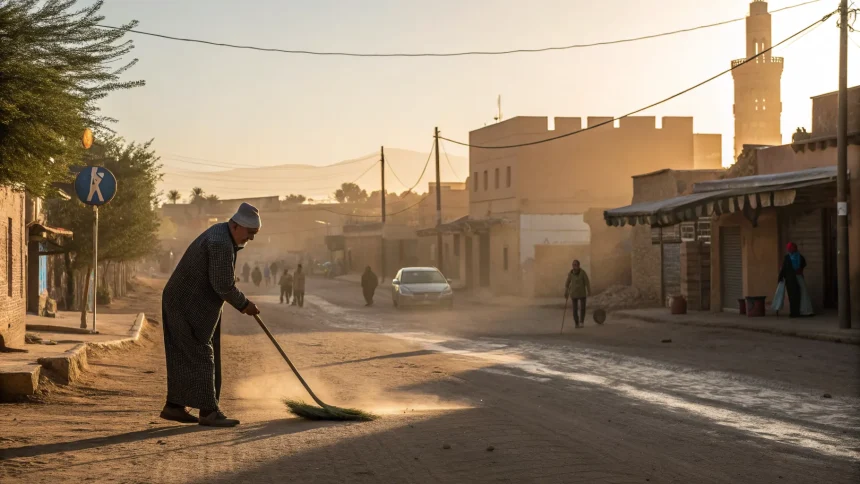
In Khenifra, a small city in central Morocco, residents still talk about a soft-spoken Frenchman whose daily routine changed public life. For decades, Jacques Leveugle swept streets before sunrise, taught free language classes, and organized outings for schoolchildren. His quiet work stitched together a network of help that the city now sees as part of its identity.
Locals knew him by sight and by habit. He appeared at dawn, broom in hand, and returned later with notebooks and chalk. The story of one person’s steady service has become a reference point for how small acts can shape a community. While formal details about Leveugle’s life remain sparse, his name carries weight in a place where public budgets are tight and social needs are many.
A Daily Routine With Lasting Effects
Residents recall how his schedule rarely changed. He cleared sidewalks, greeted market workers, and headed to informal lessons where teenagers practiced French and English. Many former students credit those lessons for helping them find jobs in tourism, retail, and administration.
“El francés delgado que barría las calles al amanecer, ofrecía clases gratuitas de idiomas y organizaba salidas para escolares.”
That description, shared in reporting on Khenifra, captures how people saw his role. He was not a founder of a large program. He was a neighbor who showed up each day. His lessons were simple and direct. He focused on conversation, basic grammar, and confidence. Field trips took children beyond their usual routes, introducing them to museums, markets, and nature nearby.
Why Language Lessons Mattered
Language learning has clear value in Morocco, where Arabic and Amazigh are official languages and French remains common in administration and business. English has also grown in schools and private centers. In smaller cities like Khenifra, access to private courses can be limited by cost and distance. Free instruction, even informal, can make a difference for students trying to pass exams or compete for work in larger towns.
Teachers in similar cities say conversation practice helps most. When classes are crowded or under-resourced, volunteers who focus on speaking can fill gaps. Leveugle’s approach matched that need. By keeping sessions open and free, he reached students who might not otherwise seek extra help.
Community Service Where Budgets Are Thin
Khenifra sits near the Middle Atlas and draws visitors for cedar forests and mountain views. Tourism brings seasonal jobs, but many families rely on local trade, crafts, and agriculture. Public services often stretch to cover basics. Street cleaning, parks, and youth programs compete for limited funds.
Volunteers often step in. Their work does not replace government services, but it can improve daily life. Swept streets make markets safer. Youth activities keep children engaged after class. Informal clubs and lessons build skills that feed into the local economy.
- Street cleaning reduces litter and improves foot traffic for vendors.
- Language skills open doors in tourism, trade, and public offices.
- School outings broaden horizons and build confidence.
Admiration, And A Note Of Caution
Local admiration for figures like Leveugle is strong. Yet urban planners and social workers point out limits. Cities benefit when volunteer efforts link with schools, town halls, and associations. Coordination avoids gaps and duplication. It also helps protect volunteers from burnout.
There is also a fairness issue. A city should not depend on unpaid labor for essential tasks. The most durable gains come when authorities build on what volunteers start. That can mean small grants, access to classrooms after hours, or help with transport for outings.
What Endures In Khenifra
The memory of Leveugle’s routine has turned into a local guidepost. Residents speak of keeping spaces clean, sharing skills, and making time for young people. A few teachers now run weekend conversation circles. Shopkeepers sponsor notebooks for students who cannot afford them. None of these steps is grand. Together, they echo the example set on those early mornings.
As Khenifra weighs its next steps, the lesson is clear. Practical help works best when it is regular, open, and close to daily life. Small acts can set new norms. City leaders could build on that by supporting neighborhood programs and keeping doors open to volunteers who want to teach or mentor.
The story of a single broom and a handful of notebooks offers a simple takeaway. Consistency builds trust. Trust builds community. Khenifra’s next chapter may depend on keeping that chain intact—and on finding new ways to link personal effort with public support.