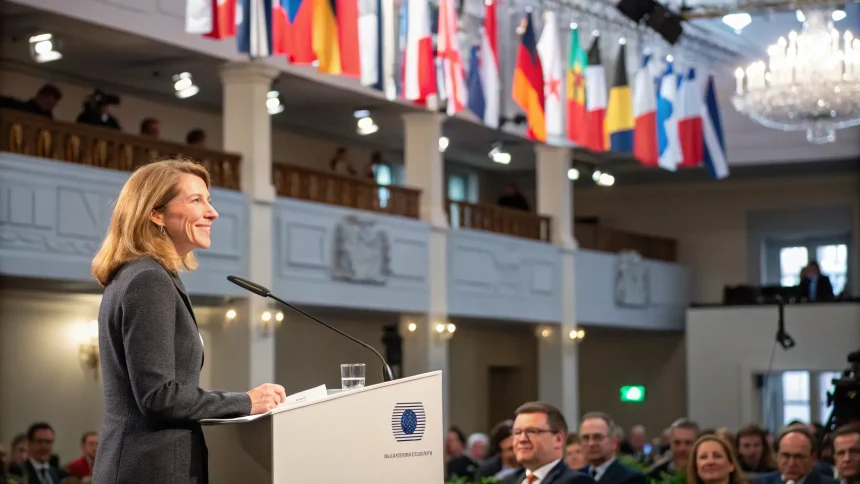
European Union foreign policy chief Kaja Kallas rejected U.S. Secretary of State Marco Rubio’s claim that Europe is a “weak ally,” setting off a sharp exchange at the Munich Security Conference. Speaking on Saturday in Munich, Kallas called the remarks “European-bashing” and argued that the continent remains strong, united, and appealing to partners across the world. The clash highlighted broader tensions in transatlantic ties over migration, culture, and strategic priorities.
Why This Matters Now
The dispute arrives as Europe and the United States seek to stay aligned on support for Ukraine, defense spending, technology controls, and energy security. Leaders on both sides have tried to present a united front. Yet disagreements over migration policy, cultural debates, and burden-sharing in security continue to flare in public forums.
At Munich, long a venue for frank talk among allies, the exchange quickly moved from talking points to a debate over Europe’s direction. Rubio framed Europe as drifting into decline. Kallas pushed back, stressing that European states have increased defense cooperation and remain committed to shared security goals.
Kallas’s Rebuttal
“European-bashing.”
Kallas used that phrase to describe Rubio’s comments, arguing they misread Europe’s current trajectory. She insisted that Europe is not faltering but adapting to new threats and pressures.
Europe remains “strong, united, and attractive to global partners.”
Her message was aimed at an American audience as much as a European one. It served as a reminder that Washington’s closest allies still see themselves as core to any strategy on security, trade, and technology.
Background: A Strain With History
Tensions inside the alliance are not new. Past disputes have centered on defense spending, trade tariffs, and approaches to Russia and China. European capitals have faced regular pressure to spend more on their militaries and to align export controls with U.S. policy. The war in Ukraine pushed many governments to raise budgets, deepen coordination, and accelerate joint procurement. Those steps have eased some concerns in Washington, though disagreements remain over speed and scale.
Migration and culture have become flashpoints. Some U.S. politicians frame European debates over asylum and social policy as evidence of weakness. Many European leaders argue that these are democratic struggles over policy, not signs of decay. They also note that Europe’s single market, research base, and regulatory weight continue to draw partners and investment.
Fault Lines Over Migration, Culture, and Strategy
Rubio’s comments tapped into three live debates:
- Migration: How to manage arrivals, share responsibility across EU states, and secure borders without violating rights.
- Culture: Disputes over identity, education, and social norms that shape domestic politics and spill into foreign policy rhetoric.
- Strategic priorities: Balancing support for Ukraine, deterrence in Europe, attention to the Indo-Pacific, and industrial policy at home.
Officials in several European capitals argue that their societies remain stable and innovative despite political strain. They cite expanded defense cooperation, new investment screening, and closer ties with partners in Asia and Africa. Critics in the U.S. counter that Europe moves too slowly and relies too much on American guarantees.
Signals From Munich
The exchange at Munich was less about one remark and more about narrative. Rubio’s warning drew a line under concerns that Europe will fall short on defense and migration control. Kallas countered with a confidence play, arguing that Europe is holding firm under pressure.
Security experts at the conference described a mixed picture. European states have improved readiness and coordination. Energy diversification advanced faster than many expected after Russia’s invasion of Ukraine. Yet ammunition production, long-term budgeting, and industrial capacity remain work in progress. These gaps fuel U.S. calls for faster action.
What to Watch Next
Several markers will test the claims from both sides. Upcoming European defense budgets, joint procurement plans, and support packages for Ukraine will show whether momentum continues. Talks over migration reform inside the EU will reveal whether leaders can find a workable balance between control and protection. Coordination with Washington on sanctions and technology will signal how tight the alliance stays under economic pressure.
For now, the message from Munich is clear. Doubts about Europe’s strength still echo in Washington. European leaders, led by Kallas this weekend, intend to answer them head-on. The next months will show whether actions match the words, on both sides of the Atlantic.