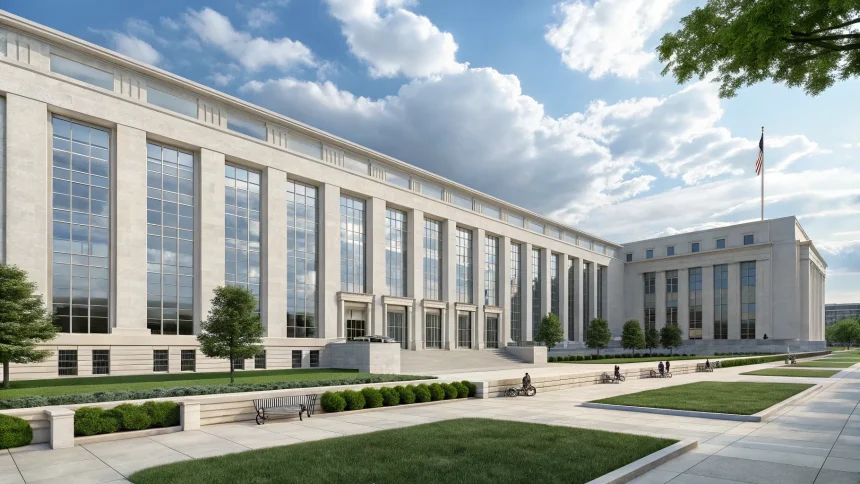
The Environmental Protection Agency is considering scrapping the federal determination that greenhouse gases threaten public health and welfare, a move that could reshape U.S. climate policy. The shift would target the 2009 “endangerment finding,” which has served as the legal basis for regulating carbon dioxide and other heat-trapping pollutants under the Clean Air Act.
Discussions are underway in Washington as officials debate how far the agency can go and on what timeline. The decision would affect rules for vehicles, power plants, oil and gas operations, and other major sources of emissions. It would also set up an intense legal and political battle over the role of science and federal authority in climate regulation.
EPA expected to scrap Obama-era ‘endangerment finding’ on greenhouse gases.
What the Endangerment Finding Does
EPA issued the endangerment finding in 2009 after reviewing scientific research on climate change. The finding concluded that six greenhouse gases, including carbon dioxide and methane, endanger public health and welfare. That determination required EPA to regulate those pollutants under the Clean Air Act when they come from major sources.
Since then, the finding has underpinned national greenhouse gas standards for passenger vehicles, efficiency rules for power plants, and methane limits on oil and gas infrastructure. It also informed permitting decisions for large industrial facilities.
The legal roots go back to the Supreme Court’s 2007 decision in Massachusetts v. EPA, which held that greenhouse gases fit within the Clean Air Act’s definition of “air pollutant.” The Court said EPA must decide, based on science, whether those emissions endanger public health and welfare. EPA’s answer in 2009 was yes.
A High Legal Bar for Reversal
Rolling back the finding would require a new scientific record strong enough to withstand court review. EPA would need to show that greenhouse gases no longer pose a threat, or that earlier evidence was flawed. That is a steep task given extensive research linking rising temperatures to extreme heat, coastal flooding, and health risks like asthma and heat-related illness.
Past court decisions have protected the finding from challenges. While the Supreme Court in West Virginia v. EPA (2022) limited how the agency designs power sector rules, it did not erase EPA’s duty to regulate greenhouse gases once they are found to endanger health and welfare.
Environmental groups would almost certainly sue to block a repeal. States that have built climate programs around federal standards could join. Industry groups may split. Some sectors want uniform national rules to avoid patchwork state policies, while others favor fewer federal mandates.
Industry and Environmental Responses
Clean energy advocates argue that scrapping the finding would inject uncertainty into markets for vehicles, power generation, and fuels. Automakers have invested billions in cleaner engines and electric models tied to long-term emissions targets. Utility companies have mapped out plans to retire coal units and add renewables, often modeled on expected federal rules.
Oil and gas trade groups may welcome a rollback of methane standards and carbon reporting requirements. But some producers favor consistent rules, saying predictable policy can lower compliance costs and reduce state-by-state differences.
Public health organizations warn that weaker climate rules could worsen air quality and heat exposure. They point to risks faced by children, older adults, and workers outdoors. City officials in coastal regions, already paying for storm defenses and flood control, say federal retreat would shift costs to local budgets.
Policy Stakes for States and Markets
If the finding is withdrawn, several outcomes are possible:
- Federal greenhouse gas standards for cars and power plants could be suspended or rewritten.
- States may expand their own climate rules, increasing regional variation.
- Long-term investments in clean energy, carbon capture, and grid upgrades could face delays or higher financing costs due to policy uncertainty.
Analysts note that market trends will still matter. Renewable power has grown as costs have fallen. Many corporations have net-zero or emissions-cutting goals that require cleaner electricity and transportation. Yet federal rules shape the pace and clarity of those shifts.
What to Watch Next
EPA would need to begin a formal rulemaking to repeal the finding, including a draft proposal, public comments, and a final rule. Expect a heavy emphasis on scientific evidence, health assessments, and economic analysis. Litigation could follow quickly, with requests to pause any repeal while courts review the record.
State attorneys general, major industries, and public health groups are preparing arguments now. Congress could weigh in through oversight or legislation, though any action would face closely divided chambers.
The outcome will define how the United States regulates climate pollution under the Clean Air Act. It will also signal to markets whether federal climate policy is stabilizing or entering another period of sharp swings.
For now, the message from Washington is clear: a central pillar of U.S. climate regulation is on the line. The next steps by EPA, the courts, and states will determine how much of it remains in place—and for how long.