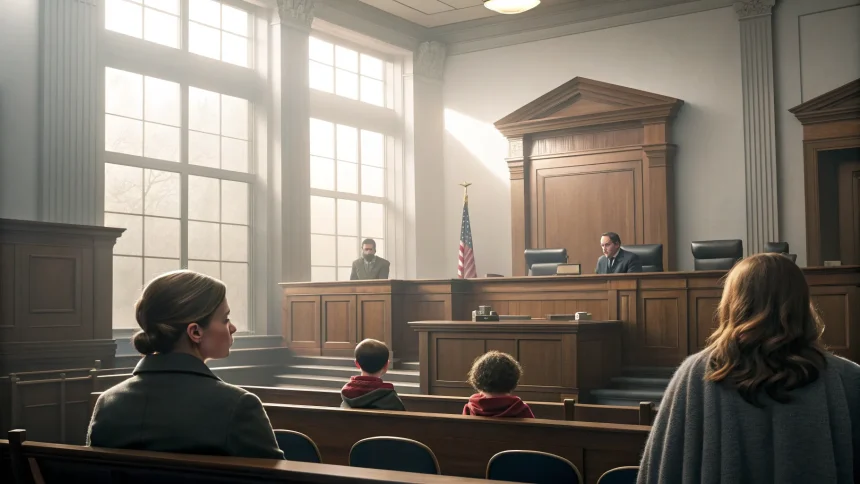
A jury has awarded $8.3 million to the family of a Kansas foster teen who died in 2021 after staff held him facedown for 39 minutes at a juvenile intake center during a mental health crisis. The verdict, reached this week, puts fresh scrutiny on restraint practices for youth in state custody and raises urgent questions about safety during behavioral emergencies.
A jury has awarded $8.3 million to the family of a Kansas foster teen who died in 2021 after being held facedown for 39 minutes in a juvenile intake center as he underwent a mental health crisis.
The case centers on a teenager in foster care who was transported to a county intake facility, where staff used prone restraint for an extended period. He did not survive. The jury’s decision signals that jurors found the response excessive or unsafe, even amid a chaotic situation.
Why Restraint Practices Are Under Fire
Prone restraint—holding someone facedown—has long been criticized by medical and civil rights groups because it can restrict breathing, especially during stress. Safety guidance in many states urges staff to avoid prolonged prone holds and to monitor breathing if a hold is used at all. The practice remains a flashpoint in schools, hospitals, and juvenile facilities.
Advocates say youth in crisis need de-escalation, trauma-informed care, and close medical oversight. Facilities often respond that staff must manage immediate threats to safety, sometimes with hands-on measures, while following their training. The tension between these views often plays out in courtrooms after tragedies, as it did here.
Foster Youth and Mental Health Risks
Children in foster care face higher rates of trauma and behavioral health needs than their peers. That makes the stakes higher during any encounter with law enforcement or intake staff. Experts note that a loud, unfamiliar setting and multiple authority figures can worsen panic and resistance, increasing the risk of force.
In this case, the teen’s status as a foster youth adds another layer: the state is responsible for both his placement and his safety. When a death occurs in custody or during intake, accountability can involve local agencies, private contractors, and state oversight—a web that families often struggle to navigate.
Inside the Verdict
While details of the deliberations are not public, the award signals strong juror concern about the length of the restraint and the response to a clear medical crisis. Thirty-nine minutes is far longer than the brief, last-resort holds often described in policy manuals. Jurors appear to have concluded that staff actions or supervision fell short of a reasonable standard of care.
Legal analysts say such verdicts can prompt rapid policy reviews. Insurers may also push facilities to change training and staffing. For families, the award is both a measure of accountability and a painful reminder that change often follows loss.
Policy Implications for Juvenile Facilities
The verdict will likely add pressure on local and state leaders to reevaluate restraint policies in intake centers. Typical reforms include:
- Clear bans or strict time limits on prone restraint.
- Mandatory medical checks and continuous breathing monitoring during any hold.
- Expanded de-escalation and crisis intervention training for all staff.
- Independent review of critical incidents and public reporting.
Facilities that rely on private contractors may also revisit contracts to tighten performance standards and oversight. For staff, better training and staffing ratios can reduce the need for force and improve safety during mental health crises.
What Comes Next
The verdict could spur state lawmakers to revisit rules on restraints for youth in custody. It may also encourage families and advocates to seek audits of similar facilities. If a criminal inquiry is underway, or if regulatory bodies are involved, those outcomes could shape further changes.
The broader question is how intake centers handle mental health emergencies. Many experts argue that clinical teams should lead during crises, with rapid access to medical care and calmer settings. That approach takes investment, but it may reduce both harm and liability.
The jury’s message is hard to miss: prolonged facedown restraint of a teen in crisis is unacceptable. The award brings accountability to one family. The larger test is whether agencies act—updating training, limiting dangerous holds, and ensuring that the next child in crisis meets clinicians first, not the floor.