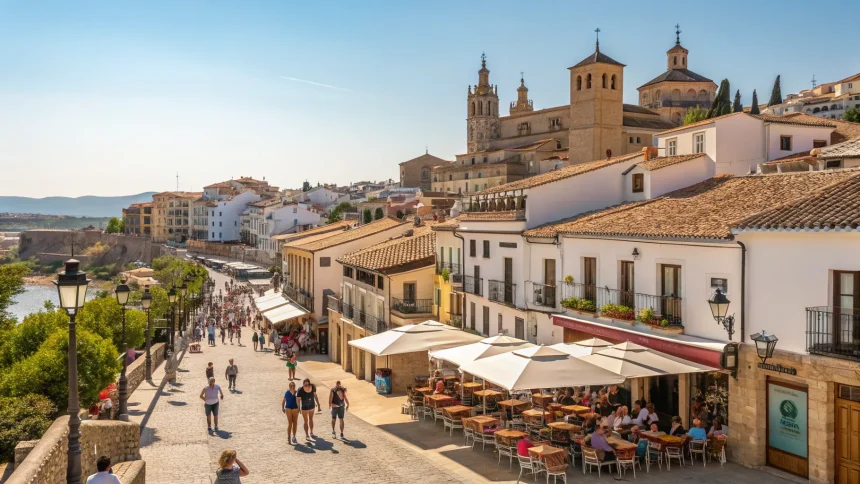
Spain closed 2025 with a new tourism high, drawing nearly 96.8 million foreign visitors. The surge caps a rapid rebound from the pandemic and cements the country’s place among the world’s top destinations.
“Spain has set a new tourism record, welcoming nearly 96.8 million foreign visitors in 2025.”
The figure signals strong demand across the year, with steady flows into major hubs such as Barcelona, Madrid, the Balearic Islands, and the Canary Islands. It also raises urgent questions about housing, city services, and the long-term mix of visitors and residents.
How Spain Reached a New Peak
Spain’s tourism sector has been on an upward track since travel reopened. The country recorded about 83.7 million foreign visitors in 2019, the last full year before the pandemic. In 2023, arrivals climbed to roughly 85.1 million, setting a new benchmark at the time.
By 2025, the industry benefited from stronger air links, a packed calendar of festivals and sports, and a weak euro that helped long-haul travelers. Demand grew from key markets, including the United Kingdom, France, Germany, and the United States. Rail improvements also encouraged intra-European trips.
The sector’s recovery has fueled jobs in hospitality and transport. Hotels reported high occupancy during summer months and long weekends. Rural and inland regions drew more visitors than in prior years, spreading activity outside the traditional beach season.
Economic Gains Meet Local Strains
Mayors and regional leaders have praised the jobs and tax revenue. Service industries, from restaurants to tour operators, benefited from higher volumes. National accounts show tourism as a vital source of income and a key support for growth.
Yet the rush has stressed some neighborhoods. Short-term rentals have tightened housing supply in popular districts. Residents have pushed city halls to limit noise, manage crowds, and protect public spaces.
- Barcelona has tightened rules on holiday rentals and cruise ship arrivals.
- The Balearic Islands apply a tourist tax and cap new beds.
- Canary Islands leaders have debated limits in hot spots like Tenerife.
Business groups argue that clear, stable rules are needed. Hotel associations say stricter enforcement against illegal rentals would ease pressure. Urban planners call for better crowd management and transport links to distribute visitors.
Shifts in Travel Patterns
Industry data point to longer average stays among long-haul visitors and higher per-trip spending on culture and dining. Off-season travel has also grown, aided by flexible work and remote-friendly policies in some firms.
Airlines have expanded routes into secondary cities, such as Valencia, Málaga, and Bilbao. That has spread demand more evenly while reducing bottlenecks in Madrid and Barcelona. Regional tourism boards report stronger interest in wine routes, hiking, and heritage sites.
Conference and sports travel helped fill calendars in spring and autumn. Major events created spikes in hotel rates, which supported revenue but stirred debate on affordability for domestic travelers.
What the Record Means for 2026
Analysts see two main paths. Spain can keep volume high and manage growth with firm rules, or it can pivot toward higher-value travel to ease strain. Either way, 2025’s record is likely to shape policy next year.
Tourism officials have discussed incentives to draw visitors to lesser-known areas and to promote low-season trips. Cities are testing digital tools to monitor flows and guide crowds to less busy sites. Environmental groups want stricter emissions plans tied to flights and cruises.
Hoteliers warn that cost inflation, wage deals, and energy prices could squeeze margins. They expect competition from neighboring countries to intensify, especially if exchange rates shift. Airlines could adjust capacity if demand softens in certain markets.
Voices From the Sector
Local leaders, hoteliers, and residents share a common goal: making growth sustainable. The statement that Spain welcomed “nearly 96.8 million” visitors has fueled those talks, putting focus on quality over sheer volume.
“The record is good news for jobs,” said a hotel association spokesperson, “but long-term success will depend on fair rules and better planning.”
“We need housing we can afford,” said a Barcelona resident active in a neighborhood group. “Tourism policy must work for people who live here.”
Economists add that stable, predictable policy will help the sector invest in skills and greener operations. They point to public transport, heritage upkeep, and coastal protection as areas that need steady funding.
Spain’s new high confirms the country’s pull and a strong recovery. The next test is how leaders balance growth with livability. Watch for new rental rules, capacity limits in hot spots, and incentives for off-season travel. The choices made in the coming months will shape tourism’s role in Spain’s economy and in daily life across its cities and islands.