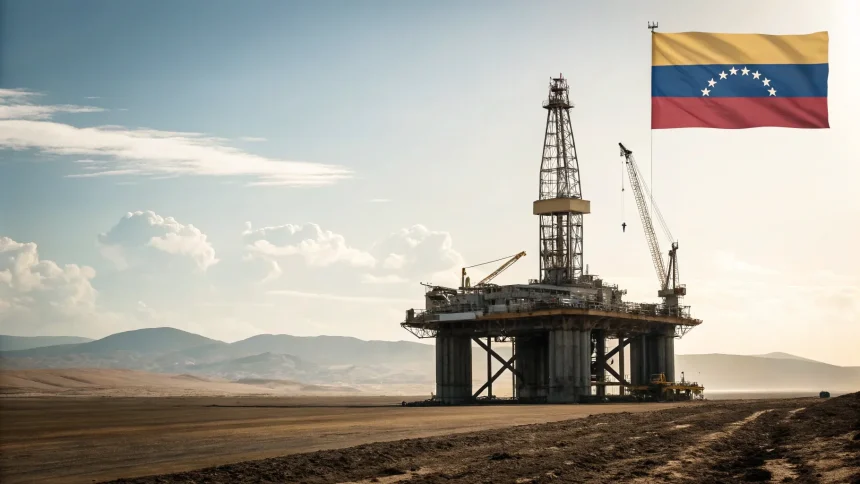
Venezuela’s legislature has approved opening the oil sector to privatization, a sharp break with more than 20 years of state-first policy under the country’s socialist movement. The vote in Caracas signals an urgent push to attract capital and technical know-how as the economy struggles and production remains far below historic highs.
The measure reverses the long-standing model that placed state oil company Petróleos de Venezuela, S.A. (PDVSA) at the center of exploration, production, and exports. Lawmakers framed the shift as a bid to revive output, repair aging infrastructure, and stabilize public finances. Critics warn it could weaken public control over a national asset and open new avenues for corruption if oversight is weak.
“Venezuela’s legislature has approved opening the nation’s oil sector to privatization. This decision reverses a key principle of the socialist movement that has ruled for over two decades.”
What the Vote Changes
For years, Venezuela relied on PDVSA and joint ventures where the state held a controlling stake. The new policy opens the door to private operators taking larger roles and, potentially, controlling interests in projects. Details on contract terms, tax regimes, and ownership limits will determine how far the shift goes.
Analysts say success hinges on clear rules. Investors will look for stable contracts, transparent bidding, and credible safeguards on revenue-sharing. Without that, few expect large inflows of long-term capital.
Why Now: Economic Pressures and Production Declines
Oil once funded wide social programs and subsidies. Years of underinvestment, mismanagement, and infrastructure decay eroded capacity. International sanctions further limited access to financing, equipment, and key export markets.
Output remains well below past peaks. Revenue shortfalls have strained the state budget, weakened public services, and fueled high inflation. Opening the sector is seen by supporters as a direct way to boost production and bring in foreign currency.
Supporters See Investment, Jobs, and Repairs
Backers argue private operators can move faster on maintenance and new drilling. They say fresh capital can restart mothballed fields, rehabilitate refineries, and modernize pipelines and terminals. That could support jobs in oil regions and generate taxes for local governments.
Some regional officials have long sought more flexibility to partner with private firms. They contend that every month of delay risks further damage to wells and processing units that grow harder to restore over time.
Critics Warn of Sovereignty and Oversight Risks
Opponents fear the state could lose control over strategic reserves. Union leaders and community groups question whether privatization will protect workers and fund social needs. They also worry about asset sales at depressed values if the legal and political climate keeps risk high.
Transparency advocates call for public disclosure of contracts, independent audits, and strong anti-graft enforcement. Without those measures, they warn, new deals could mirror past scandals rather than fix them.
Sanctions, Courts, and the Fine Print
Sanctions remain a major obstacle. Even interested firms may hesitate if they face compliance risks or lack clear waivers. Legal challenges could also emerge if new rules clash with existing laws on state control.
Key questions include how profits will be taxed, whether PDVSA will retain stakes, and what dispute resolution mechanisms will apply. The government’s capacity to regulate safety and the environment will also be tested.
Regional and Global Stakes
Venezuela holds one of the world’s largest oil reserves. Any sustained production increase could influence crude markets and regional trade. Neighboring countries may see new flows of crude and refined products, especially if domestic refineries return to service.
Energy analysts will watch how quickly capital commitments follow the announcement. Timelines for upstream projects are long. Early wins are likely to come from repairing existing facilities rather than new megaprojects.
What to Watch Next
- Publication of the legal text and implementing regulations.
- Any sanctions guidance for energy companies and service providers.
- Contract awards, bidding transparency, and fiscal terms.
- Labor and community protections in new agreements.
- Early production, refinery output, and export trends.
The approval marks a turning point for a country that built its modern identity on state-led oil. Whether this reset lifts production and stabilizes finances will depend on the clarity of the rules and the credibility of enforcement. If the plan brings real investment and cleaner governance, Venezuela could halt years of decline. If not, privatization risks becoming another promise that fails to reach the wellhead.