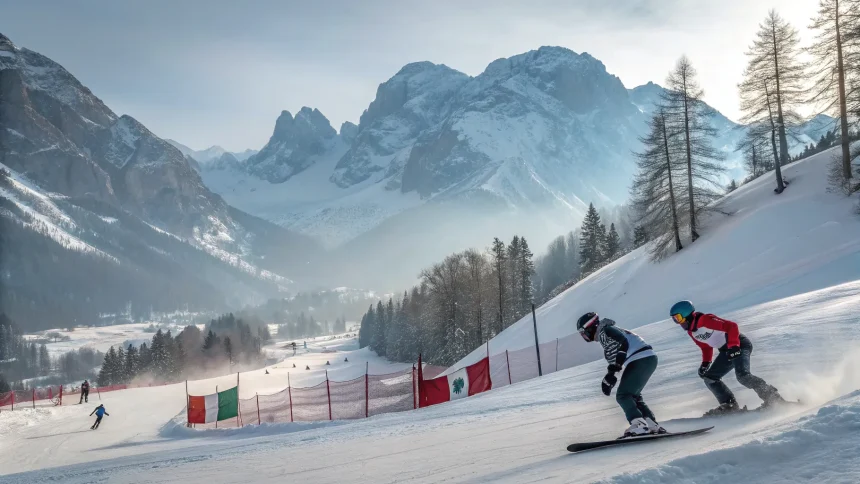
Plans for a U.S. Immigration and Customs Enforcement unit to be present at the upcoming Winter Games in Italy have sparked a political dust-up and stirred public confusion just weeks before the opening ceremony.
Italian officials are seeking clarity on who authorized the visit, what powers American agents would have on Italian soil, and how their work would mesh with local police. The concern is simple but serious: security co‑operation is welcome; foreign law enforcement power is not.
“News that a U.S. Immigration and Customs Enforcement unit will be present at the upcoming Winter Games has sparked confusion and concern in Italy.”
What Sparked the Uproar
The presence of an ICE unit, even in a support role, touches hot buttons in Italy’s debate over migration, policing, and national sovereignty. ICE is best known for immigration enforcement and investigations tied to human trafficking, document fraud, and transnational crime. That brand carries political baggage in Europe.
Italian officials say they were not opposed to foreign liaison support for a global event but want firm limits. The expectation is that any visiting team would coordinate intelligence and share tips, while Italian police lead and make any arrests.
Who Would Be in Charge
Under standard practice for international events, the host nation remains in charge. Foreign agents, if invited, work as liaisons inside a joint command center or embassy setting. They do not patrol venues or exercise police powers unless formally deputized, which is rare.
Legal experts point to a few guardrails:
- Italian law governs arrests, searches, and interviews on Italian soil.
- Data sharing must comply with EU privacy rules, including clear limits on retention and use.
- Any U.S. presence should be spelled out in a written agreement with the host government.
Without those details in public view, rumors fill the gaps. That fuels worries about mission creep and surveillance.
How Past Games Handled Foreign Agents
Security analysts note that previous Olympics and world events often included foreign liaison officers from partner countries. Their tasks were focused: verify identities, flag known threats, and speed cross-border checks. The host nation still ran the show.
This approach reduces delays when time matters, such as validating a counterfeit passport or confirming a watchlist match. It can also help track illicit ticketing, doping networks, or human trafficking rings that move across borders.
But the model depends on tight rules. Clear chains of command and documented protocols keep cooperation from bleeding into unauthorized enforcement.
Politics and Public Opinion in Italy
Italy’s migration debate is already tense, and the word “immigration” in ICE’s name adds heat. Civil liberties groups want assurances that spectators, athletes, and volunteers will not face identity checks by foreign personnel. Opposition lawmakers are asking the government to publish the terms of any agreement.
Supporters of the plan argue that targeted cooperation can prevent crimes that exploit major events. They frame the ICE presence as a technical fix: help with intelligence, not street policing. Critics counter that good intentions still need hard limits and transparency.
What Officials Need to Clarify
Several questions would cool tempers if answered clearly:
- Is the ICE team limited to liaison work, with no arrest powers?
- Where will they operate—inside a joint operations center or off-site?
- What data will be shared, and how long will it be kept?
- Who signed the agreement, and for how long does it apply?
Publishing a short, plain-language summary would help the public see the guardrails. It would also show athletes that security is coordinated, not chaotic.
What Comes Next
Diplomats and security chiefs are likely working to tighten the plan and calm the rhetoric. The fastest path is a written clarification that affirms Italian control, defines ICE’s role, and sets privacy protections.
For Italy, the stakes are practical and symbolic. The country wants safe Games without ceding authority. For the United States, the goal is to protect athletes and visitors while respecting the host’s rules.
As the torch nears its lighting, watch for three things: a formal statement on jurisdiction, a data-sharing protocol that passes EU muster, and visible leadership by Italian police at every venue. If those pieces fall into place, cooperation can proceed with fewer surprises—and fewer headlines.