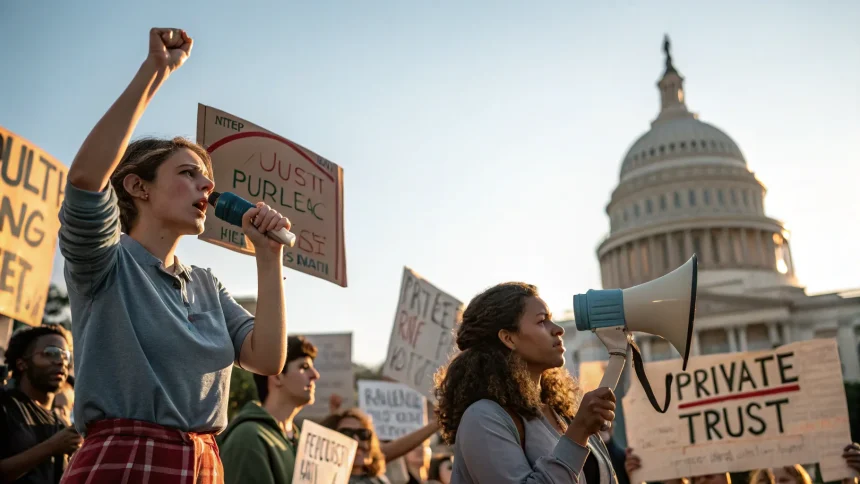
Campaigners are challenging a state’s decision to accept funding from technology companies they describe as linked to former President Donald Trump, saying the move risks politicizing public AI systems and weakening trust. The dispute centers on who pays for public-sector AI and what influence private funders may gain.
Advocates say the state agreed to outside money to speed up work on AI tools for services such as benefits processing, public safety analytics, and agency chatbots. Critics argue the decision was rushed and lacked safeguards. State officials say the program will follow strict rules and that the funding will not affect policy or outcomes.
Campaigners decry ties with ‘Trump-supporting’ tech firms after funding is accepted to develop state AI systems
Background: Money, Politics, and Public AI
Governments are moving to adopt AI to improve services and cut costs. Many agencies face staff shortages and budget limits. Outside funding can help pay for engineering, security reviews, and pilot projects.
But the political profile of donors can shape public opinion. Campaigners argue that any perception of partisan influence could damage trust, especially where AI may affect eligibility decisions or law enforcement.
Public interest groups have urged clear procurement rules, complete transparency on donors, and independent audits. They want a bright line between political activity and government tech.
The Funding Deal and Its Oversight
Officials say the funding package is limited to research, pilots, and infrastructure. They say the state will own the systems, and agencies will set policy.
Procurement experts note that contract terms matter more than donor identity. They argue that detailed service-level agreements, clear data-ownership clauses, and audit rights are key.
- Full disclosure of donors and subgrants
- Independent security and bias testing
- Public release of model documentation
- Conflict-of-interest screening for all vendors
Campaigners want these steps in writing. They also want a public register of any meetings between funders, vendors, and agency leaders.
Political Reaction and Free Speech Concerns
The funding has triggered a partisan split. Critics say it risks aligning state systems with companies linked to one party. Supporters argue that political views of executives should not bar firms from public work.
Civil liberties advocates warn that blanket bans based on political donations could violate free speech. They prefer strong guardrails that apply to all donors. That approach focuses on conduct rather than ideology.
Advocates for the funding say the program will improve services for residents. They cite faster response times and better fraud detection as likely gains. They insist that models will be evaluated for fairness and privacy compliance.
What AI in Government Could Look Like
The first systems are expected to target routine tasks. That includes summarizing case files, handling document intake, and assisting call centers. Agencies want lower wait times and fewer errors.
Risk areas include automated denials, predictive policing, and opaque scoring tools. Experts recommend keeping people in the loop for high-impact decisions. They also favor publishing manuals, metrics, and error rates.
Several states have formed AI task forces. These groups are drafting rules on procurement, data retention, and model testing. Transparency and due process are recurring themes.
Calls for Transparency and Public Input
Campaigners are asking for open hearings before more money is accepted. They want to know how vendors are chosen, how models are evaluated, and how appeals will work.
Public policy analysts suggest a simple checklist for agencies. It should cover data sources, accuracy, bias, security, uptime, and incident reporting. They also recommend a sunset clause so pilots must prove value before wider use.
Industry groups say clear rules will help honest firms compete. They argue that stable standards reduce cost and improve outcomes for residents.
The dispute highlights a larger question: Can public AI be funded by private donors without eroding trust? The answer will depend on transparency, oversight, and the state’s willingness to publish evidence. For now, the program moves ahead, and both sides are watching the contract terms. Residents should expect more hearings, more disclosures, and a tougher review of any system that affects essential services.