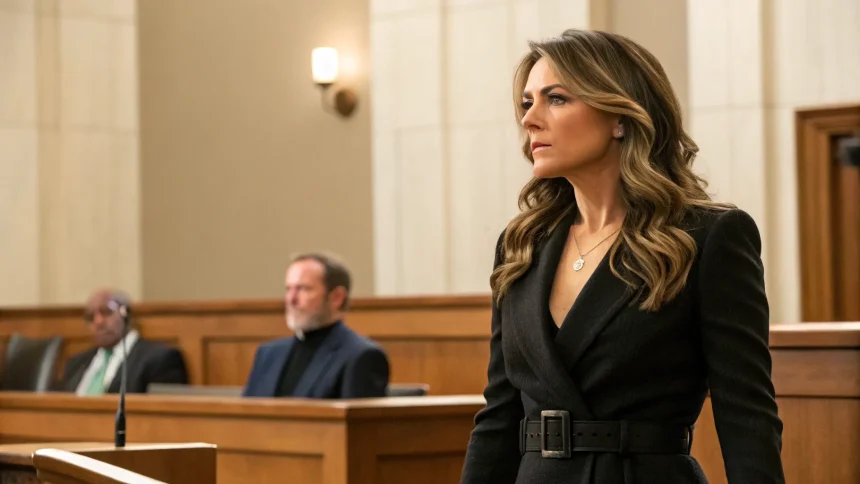
Elizabeth Hurley told a courtroom that reporters linked to the Mail paid others to plant secret microphones on the windows of her home. The publisher rejected the claim as “simply untrue.” Her statement adds fresh heat to a high-profile fight over newsgathering tactics, with press freedom and privacy rights colliding in a London court.
Hurley, a model and actor, said the devices were aimed at her dining room. The allegation points to covert surveillance, not just routine reporting. Associated Newspapers, which publishes the Daily Mail and The Mail on Sunday, denies any unlawful activity.
What Hurley Says Happened
“Mail journalists commissioned people to place secret microphones on my dining room windows.”
Hurley’s account suggests planning and payment for hidden listening devices. If true, the conduct would go far beyond phone calls or doorstep inquiries. It would also raise questions about how private conversations were accessed and used.
Her evidence did not, at least in open court, detail the exact dates, contractors, or payments. But the focus on a private space — a dining room — signals an alleged breach of the most personal setting. The accusation fits a wider pattern of claims about covert methods used to source celebrity stories in the 2000s and 2010s.
The Publisher’s Firm Denial
The publisher says the allegation is “simply untrue.”
Associated Newspapers has repeatedly rejected claims of unlawful activity. In prior hearings in related cases, the company has said it follows the law and industry codes. Lawyers for the publisher argue that some allegations rely on rumor, assumption, or a misunderstanding of how reporters work.
The company also notes that tough rules and oversight exist for UK journalists. Those include legal restrictions, civil liability, and the UK Editors’ Code of Practice. It insists it does not sanction the planting of bugs or other criminal methods.
Why This Fight Matters
Hurley’s claim lands amid wider litigation over alleged unlawful information gathering by UK tabloids. High-profile figures, including royals and entertainers, have brought cases in London over the past few years. They argue they were targeted through unlawful means, from interception to hired operatives.
For the press, the stakes are serious. Findings against a major publisher could trigger damages, fresh complaints, and stricter controls. For claimants, a courtroom win could reshape how tabloids source stories about public figures.
- Privacy advocates say covert devices have no place in reporting.
- Media lawyers warn that broad claims need clear proof and dates.
- Editors stress the difference between aggressive reporting and illegal acts.
What the Court Will Weigh
Judges will look for corroboration. That could include technical records, contractor testimony, and links between any devices and story publication dates. Witness evidence helps, but the court often wants contemporaneous documents.
The defense will push back on intent, method, and chain of custody. It may question whether any device existed, who placed it, and whether the publisher knew. It may also argue that unrelated private investigators are being tied to the newspaper without proof.
History and Industry Context
The UK press has faced intense scrutiny since the phone-hacking scandal more than a decade ago. That period led to inquiries, settlements, and internal overhauls in newsrooms. Many outlets introduced stricter compliance checks and legal reviews before publication.
Despite reforms, fresh claims continue to surface. Public figures say old tactics lingered in the shadows. Newsrooms say they have cleaned house, and that new complaints often recycle disputed material.
What Comes Next
The court will decide whether Hurley’s allegation moves forward to a fuller trial or is narrowed. If the claim proceeds, expect requests for device data, security logs, and contractor records. If it stalls, the focus may shift to other claims in the broader case.
Either way, the hearing highlights a core question: how far some reporters went to land exclusives in past years, and what proof remains. The answer will influence damages, newsroom rules, and public trust.
For now, readers get two clear positions. Hurley says covert bugs were placed on her window frames. The publisher says none of it happened. The court’s next steps will show which version holds up under evidence, not headlines.