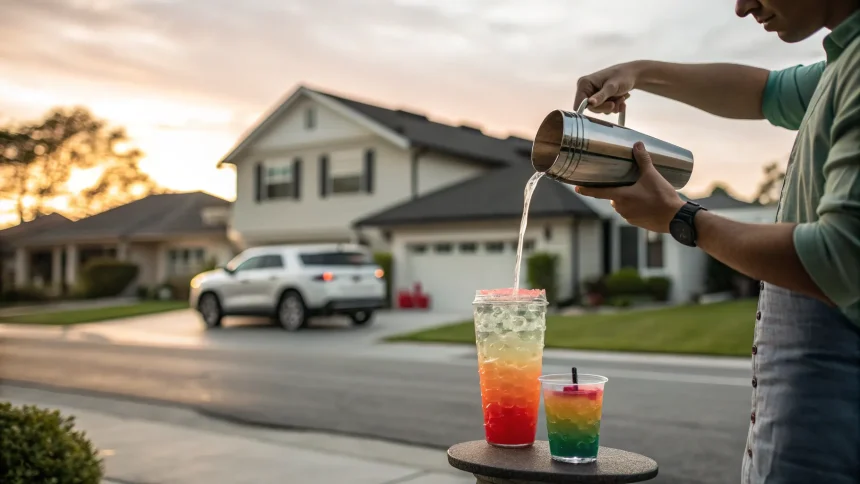
The pandemic didn’t just move office meetings to the living room. It moved happy hour there too. As home drink-making surged, restaurants met customers at the curb with sealed cocktail cups, a shift now allowed in more than 30 states, according to the Distilled Spirits Council.
Food writers and bartenders saw it first. As Elizabeth Karmel put it, “Cocktails are having a moment, and because of the pandemic, that moment is happening most often at home.” The change began when dining rooms closed and bars went dark. What followed was a rush to keep hospitality alive, one takeout old fashioned at a time.
How Home Bartending Took Off
When staying in became the default plan, many people traded barstools for bar carts. Shakers and jiggers sold briskly, and recipe searches jumped. Households experimented with sours, spritzes, and zero-proof riffs. For many, it was a small ritual that broke up long days.
Industry groups have said retail spirits sales rose during lockdowns as people bought bottles they once only ordered by the glass. Online classes and virtual tastings followed. They taught basics like measuring, chilling, and balancing sweet, sour, bitter, and strong. The result was a new confidence in mixing at home—and a higher bar for what takeout drinks needed to deliver.
Restaurants Lean Into Cocktails To Go
Restaurants pivoted quickly. Takeout food traveled fine, but margaritas and martinis needed special treatment. Many operators batch-mixed, sealed containers, and added labels with ingredients and safe-use notes. Some sold kits with fresh citrus and syrups to keep drinks bright on arrival.
“Many restaurants have responded with cocktails to go, approved in more than 30 states, according to the Distilled Spirits Council, an industry trade group.”
For some businesses, to-go drinks became a lifeline. Spirits-based cocktails often carry higher margins than food. That helped offset fewer seats and shorter hours. Bartenders adapted recipes for travel, choosing spirits and modifiers that hold up and separating ice to prevent dilution.
The Policy Patchwork—and the Debate
The rules vary by state and city. Some places greenlit sealed alcoholic drinks alongside meals. Others limited portions or required no-contact ID checks at pickup. A handful allowed delivery through licensed services with strict verification.
Supporters say the policy kept workers employed and gave customers safe, regulated options. Critics worry about underage access and impaired driving. Operators responded with checks that mirror in-person service:
- Scanning IDs at pickup or delivery
- Sealed packaging and clear labeling
- Meal purchase requirements in some jurisdictions
Enforcement remains a challenge, but many regulators and trade groups stress training and compliance. The Distilled Spirits Council continues to track which states maintain or expand allowances.
What Stays After the Crisis
As dining rooms reopened, demand for to-go cocktails did not vanish. Some states extended temporary measures or considered permanent rules. Restaurants now treat portable drinks as a regular menu item, adjusting seasonal offerings and portion sizes.
Three trends are shaping what comes next. First, convenience matters. Customers like pairing a takeout pizza with a house negroni without buying a full bottle of every ingredient. Second, quality counts. Fresh juice, clear ice, and better packaging separate a solid drink from a soggy one. Third, moderation is in. Single-serve portions and low- or no-alcohol options are growing, matching the shift in customer preferences.
Bars have also found new ways to build loyalty. Preorder specials, limited releases, and rotating signatures keep regulars checking back. Some pair drinks with playlists or brief mixing notes, adding a dash of barroom charm to the home routine.
Economic and Cultural Ripples
The to-go model created new supply chains for small producers. Local bitters, syrups, and canned mixers gained shelf space through restaurant partnerships. That helped independent makers ride out a rocky period and introduced customers to fresh flavors.
There are risks. Packaging adds cost and waste, and compliance takes time. But many operators say the added revenue and goodwill outweigh the hassle. As one manager noted in industry forums, the option lets a Friday night crowd exist “even when the living room is the lounge.”
Cocktails are no longer tied only to bar rails and happy-hour clocks. They are a part of the takeout menu, the backyard cookout, and the quiet Tuesday at home. The takeaway is simple: customers want choice, restaurants want stability, and regulators want safety. Expect the debate over permanent rules to continue, with data on compliance and economic impact shaping the outcome. For now, the home bartender and the curbside cocktail are coexisting—and clinking—from a safe distance.