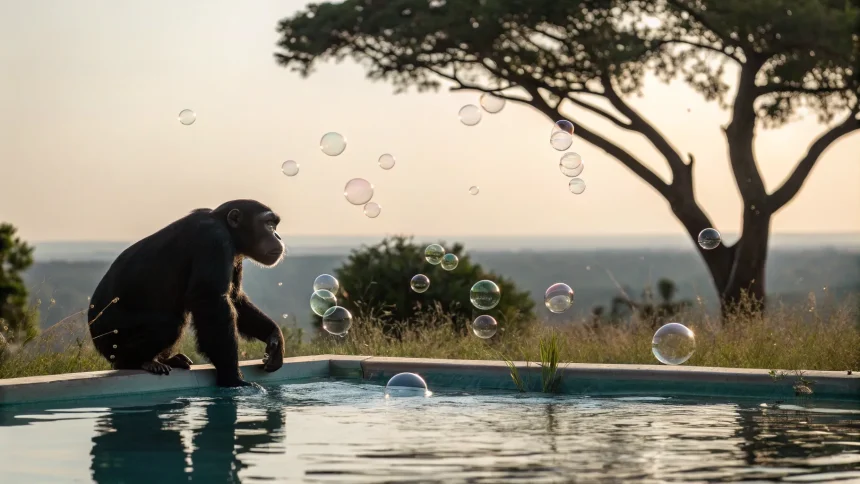
Decades after Michael Jackson’s pet chimpanzee Bubbles became a global curiosity, his story still sparks debate over fame, animal welfare, and the business of exotic pets. The chimp entered the pop star’s life in the early 1980s and quickly became part of the act, appearing in photos, on tours, and in gossip pages. Now, his journey stands as a case study in how celebrity can shape how society treats animals—and how laws respond.
“Michael Jackson got Bubbles in 1983 when the chimp was just eight months old. He slept in a crib inside the singer’s room and was often seen wearing human clothes.”
From Sidekick to Cultural Symbol
Bubbles was once a constant presence. He was photographed in matching outfits. He traveled with entourages. He became shorthand for the excess of the era. Those images made him famous, but they also masked an uncomfortable truth. Chimpanzees grow strong, fast, and require complex care.
By the late 1990s and early 2000s, Bubbles faded from public view. As he matured, professional caretakers stepped in. Animal sanctuaries noted rising interest from owners seeking placement for apes that had outgrown private homes or entertainment work. Bubbles later moved to a sanctuary setting designed for great apes, where he still lives.
Why This Matters Now
Bubbles’ fame coincided with a boom in private ownership of primates. That boom has receded, but its effects linger. Several states now restrict or ban primates as pets. Federal lawmakers have introduced measures, such as versions of the Captive Primate Safety Act, aiming to tighten rules on sales and transport.
Animal behavior experts say chimps need space, social groups, and specialized care that private owners rarely provide. Public attitudes have shifted too. The sight of a chimp in a diaper once drew laughs. Today, it raises questions about welfare and consent.
The Industry, the Image, and the Aftercare
Celebrity visibility helped sell a fantasy. If a superstar could treat a chimp like a child, many concluded they could as well. Trainers and sanctuaries spent years trying to unwind that message.
Sanctuaries report that costs to support a single great ape can run high, from specialized diets to medical care and secure habitats. Long lifespans make the commitment even heavier. Bubbles, now a senior chimp, benefits from that network of care, funded by donations and managed by experienced staff.
Ethicists point to the turning point that often arrives when juvenile chimps become physically powerful. That is the moment the photo ops stop and the placement searches begin. It is also when the public sees the gap between the myth and the workload.
What The Photos Didn’t Show
Experts say early handling can shape behavior, but it cannot change biology. Adult chimps are many times stronger than adult humans. They need social bonds with other chimps and enrichment that mimics life in the wild.
Entertainment offers quick attention, but it can set up lifelong consequences. The feel-good snapshots fade. The care needs do not.
- Early fame turned Bubbles into a household name.
- As he matured, professional care became essential.
- Sanctuaries now shoulder the long-term responsibility.
- Lawmakers have moved to tighten primate ownership rules.
Shifting Standards and Public Opinion
Television and magazines once promoted chimp sidekicks as charming. Today, studios face pressure to use visual effects or stock footage instead of live primates. Major advertisers have reduced campaigns featuring apes. The message is simple: entertainment should not hinge on risky animal handling.
Advocates argue that Bubbles’ story helped move that needle. Fans saw a beloved animal grow up and leave the spotlight. Many learned, slowly, that retirement is not a fairy tale but a daily routine of care.
What To Watch Next
Policy changes continue, and enforcement matters. Online sales and private breeding still exist. Sanctuaries must plan for decades of care, fundraising, and facility upkeep. The public has a role too—choosing where to spend attention and money.
Bubbles remains a symbol, but not the one first imagined. He stands for the cost of treating wild animals like props. He also shows that real care is quieter than fame. The headline moment lasted a few years. The responsibility lasts a lifetime.
The through line is clear. Early charm can hide long-term needs. The next chapter belongs to sanctuaries, lawmakers, and a public that now knows better. Watch the rules, follow the money, and remember who pays the bill when the cameras stop.