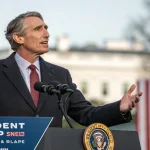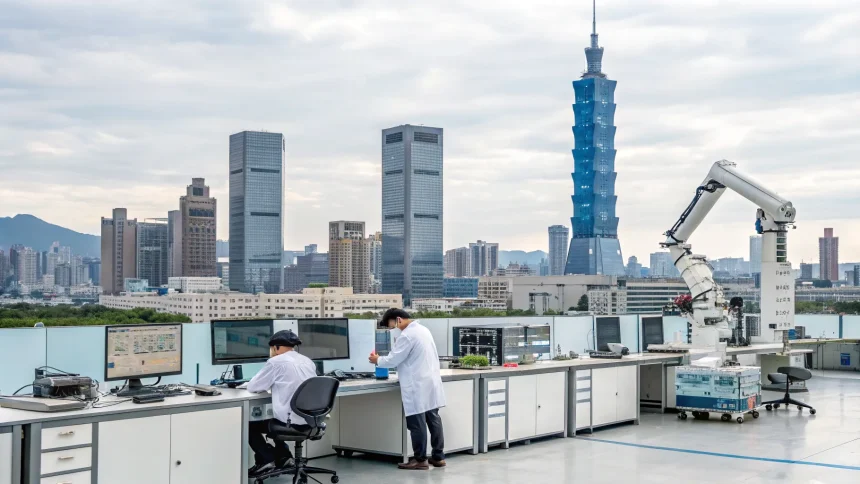
Taiwan signaled a push to deepen its role in American artificial intelligence development, tying the effort to a new trade move that lowers tariffs and encourages more Taiwanese investment in the United States. Vice Premier Cheng Li-chiun said Friday that Taipei wants to become a close strategic AI partner with Washington, linking market access and capital flows to tighter tech cooperation.
The statement aligns with years of growing tech ties between the two economies. It also comes as AI supply chains grow more concentrated in East Asia and the United States seeks to secure advanced chip production at home.
“Taiwan aims to become a close strategic artificial intelligence partner with the United States,” Vice Premier Cheng said, citing a deal to reduce tariffs and boost Taiwanese investment in the country.
Why AI Cooperation Matters Now
Taiwan sits at the center of the AI hardware stack. Its manufacturers produce key components for data centers, smartphones, and edge devices. Taiwan Semiconductor Manufacturing Co. (TSMC) fabricates leading chips that power training and inference for major AI models. U.S. firms design many of these chips, making Taiwan a critical link for American technology companies.
Washington, meanwhile, has pressed for greater supply chain resilience. The CHIPS and Science Act expanded incentives to bring advanced manufacturing and packaging work onshore. TSMC’s projects in Arizona reflect that shift, even as they face cost, workflow, and talent hurdles.
The Trade Move and Investment Signals
Cheng tied the AI partnership to a tariff reduction and new investment push. While details were not disclosed, the move suggests a coordinated effort to smooth trade in components and equipment, and to support capital spending by Taiwanese firms in U.S. facilities.
- Lowering tariffs can reduce import costs for tools and parts used in chipmaking and AI servers.
- Encouraging investment may accelerate plant buildouts and supplier networks around U.S. facilities.
- Easier market access can help small and mid-sized tech suppliers scale across both markets.
Previous U.S.-Taiwan trade steps focused on streamlining customs and improving standards. The new push appears to go further on tariffs, with the goal of speeding AI-related production and research ties.
Security and Economic Stakes
AI has moved to the center of national strategy. U.S. controls on advanced chip exports to certain markets reflect security concerns. Strengthening links with Taiwan could help the United States secure steady access to high-end manufacturing, packaging, and testing. It could also support joint research on energy efficiency, advanced lithography, and secure computing.
For Taiwan, deeper links with U.S. buyers and labs can anchor long-term demand and reduce exposure to supply disruptions. It also supports workforce training and standards that align with U.S. security and reliability rules.
Challenges On the Ground
Ambitions may run into practical limits. Building advanced fabs is expensive, and U.S. labor and permitting costs can delay timelines. Specialized talent remains in short supply, from tool technicians to materials scientists. Export controls create compliance burdens that can slow product cycles.
Analysts also warn of overconcentration risk. If too much capacity depends on a few sites or suppliers, shocks can ripple through the AI market. Diversifying suppliers, improving packaging capacity, and building inventories for key materials could help.
What It Means for Industry
The tie-up could speed deployment of next-generation chips and systems for data centers. It may also support growth in advanced packaging, where Taiwan holds strengths and the U.S. seeks expansion. Cloud providers, AI startups, and systems integrators could benefit from smoother supply and clearer trade rules.
Education and training partnerships are likely to follow investment. Joint programs between Taiwanese universities, U.S. community colleges, and research labs could address talent gaps. Shared standards for safety and testing could bring faster approvals and lower integration costs.
Still, the pace will depend on how quickly tariff changes take effect and how much capital Taiwanese firms commit to U.S. projects. Clear permitting timelines and stable subsidies will also shape results.
Cheng’s message signals a new phase in a long-running tech partnership. If tariff relief and investment momentum hold, both sides could see faster AI deployment and sturdier supply chains. The next months will show whether commitments translate into shovels in the ground, trained workers on factory floors, and steady deliveries of the chips that drive modern AI.