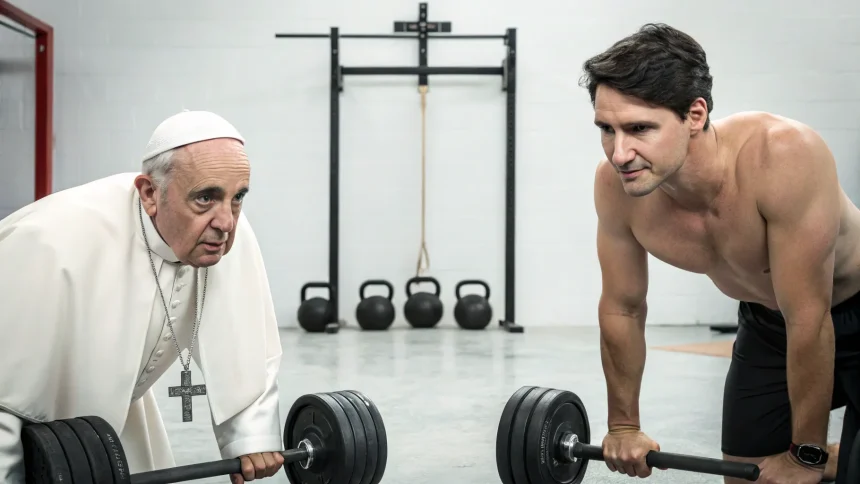
A fitness brand has sparked a fresh fight over artificial intelligence with a stark new ad campaign featuring distorted images and deepfakes of Pope Francis and Canadian Prime Minister Justin Trudeau.
Released this week across social platforms, the campaign taps into rising anger about synthetic media and online manipulation. It leans on shock to make a point: AI may be fast and flashy, but it can also distort truth. The move sets off a debate at the intersection of marketing, ethics, and public trust.
What The Campaign Shows
The fitness brand’s jarring new ad campaign channels anti-AI rage in a new ad campaign featuring distorted images and deepfakes of Pope Francis and Justin Trudeau.
The visuals are harsh by design. The figures appear altered, their faces warped in ways that signal fakery. The message is blunt: beware of what you see online, and value what is real. The brand ties this to physical training, hinting that effort and authenticity beat shortcuts.
Public figures carry symbolic weight in ads. Using religious and political leaders makes the spot hard to ignore, and just as hard to defend if viewers feel it crosses a line. Even without naming the brand’s claim outright, the creative choice carries risk.
Why Deepfakes Hit A Nerve
Deepfakes have shifted from online curiosity to a daily trust problem. They can clone a voice, swap a face, and fool millions in minutes. Platforms race to label synthetic media. Regulators debate rules. Voters wonder if they can believe a clip that lands in their feed.
Here, the campaign rides that anxiety. By picking well-known leaders, it highlights how easy it is to distort an icon and still get clicks. That shock helps the ad stand out, but it also raises questions about consent, respect, and potential harm.
Marketing On The Edge
Edgy ads have long pushed limits to earn attention. This one taps a current fear. Brand strategists say the payoff can be high if the message feels fair and the execution stays within ethical lines. The risk comes when audiences see the tactic as exploitative.
Advertising watchdogs and platform policies may take interest. Many services restrict synthetic media that impersonates public figures, especially without clear labels. Viewers may also ask if the ad clarifies that the images are artificial.
Reactions And Responsibility
Consumer response will hinge on one factor: intent. If the ad clearly warns about manipulation and celebrates authentic effort, some will cheer. If it looks like cheap shock, backlash could spread fast.
- Supporters may call it a timely warning about misinformation.
- Critics may see disrespect and a stunt built on borrowed fame.
- Privacy and consent advocates may ask how the images were produced and approved.
Religious groups and political observers could also weigh in. Using a pope and a prime minister turns a fitness pitch into a cultural flashpoint. That may be the point. But it comes with a cost if communities feel mocked or misled.
The Bigger Picture
Brands are under pressure to say where they stand on AI. Some use AI tools for production. Others trade on the word “real” to set themselves apart. This campaign plants a flag on the “human-made” side, linking authenticity to sweat and grit. That stance may resonate with customers wary of bots and filters.
The legal and policy track is moving too. Lawmakers in several countries are weighing rules for political deepfakes and synthetic endorsements. Clear labeling, consent, and enforcement will shape what marketers can do next. Until then, public judgment remains the loudest regulator.
What Comes Next
Expect calls for disclosure tags on any synthetic imagery, especially when public figures are involved. Platforms may push stricter labels. Industry groups could issue new guidance on using fabricated likenesses in ads. Competitors will watch closely to see if the buzz helps or harms.
The campaign lands at a moment when truth feels fragile online. It makes a sharp case for the value of the real, while using the unreal to do it. That irony is both its hook and its hazard.
Bottom line: the brand has started a conversation the internet is already having. If the message leads to clearer labels and smarter media habits, it will look bold. If it erodes trust or feels like a gimmick, viewers will bench it. Watch for a second wave of ads, possible platform responses, and whether the public rewards a stance that prizes sweat over simulation.