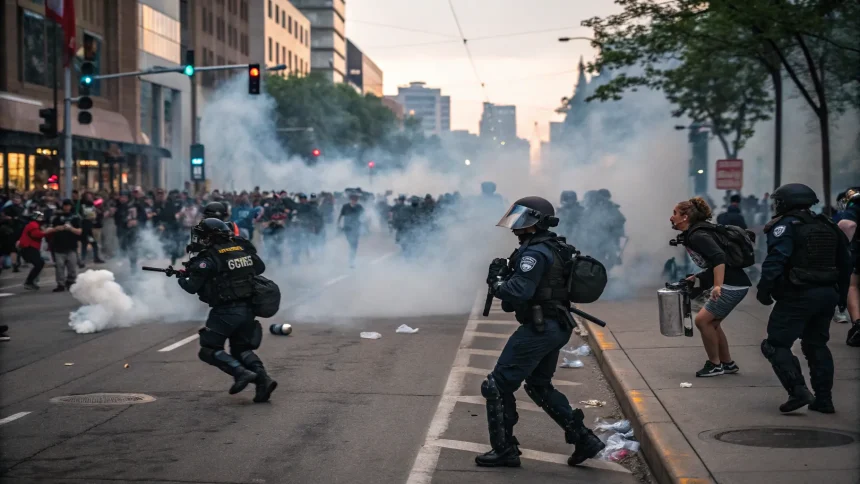
Federal officers used tear gas to disperse an onlooking crowd in Minneapolis after a car crash involving immigration agents, raising questions about crowd control and public safety. The incident occurred as bystanders gathered to see what had happened, some sounding whistles and calling out. Authorities have not released a full account of the sequence, but witnesses reported a rapid escalation.
Early reports described a tense scene as officers moved to clear people from the area. The use of chemical agents in a non-protest setting is unusual and drew immediate concern from civil rights observers and neighborhood leaders. Minneapolis officials and federal agencies did not offer detailed timelines or injury counts by press time.
What Witnesses Described
“Federal officers in Minneapolis have fired tear gas to break up a crowd of whistle-blowing bystanders who showed up to see the aftermath of a car crash involving immigration agents.”
People who were near the crash said the crowd formed quickly. Some blew whistles to alert others and to signal for space around the damaged vehicles. Several witnesses said officers shouted commands to step back before deploying gas, though it was not clear how much time passed between the warnings and the action.
No arrests or injuries have been publicly confirmed. Paramedics were seen in the area treating people affected by the irritant, according to one bystander. The condition of those involved in the crash was not immediately known.
Context on Crowd Control
Federal agencies set their own guidelines for crowd management, often aligning with local standards on use of force. Tear gas is typically considered a last resort when officers judge that a crowd poses a safety risk or impedes emergency work. Critics argue that gas can worsen confusion and harm people who are not a threat, especially in confined areas.
Minneapolis, which has faced intense scrutiny of policing practices since 2020, has tightened policies on dispersal tactics during demonstrations. The presence of federal officers at a traffic incident adds a jurisdictional layer that may complicate accountability and reporting.
Key Questions Now Facing Officials
- What prompted officers to deploy gas instead of relying on barriers or verbal commands?
- How large was the crowd, and was there a specific threat or obstruction?
- Were body cameras in use, and will footage be released?
Voices From Both Sides
Law enforcement specialists often argue that clearing a crowd can be necessary to secure a crash site, protect evidence, and allow medical teams to work. They point out that a fast-moving crowd near vehicles can lead to secondary injuries. “Scene safety comes first,” one former federal trainer said in a general comment about policy.
Civil liberties advocates counter that chemical agents should be rare, and only after clear and repeated warnings. They call for precise thresholds and public reporting when gas is used. “The public deserves to know why this was needed and who approved it,” said a local watchdog in a statement responding to the incident.
Legal and Policy Backdrop
Use-of-force reviews usually examine whether officers followed agency rules, whether dispersal orders were audible and repeated, and whether people had safe exit routes. Policies also require documentation of the justification and the type of munitions used. If the crash involved federal personnel, any investigation may include both local authorities and internal federal reviewers.
Past cases show that timely release of incident reports and video can calm tensions and correct rumors. Delays tend to fuel skepticism. Public health experts also note that tear gas can cause respiratory distress, eye irritation, and panic, making medical screening important after deployment.
What Comes Next
Community members are likely to press for clarity on the cause of the crash, the status of the immigration agents involved, and the decision to use gas. City leaders may seek a joint briefing with federal officials to avoid conflicting narratives and to set expectations for transparency.
For now, the central facts remain under review. The questions are basic but urgent: who was at risk, what warnings were given, and whether less harsh steps were available. Answers to those points will shape public trust and set the tone for future responses at crowded scenes.
If agencies move quickly to share records and timelines, they could lower tensions and provide a model for handling high-stress incidents. If not, the debate over crowd control in Minneapolis will only intensify.