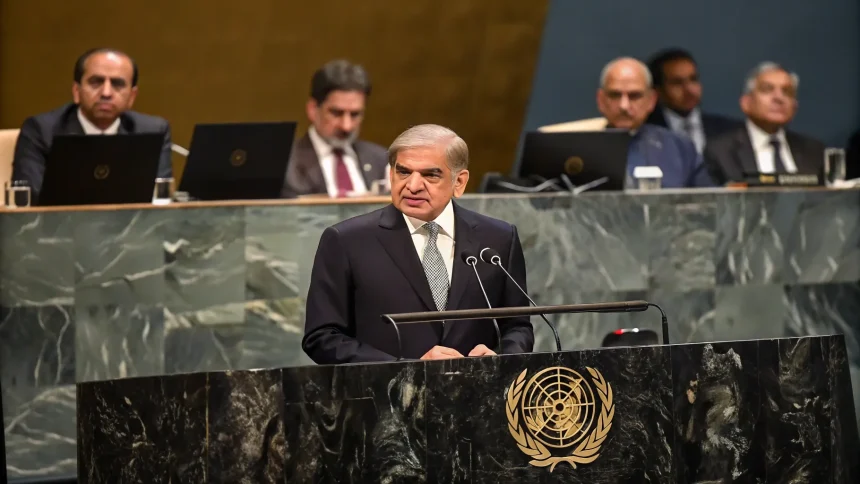
Standing before world leaders in New York, Pakistan’s Prime Minister Shahbaz Sharif pressed for urgent help after floods left tens of millions in harm’s way. Speaking during the U.N. gathering, he framed the disaster as a global climate crisis with local consequences — and asked richer nations to step up. The appeal came as Pakistan tries to recover from record monsoon rains that battered communities, crippled infrastructure, and strained a fragile economy.
A Nation Soaked, A World on Notice
Pakistan has become a tragic case study in climate exposure. In recent years, powerful monsoons and melting glaciers have combined to create flood conditions across wide areas. Government officials say more than 33 million people faced risk during the most severe waves, displacing families and wiping out crops.
Sharif opened with a stark image from the floodplain.
“As I stand here today to tell the story of my …”
The thought trailed off, but the message landed: the story is larger than one country. Pakistan contributes a small share of global emissions, yet carries heavy losses from a warming planet. The U.N. has warned that extreme weather is growing more frequent and more damaging across South Asia, putting low-lying communities in danger.
The Pitch to World Leaders
Sharif called for funding to rebuild and protect. He pointed to schools and clinics washed out, roads split, and farms that may not harvest for seasons. His government wants support for both relief and long-term prevention, including stronger river defenses and early-warning systems.
He also leaned on the growing push for loss and damage financing — money meant to help countries recover from climate-driven destruction. “Those who did least to cause warming should not pay the highest price,” he argued in essence, asking donors to move from pledges to payments.
Debate Over Responsibility and Results
Not everyone agrees on the checkbook or the chain of responsibility. Aid groups back rapid funding but warn of donor fatigue and slow disbursement. Economists say Pakistan needs relief that does not pile on debt, along with oversight that assures money reaches families, not just balance sheets.
Critics inside Pakistan point to governance problems. They argue better planning, tighter building codes, and stronger local institutions could reduce future damage. Supporters counter that even the best planning cannot hold back a monsoon supercharged by warming seas and melting ice.
Climate scientists say heavier downpours in the region fit a clear pattern. Warmer air holds more moisture, and when it rains, it can pour. That makes flood control not just a national duty, but a shared project for a hotter century.
What the Numbers Signal
Officials and aid agencies report widespread losses to homes, roads, and farmland. Health experts warn of rising waterborne disease after floods, especially among children. Food prices often spike as crops fail, squeezing vulnerable families.
- More than 33 million people exposed to flood risk.
- Mass displacement and damage to schools and clinics.
- Threats of disease outbreaks and food insecurity after waters recede.
Pakistan’s representatives say the country cannot rebuild alone. They want predictable finance for adaptation and recovery, plus technology and training to make communities safer.
What Comes Next
Diplomats will now weigh fresh funding pledges against competing crises. Any agreement will likely blend emergency aid, long-term adaptation money, and debate over loss-and-damage funding rules. Pakistan, for its part, says it is ready to show progress on oversight to speed support.
Sharif’s appearance put a human face on spreadsheets and climate graphs. His message was blunt: the cost of waiting is higher than the cost of action. The next measure of success will be simple — whether funds reach villages before the next storm does.
As U.N. meetings wrap, watch for final pledges, timelines for delivery, and signs of coordination across donors. One season of flooding changed Pakistan’s map. The question now is whether global promises can change its future.