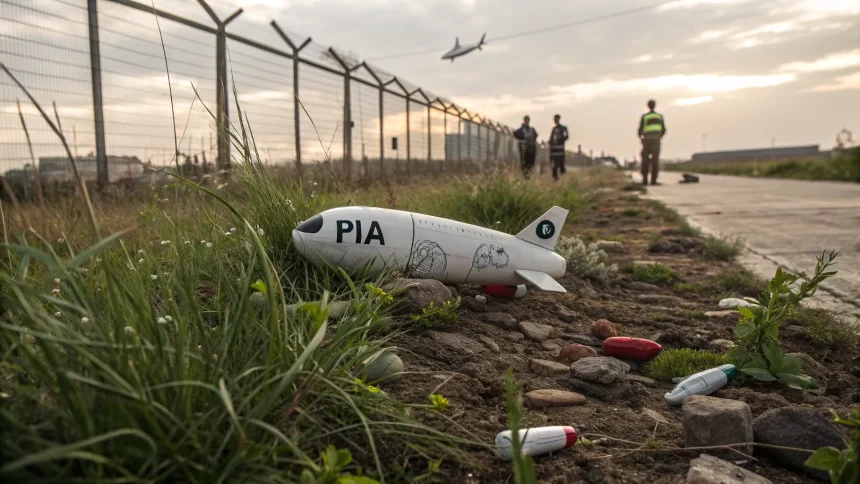
An airplane-shaped toy balloon marked with the letters “PIA” was recovered near an international border on December 29, prompting a brief security sweep and fresh questions about cross-border sensitivities. The inscription refers to Pakistan International Airlines, a detail that added to the initial caution shown by authorities. No threat was reported.
“An aero-plane shaped toy balloon with PIA written balloon was recovered near international border on December 29. The PIA is stands for ‘Pakistan International Airlines’.”
The item appears to be a child’s toy. However, its appearance in a high-security zone led to standard checks. Border officials often treat stray objects with care, especially when they carry markings linked to a neighboring country.
Background and Context
Border districts frequently report stray balloons, kites, and lightweight objects carried by wind. These incidents increase during festival seasons, school events, and wedding celebrations, when balloons are released in large numbers. Airline-themed balloons are common party decorations sold in many markets.
Security forces in frontier areas maintain a cautious posture due to past incidents involving cross-border smuggling, drones, and unauthorized sensors. While most balloon recoveries turn out harmless, each case is logged and examined for hidden devices or messages.
The presence of airline branding on a toy is not unusual. But the regional context makes any object with foreign markings a matter of interest for local police and border guards. Weather patterns in winter can also carry light objects over long distances.
How Authorities Typically Respond
Officials did not report any hazardous material, according to initial checks. Standard procedure in such cases emphasizes safety, documentation, and quick disposal if no risk is found. Investigators also assess whether the item drifted accidentally or was planted to cause alarm.
- Secure the area and notify bomb disposal teams if required.
- Photograph and catalog the item for records.
- Screen for electronics, payloads, or coded markings.
- Assess wind and weather data to map probable drift routes.
Such steps help distinguish a harmless event from an attempt at distraction. They also provide data on seasonal patterns that can explain where objects originate.
Security, Perception, and Public Reaction
Objects with foreign logos can trigger anxiety near a tense border. Even when harmless, they can spread rumors on social media. Local authorities aim to curb speculation by sharing timely updates. Transparency helps prevent panic.
Analysts say the key question is intent. An ordinary toy that drifts across a fence is common and low risk. A modified object suggests a different concern. In recent years, police reports have noted both kinds. The majority fall into the benign category.
Residents in border villages often alert police when they spot such items. This cooperation speeds up checks and reduces false alarms. It also keeps patrols focused on genuine threats, such as unauthorized drones or arms smuggling.
Weather, Trade, and Cross-Border Drift
Winter winds can carry balloons many kilometers, especially if they are filled with helium and shaped to catch air currents. Open farmland near border fencing allows free movement of light objects. Seasonal fog may delay detection until daylight.
Market trade can also explain brand markings. Party goods with airline logos, including foreign carriers, are widespread in South Asia. Retailers stock themes that appeal to children, such as airplanes. That means cross-border branding is not, on its own, a sign of intent.
What To Watch Next
Investigators are expected to finalize reports after routine forensic checks. If no attachments are found, the case will likely be closed as a non-event. Still, recurring finds, even harmless ones, help refine patrol protocols and weather-based risk maps.
Observers will watch for any pattern, such as repeated discoveries in a specific sector or timing linked to wind shifts. If a trend emerges, authorities may adjust patrol schedules or deploy extra sensors during high-drift periods.
The latest discovery appears to be low risk. Yet it reflects the fine line that border agencies walk each day: staying alert to rare threats while avoiding undue alarm. For now, the guidance is simple—report unusual objects, let experts examine them, and avoid speculation.
As the year ends, this small incident offers a reminder. Most alarms along the frontier are cleared quickly. The bigger task is steady vigilance, clear communication, and fast checks that keep daily life normal for people who live and work near the fence.