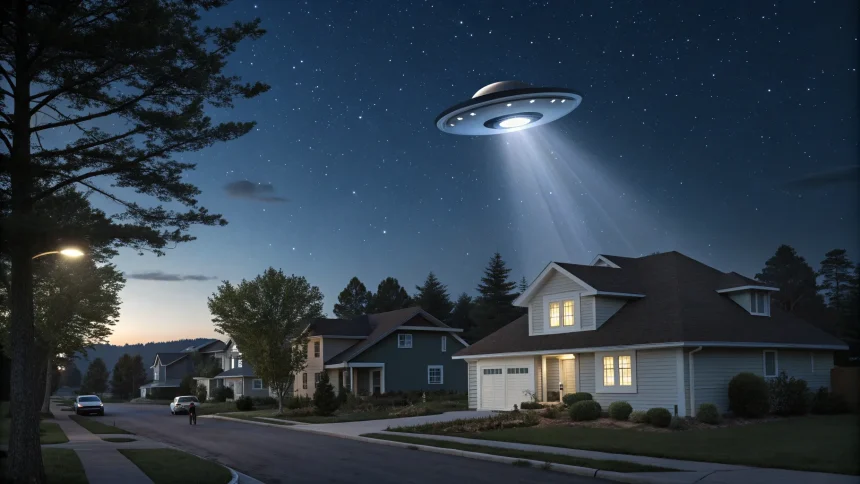
Nearly half of Americans now say aliens have visited Earth, a shift that signals a broader change in public attitudes about unexplained aerial events and official secrecy. Recent polling indicates a sharp drop in those who are unsure, suggesting opinions are hardening as the topic moves into mainstream debate.
The change comes as government reports, viral videos, and streaming documentaries keep the subject in constant view. While believers are growing in number, experts caution that the reasons for the surge are complex and often overlapping.
“Polling shows that nearly half of Americans now believe aliens have visited this planet—and that the number who aren’t sure has dropped by two-thirds. The reasons why, experts say, are complicated.”
Shifting Beliefs Meet a New Information Era
Belief in extraterrestrial visitors has long cycled through peaks and valleys in American culture. In past decades, spikes often followed famous sightings, popular films, or media investigations. Today, the drivers look different. Social media amplifies eye-catching claims. Official statements about unidentified aerial phenomena (UAP) draw more attention than in the past. And news cycles revisit the story whenever new footage or hearings appear.
Experts point to a broad climate of skepticism. Trust in institutions has declined, making alternative explanations more plausible to many. This helps explain why fewer people sit on the fence. Those who once said “not sure” may now feel pushed to decide.
Government Signals and Public Reaction
In recent years, military and intelligence officials have acknowledged reports of UAP incidents that lack clear explanations. While the language remains cautious, the acknowledgment itself is unusual. It offers an official frame for a topic long seen as fringe, and that official attention feeds public interest.
Researchers say the effect is twofold. Public curiosity rises when authorities admit gaps in knowledge. At the same time, the public can confuse “unidentified” with “alien,” even though the terms are not interchangeable.
Media, Memes, and the Viral Effect
Streaming platforms and podcasts have built large audiences around mysteries and unexplained encounters. Eye-catching clips are easy to share, and repetition makes claims feel familiar. When people see the same footage discussed across platforms, it can feel like corroboration.
That does not mean evidence has improved. It means the narratives are more accessible and persistent. In this environment, thoughtful skepticism competes with sensational content.
Why Fewer People Are Unsure
The sharp drop in undecided respondents points to a sorting effect. Several pressures can push people to a clear stance:
- More frequent coverage makes neutrality feel less comfortable.
- Institutional acknowledgment of UAP invites stronger opinions.
- Community identity online rewards firm views.
- Growing distrust of official explanations fuels belief in alternatives.
What the Numbers Do—and Don’t—Say
Nearly half believing in alien visits is a striking figure. But it does not confirm the nature of any specific event. It reflects sentiment, not proof. Polls capture mood, media exposure, and cultural currents. They do not validate sightings or settle scientific questions.
For investigators, the trend has mixed effects. On one hand, public interest can support more reporting and data collection. On the other, strong prior beliefs can skew how new evidence is interpreted.
Science’s Cautious Approach
Scientists often call for better data. Clear sensor records, multiple vantage points, and transparent methods are key. When evidence is ambiguous, they resist leaps to extraordinary conclusions. This can frustrate a public eager for answers, especially when mystery fuels engagement.
Still, careful standards matter. Extraordinary claims demand strong evidence. The gap between public belief and scientific caution is not new, but it appears to be widening again.
What to Watch Next
The belief surge may endure if three trends continue: official attention to UAP, high-visibility media, and low institutional trust. That combination keeps uncertainty in view and makes sweeping explanations more attractive.
Better public education on the difference between “unidentified” and “extraterrestrial” could add clarity. Transparent release of data and methods would help the public weigh claims more carefully. As more people pick a side, the debate will likely intensify, not fade.
For now, the headline is clear: more Americans are confident aliens have visited, and fewer are sitting on the sidelines. Whether future evidence supports or challenges that belief will shape the next chapter in this long-running story.