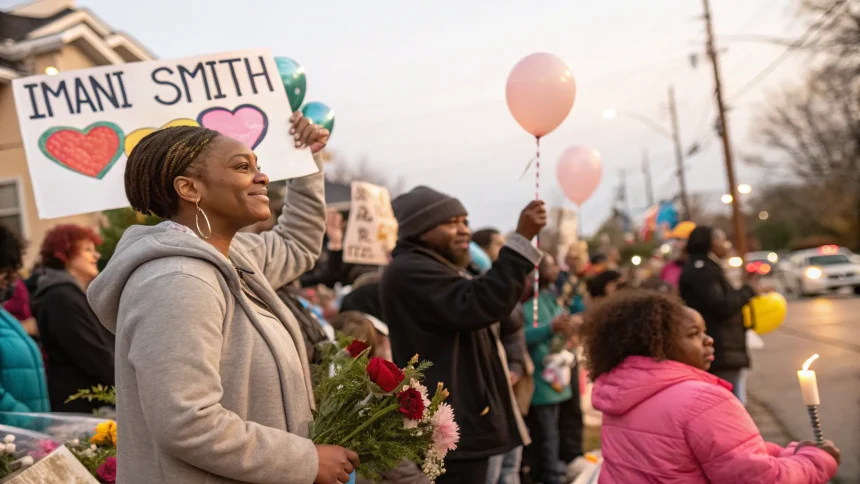
Neighbors, friends, and strangers are gathering around the family of Imani Smith after a public appeal for help and healing. The effort centers on a fundraiser and a single, aching sentence from a grieving aunt that captured the loss and the love left behind.
The message came from Kira Helper, who identified herself as Smith’s aunt. She posted it on a crowdfunding page that has become a focal point for support and remembrance.
A Family’s Appeal
“Imani had her whole life ahead of her. She was a vivacious, loving and fiercely talented person,” wrote Smith’s aunt, Kira Helper, on GoFundMe.
Her words put a face to grief and gave people a way to respond. The fundraiser now stands as both a memorial and a practical tool. It helps cover urgent needs that follow tragedy, from memorial costs to time off work.
Helper’s description paints Imani as a bright force. The portrait is brief but clear. It suggests a life shaped by talent, joy, and the kind of presence that fills a room.
Crowdfunding as a Safety Net
In recent years, crowdfunding has become a go-to response after loss. Families turn to online campaigns when formal support is slow or out of reach. The model relies on quick sharing and small donations at scale.
Experts have noted that these campaigns can close gaps but cannot fix the gaps themselves. They can raise money fast. They also reflect how much communities shoulder when systems fall short.
GoFundMe has said memorial and emergency campaigns are among its most active categories. The platform’s size makes it a natural place for neighbors and far-flung supporters to connect. A single share can carry a story across a city in minutes.
What We Know and What We Don’t
The family’s public note focuses on who Imani was, not on the circumstances. That choice keeps attention on a life rather than the loss alone. It also leaves questions that the community must hold with care.
For donors, the key points are clear. A family is asking for help. The appeal comes with a simple, heartfelt description. People who feel moved have a direct way to contribute.
Grief in Public, Help in Real Time
Public mourning can be uncomfortable, but it opens a door. It lets friends act and gives strangers permission to stand beside a family. It turns sympathy into action.
At the same time, it can be tiring for those closest to the person lost. Running a campaign takes time. Sharing updates can feel heavy. Clear goals and trusted organizers help lighten that load.
How Communities Show Up
Money matters in the short term. So do daily acts of help. Neighbors can lift a lot by handling routine tasks during a hard stretch.
- Offer meals or grocery runs.
- Coordinate rides or childcare.
- Share verified fundraisers with a short note.
- Respect the family’s pace and privacy.
Why This Story Resonates
Helper’s sentence resonates because it feels familiar. Many know someone who “had their whole life ahead of them.” The phrase says what grief cannot quite finish. It honors a future that should have unfolded.
Describing Imani as “vivacious, loving and fiercely talented” invites people to remember her that way. It also challenges the community to match that energy in support.
As the fundraiser continues, the family has signaled what they need: space to grieve and help to manage the practical details. The wider community has a role to play, one share and one act at a time. The coming days will show how far that circle extends, and how a brief message can move many hands to steady one family.