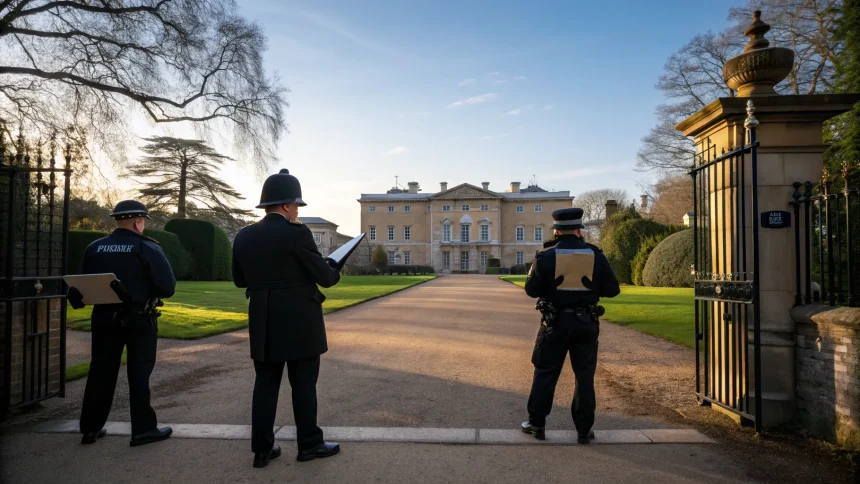
Specialist Metropolitan Police officers tasked with royal and diplomatic protection visited Prince Andrew’s residence at Royal Lodge, Windsor, in November, according to people familiar with the matter. The quiet visit adds fresh attention to security arrangements around the Duke of York and royal properties, amid ongoing debates over cost, risk, and public accountability.
The officers’ appearance at the Grade II-listed home comes as security across royal sites remains under review. It follows a year of high-profile events, protests, and heightened threats to public figures. What prompted the visit has not been confirmed.
What Happened at Royal Lodge
Royal Lodge sits inside Windsor Great Park and has been Prince Andrew’s home for years. The property is managed through the Crown Estate, and security in the area is a shared concern for multiple agencies.
“Specialist officers from the Met Police, who are responsible for royal and diplomatic protection, reportedly visited Andrew at his current home, Royal Lodge in Windsor, in November.”
Such visits can involve checks on entry points, alarms, patrol routes, and contingency plans. They also assess recent threats or changes in risk level tied to the resident or the location.
Who Provides Royal Protection
The Metropolitan Police unit known as Royalty and Specialist Protection oversees security for senior royals and key sites. Officers often work with local forces and royal household teams. The unit adjusts plans based on risk, public events, and intelligence.
Experts say these visits can be routine. They may follow seasonal changes, security upgrades, or a shift in threat assessments. The Met did not comment on individual deployments.
Security Scrutiny and Public Cost
Security for members of the Royal Family has long drawn scrutiny. The bill is substantial, and decisions on who receives protection can change over time. Prince Andrew stepped back from public duties in 2019. Since then, questions about his protection level and who pays for it have surfaced repeatedly in public debate.
Officials balance risk to individuals with the need for fiscal restraint. That tension has sharpened during periods of budget pressure and rising demands on policing.
- Royal sites attract large crowds and protests, raising baseline risk.
- Protection levels can vary by role, status, and threat intelligence.
- Security reviews often increase around major events or incidents.
Royal Lodge and Recent Headwinds
Royal Lodge remains a high-profile address due to its history and occupant. Its size and location present special challenges. Perimeter security must work alongside public access to parts of Windsor Great Park.
In recent years, the property’s future and upkeep have also made headlines. Those discussions tend to revive questions about security costs and responsibilities. Any police visit, routine or not, feeds the broader public interest in how decisions are made.
Why a Visit Now
Several factors could explain the timing. The approach to winter can trigger checks on lighting, cameras, and patrol paths. National threat levels and protest activity can prompt reviews too. There has been an uptick in coordinated demonstrations near royal events this year, which may affect nearby sites.
A former security planner, speaking generally, said visits like this ensure that “locks match threats.” That means aligning physical defenses and staffing with a current risk picture.
What It Means Going Forward
The visit signals attention to risk rather than a change to Prince Andrew’s status. Without official comment, it is unwise to read more into it. Still, the episode lands amid wider efforts to modernize royal security and contain costs without weakening protection.
Public interest will center on accountability and transparency. Officials must show that security is proportionate and effective, while guarding sensitive details that keep sites safe.
For now, the key facts are simple: specialist officers went to Royal Lodge in November. The purpose likely involved routine checks, updates, or planning. The move reflects ongoing vigilance across royal properties as pressures on policing grow.
Watch for further signals in the months ahead. Those may include broader police reviews, technology upgrades, or policy guidance on who receives protection and when. The balance between security and public trust remains the through line.